
札幌の英会話学校 AGREATDREAM 011-768-8116

Blog

  • Transition Words and Phrases: Word Lists for Essay Writing & SEO

    Transition Words and Phrases: Word Lists for Essay Writing & SEO

    Transition Words and Phrases: Word Lists for Essay Writing & SEO

    Welcome to our comprehensive transition word and phrase list. Below you will find both single word and multiple word lists optimized for essay writing also SEO website usage.

    What are transition words?

    Transitions

    Transition words are used to connect ideas and show flow. They help readers move through complex ideas, establish relationships and connections between ideas as well. They are also important when you look at website rankings. Many search engine optimization programs recommend you use them to improve readability, like in Yoast SEO. If you use them correctly they typically results in better rankings in search engines like Google.

    Conjunctions are the most basic of transitional words. They join words, phrases or clauses together. Good examples are “and”, “but” also “or”.

    • I drove to school and I got there just in time.
    • I drove home but was still late for dinner.
    • I want to drive to Sapporo or I want to finish writing my essay.

    As you can see in the examples above, the conjunctions serve different purposes. 

    • The first conjunctive “and” connects the two occurrences equally. 
    • The second conjunctive “but” introduces a contrast. 
    • The third conjunctive “or” presents a choice or alternative between two options.

    Knowing different categories of transition words will also help you choose the best ones to get your point across.


    WRITER’S HANDBOOK > IMPROVING YOUR WRITING STYLE > TRANSITIONAL WORDS AND PHRASES


    Below is a list of transitional words you can use to guide your reader through your writing (essays, reports, stories…)

    Single Transition Word List

    accordingly, additionally, afterward, afterwards, albeit, also, although, altogether, another,

    basically, because, before, besides, but, certainly, chiefly, comparatively, concurrently,

    consequently, contrarily, conversely, correspondingly, despite, doubtedly, during, e.g.,

    earlier, emphatically, equally, especially, eventually, evidently, explicitly, finally, firstly,

    following, formerly, forthwith, fourthly, further, furthermore, generally, hence, henceforth,

    however, i.e., identically, indeed, instead, last, lastly, later, lest, likewise, markedly, meanwhile,

    moreover, nevertheless, nonetheless, nor, notwithstanding, obviously, occasionally, otherwise,

    overall, particularly, presently, previously, rather, regardless, secondly, shortly, significantly,

    similarly, simultaneously, since, so, soon, specifically, still, straightaway, subsequently, surely,

    surprisingly, than, then, thereafter, therefore, thereupon, thirdly, though, thus, till, undeniably,

    undoubtedly, unless, unlike, unquestionably, until, when, whenever, whereas, while…

    Multiple Transition Words and Phrases for Essays and SEO Content

    analogous to
    (comparable in certain respects, typically in a way which makes clearer the nature of the things compared)


    Above

    above all


    After

    after all, after that


    All

    all in all, all of a sudden, all things considered


    Although

    although this may be true,


    Another

    another key point


    As

    as a matter of fact, as a result, as an illustration, as can be seen, as has been noted, as I have noted, as I have said, as I have shown, as long as, as much as, as shown above, as soon as, as well as,


    At

    at any rate, at first, at last, at least, at length, at the present time, at the same time, at this instant, at this point, at this time,


    balanced against, being that, by all means, by and large,

    by comparison, by the same token, by the time, compared to, be that as it may,

    coupled with, different from, due to, equally important, even if, even more, even so,

    even though, first thing to remember, for example, for fear that, for instance,

    for one thing, for that reason, for the most part, for the purpose of, for the same reason,

    for this purpose, for this reason, from time to time, given that, given these points,

    important to realize,


    In

    in a word, in addition, in another case, in any case, in any event, in brief, in case, in conclusion, in contrast, in detail, in due time, in effect, in either case, in essence, in fact, in general, in light of, in like fashion, in like manner, in order that, in order to, in other words, in particular, in reality, in short, in similar fashion, in spite of, in sum, in summary, in that case, in the event that, in the final analysis, in the first place, in the fourth place, in the hope that, in the light of, in the long run, in the meantime, in the same fashion, in the same way, in the second place, in the third place, in this case, in this situation, in time, in truth, in view of, inasmuch as,


    most compelling evidence, most important, must be remembered, not to mention,

    now that, of course,


    On

    on account of, on balance, on condition that, on one hand, on the condition that, on the contrary, on the negative side, on the other hand, on the positive side, on the whole, on this occasion,


    once, once in a while, only if, owing to, point often overlooked, prior to, provided that,

    seeing that, so as to, so far, so long as, so that, sooner or later, such as,

    summing up, take the case of, that is, that is to say, then again, this time,


    To

    to be sure, to begin with, to clarify, to conclude, to demonstrate, to emphasize, to enumerate, to explain, to illustrate, to list, to point out, to put it another way, to put it differently, to repeat, to rephrase it, to say nothing of, to sum up, to summarize, to that end, to the end that, to this end,


    together with, under those circumstances, until now, up against,


    up to the present time, vis a vis, what’s more, while it may be true, while this may be true,


    With

    with attention to, with the result that, with this in mind, with this intention, with this purpose in mind, without a doubt, without delay, without doubt, without reservation…


    Reference

    Michigan State University East Lansing (MI 48824. Fax: 517.353.5250 e-mail: jdowell @ msu.edu), accessed 26th March 2021,
    <https://tech.msu.edu/about/guidelines-policies/afs-retirement/>.
    The Andrew File System was unfortunatly retired.

    Transition words, accessed 26th March 2021,
    <https://writingcenter.unc.edu/tips-and-tools/transitions/>.


    Click to see other grammar points on this website here.

    Transition words for essays and SEO. Also how to use them. Word list included (separated by single words, multiples and prepositions)

    Transitions of Agreement / Addition / Similarity

    Transition words like also, in addition, and, likewise, add information, reinforce ideas, and express agreement with preceding material.

    in the first place

    not only … but also

    as a matter of fact

    in like manner

    in addition

    coupled with

    in the same fashion / way

    first, second, third

    in the light of

    not to mention

    to say nothing of

    equally important

    by the same token

    again

    to

    and

    also

    then

    equally

    identically

    uniquely

    like

    as

    too

    moreover

    as well as

    together with

    of course

    likewise

    comparatively

    correspondingly

    similarly

    furthermore

    additionally

    Transitions of Opposition / Limitation / Contradiction

    Transition phrases like but, rather and or, express that there is evidence to the contrary or point out alternatives, and thus introduce a change the line of reasoning (contrast).

    although this may be true

    in contrast

    different from

    of course …, but

    on the other hand

    on the contrary

    at the same time

    in spite of

    even so / though

    be that as it may

    then again

    above all

    in reality

    after all

    but

    (and) still

    unlike

    or

    (and) yet

    while

    albeit

    besides

    as much as

    even though

    although

    instead

    whereas

    despite

    conversely

    otherwise

    however

    rather

    nevertheless

    nonetheless

    regardless

    notwithstanding

    Transitions of Cause / Condition / Purpose

    These transitional phrases present specific conditions or intentions.

    in the event that

    as

    granted (that)

    as / so long as

    on (the) condition (that)

    for the purpose of

    with this intention

    with this in mind

    in the hope that

    to the end that

    for fear that

    in order to

    seeing / being that

    in view of

    If

    … then

    unless

    when

    whenever

    because of

    while

    since

    while

    lest

    in case

    provided that

    given that

    only / even if

    so that

    so as to

    owing to

    inasmuch as

    due to

    Examples / Support / Emphasis

    These transitional devices (like especially) are used to introduce examples as support, to indicate importance or as an illustration so that an idea is cued to the reader.

    chiefly

    in other words

    to put it differently

    for one thing

    as an illustration

    in this case

    for this reason

    to put it another way

    that is to say

    with attention to

    by all means

    important to realize

    another key point

    first thing to remember

    most compelling evidence

    must be remembered

    point often overlooked

    to point out

    on the positive side

    on the negative side

    with this in mind

    notably

    including

    like

    to be sure

    namely

    expressly

    truly

    indeed

    certainly

    surely

    markedly

    especially

    explicitly

    specifically

    such as

    surprisingly

    frequently

    significantly

    particularly

    in fact

    in general

    in particular

    in detail

    for example

    for instance

    to demonstrate

    to emphasize

    to repeat

    to clarify

    to explain

    to enumerate

    Transitions of Effect / Consequence / Result

    Some of these transition words (thus, then, accordingly, consequently, therefore, henceforth) are time words that show after a particular time there was a consequence or an effect.

    Note that for and because are placed before the cause/reason. The other devices are placed before the consequences or effects.

    as a result

    under those circumstances

    in that case

    for this reason

    in effect

    for

    thus

    because the

    then

    hence

    consequently

    therefore

    thereupon

    forthwith

    accordingly

    henceforth

    Conclusion / Summary / Restatement

    These transition words and phrases conclude, summarize and / or restate ideas, or indicate a final general statement. Also some words (like therefore) from the Effect / Consequence category can be used to summarize.

    as can be seen

    generally speaking

    in the final analysis

    all things considered

    as shown above

    in the long run

    given these points

    as has been noted

    in a word

    for the most part

    after all

    in fact

    in summary

    in conclusion

    in short

    in brief

    in essence

    to summarize

    on balance

    altogether

    overall

    ordinarily

    usually

    by and large

    to sum up

    on the whole

    in any event

    in either case

    all in all

    Obviously

    Ultimately

    Definitely

    Time / Chronology / Sequence

    Transitional words (like finally) have the function of limiting, restricting, and defining time. They can be used either alone or as part of adverbial expressions.

    at the present time

    from time to time

    sooner or later

    at the same time

    up to the present time

    to begin with

    in due time

    as soon as

    as long as

    in the meantime

    in a moment

    without delay

    in the first place

    all of a sudden

    at this instant

    first, second

    immediately

    quickly

    finally

    after

    later

    last

    until

    till

    since

    then

    before

    hence

    since

    when

    once

    about

    next

    now

    formerly

    suddenly

    shortly

    henceforth

    whenever

    eventually

    meanwhile

    further

    during

    in time

    prior to

    forthwith

    straightaway

    by the time

    whenever

    until now

    now that

    instantly

    presently

    occasionally

    Many transition words in the time category (consequently; first, second, third; further; hence; henceforth; since; then, when; and whenever) have other uses.

    Except for the numbers (first, second, third) and further they add a meaning of time in expressing conditions, qualifications, or reasons. The numbers are also used to add information or list examples. Further is also used to indicate added space as well as added time.

    Space / Location / Place

    These transition words are often used as part of adverbial expressions and have the function to restrict, limit or qualify space. Quite a few of these are also found in the Time category and can be used to describe spatial order or spatial reference.

    in the middle

    to the left/right

    in front of

    on this side

    in the distance

    here and there

    in the foreground

    in the background

    in the center of

    adjacent to

    opposite to 

    here

    there

    next

    where

    from

    over

    near

    above

    below

    down

    up

    under

    further

    beyond

    nearby

    wherever

    around

    between

    before

    alongside

    amid

    among

    beneath

    beside

    behind

    across

    How to Use Transition Words for Essays and SEO Content

    Transition words and phrases are very important in essays, papers and other compositions. They improve the connections between sentences and paragraphs. They give the text a logical organization and structure.

    All English transition words and phrases (sometimes also called ‘conjunctive adverbs’) do the same work as coordinating conjunctions: they connect words, phrases or clauses together and thus the text is easier to read and the coherence is improved.

    Usage: Transition words are used with a special rule for punctuation: a semicolon or a period is used after the first ‘sentence’, and a comma is almost always used to set off the transition word from the second ‘sentence’.

    Example 1:
    People use 43 muscles when they frown; however, they use only 28 muscles when they smile.

    Example 2:
    However, transition words can also be placed at the beginning of a new paragraph or sentence – not only to indicate a step forward in the reasoning, but also to relate the new material to the preceding thoughts.

    Use a semicolon to connect complete sentences. Both sentences must have a subject, a verb and be able to stand alone as a complete thought.

    AI Search Optimisation & Conversational Search Optimisation (AISO & CSO)

    As search engines evolve into AI-driven answering systems like OpenAI’s ChatGPT, Claude, Grok, Kimi AI, Google’s AI Overviews and Perplexity, the way we optimize website content must change. This shift has introduced two essential frameworks for modern digital marketing: AI Search Optimisation (AISO) and Conversational Search Optimisation (CSO).

    Traditional SEO focuses heavily on matching static keywords. In contrast, conversational AI models crawl the web looking for natural language patterns, structural logic and clear contextual relationships between ideas.

    Because AI engines process queries as natural, spoken questions, your content now should be more like human dialogue. Transition words and phrases serve as critical signals for AI algorithms. They act as logical connective tissue, helping language models convert your text into clean summary cards. By structuring pages with clear headers, lists and transitional phrases, your content is usually easy for both humans and AI search bots to read.

    A Video About Transitions: Yoast SEO Academy

    Examples of structure, when writing content or essays. From the introduction to the conclusion.

  • Hitachi Washing Machine: NW-7EX

    Hitachi Washing Machine: NW-7EX

    Hitachi Washing Machine: NW-7EX

    NW-7EX: How to remove the impeller screw

    洗濯機用パルセータ-用ネジ [PF-3150 JCF]

    The NW-7EX Impeller Screw

    The screw is right-handed, so undo it with counterclockwise rotation.
    You will need a PH3 screw driver head and maybe small spanner to help remove the tight screw.

    日立 パーツ HITACHI 【PF-3150-036】 ネジ(Pトメヨウ・サラワツキ)

    日立 パーツ HITACHI 【PF-3150-036】 ネジ(Pトメヨウ・サラワツキ)

    NW-7EX How to remove the impeller screw

    * This is just an image of an impeller from the same maker but not the actual impeller of the NW-7EX.

    The Plastic Cap

    Removing the plastic cap will be difficult but you will need a flat head screw driver to pop it out.

    Hitachi’s Website

  • Days of the Month, Cardinal Numbers, Ordinal Numbers – Grammar

    Days of the Month, Cardinal Numbers, Ordinal Numbers – Grammar

    Days of the Month, Cardinal Numbers, Ordinal Numbers – Grammar

    Days of the Month, Cardinal Numbers, Ordinal Numbers,

    数字:日付・日にち(序数)、基数、順序数
    Suuji: hizuke・hinichi (jyosuu), kisuu, junjosuu
    Numbers: Dates/Days, Cardinals, Ordinals

    日の読み方

    英語初心者だと、スラスラ出てこない方が多いです。10回くらい音読すれば自然と身につきますので、この機会にまとめて覚えておきましょう。

    日の読み方(英語で)

    on the 1st

    日 / 読み方 / 表記

    1日 / First / 1st

    2日 / Second / 2nd

    3日 / Third / 3rd

    4日 / Fourth / 4th

    5日 / Fifth / 5th

    6日 / Sixth / 6th

    7日 / Seventh / 7th

    8日 / Eighth / 8th

    9日 / Ninth / 9th

    10日 / Tenth / 10th

    11日 / Eleventh / 11th

    12日 / Twelfth / 12th

    13日 / Thirteenth / 13th

    14日 / Fourteenth / 14th

    15日 / Fifteenth / 15th

    16日 / Sixteenth / 16th

    17日 / Seventeenth / 17th

    18日 / Eighteenth / 18th

    19日 / Nineteenth / 19th

    20日 / Twentieth / 20th

    21日 / Twenty-first / 21st

    22日 / Twenty-second / 22nd

    23日 / Twenty-third / 23rd

    24日 / Twenty-fourth / 24th

    25日 / Twenty-fifth / 25th

    26日 / Twenty-sixth / 26th

    27日 / Twenty-seventh / 27th

    28日 / Twenty-eighth / 28th

    29日 / Twenty-ninth / 29th

    30日 / Thirtieth / 30th

    31日 / Thirty-first / 31st


    When reading the days of the month we usually add a determiner (限定詞) like the article (冠詞) the or the name of the month.

    For example:

    The first.
    January first.

    When the ordinal number is first, it is followed by the preposition of.

    For example:

    The first of January.


    日付の順番

    先にも紹介したとおり、アメリカとイギリスでは書く順番がことなります。日本ではアメリカ式が使われることが多いですが、相手の国にあわせるのがよいでしょう。

    アメリカの日付の書き方は
    月/日/年
    という順番になります。

    <例文 2018年8月15日の場合は?>

    on August the 15th, 2018(フォーマル)
    Spelt out: on August fifteenth, two thousand eighteen
    on August 15, 2018(フォーマル)
    8/15/2018 (カジュアル)
    8/15/18 (カジュアル)

    イギリスの日付の書き方は
    日/月/年
    という順番になります。

    <例文 2020年8月15日の場合は?>

    on the 15th of August, 2020(フォーマル)
    on the 15th August, 2020(フォーマル)
    15/8/2020 (カジュアル)
    15/8/20 (カジュアル)

    Friday, 11 September 1992(より丁寧な表記)

    Fri, 11 Sep, 1992(やや簡略な表記)

    Fri, 11 September, 1992(やや簡略に書く場合)

    11/09/1992(より簡素に書く場合)

    Fri, 11th September 1992(やや簡略に書く場合)


    レッスン要約の例:

    Can I have a lesson on December 5th, (on) Wednesday, at 1 pm?

    Can I have a lesson on Wednesday, ((on) December 5th), at 1 pm?

    Could I have a lesson at 1 pm, on Wednesday, December 5th?


    Number List

    Cardinal Number, Cardinal Number (Spelling),
    Ordinal Number, Ordinal Number (Spelling),
    Day of the Month: Japanese (Kanji), Hiragana, Romaji


    1, one,
    1st, first,
    一日, ついたち, tsuitachi,

    2, two,
    2nd, second,
    二日, ふつか, futsuka,

    3, three,
    3rd, third,
    三日, みっか, mikka,

    4, four,
    4th, fourth,
    四日, よっか, yokka,

    5, five,
    5th, fifth,
    五日, いつか, itsuka,

    6, six,
    6th, sixth,
    六日, むいか, muika,

    7, seven,
    7th, seventh,
    七日, なのか, nanoka,

    8, eight,
    8th, eighth,
    八日, ようか, youka,

    9, nine,
    9th, ninth,
    九日, ここのか, kokonoka,

    10, ten,
    10th, tenth,
    十日, とおか, touka,

    11, eleven,
    11th, eleventh,
    十一日, じゅういちにち, jyuu ichi nichi,

    12, twelve,
    12th, twelfth,
    十二日, じゅうににち, jyuu ni nichi,

    13, thirteen,
    13th, thirteenth,
    十三日, じゅうさんにち, jyuu san nichi,

    14, fourteen,
    14th, fourteenth,
    十四日, じゅうよっか, jyuu yokka,

    15, fifteen,
    15th, fifteenth,
    十五日, じゅうごにち, jyuu go nichi,

    16, sixteen,
    16th, sixteenth,
    十六日, じゅうろくにち, jyuu roku nichi,

    17, seventeen,
    17th, seventeenth,
    十七日, じゅうしちにち, jyuu shichi nichi,

    18, eighteen,
    18th, eighteenth,
    十八日, じゅうはちにち, jyuu hachi nichi,

    19, nineteen,
    19th, nineteenth,
    十九日, じゅうくにち, jyuu ku nichi,

    20, twenty,
    20th, twentieth,
    二十日, はつか, hatsuka,

    21, twenty-one,
    21st, twenty-first,
    二十一日, にじゅういちにち, ni jyuu ichi nichi,

    22, twenty-two,
    22nd, twenty-second,
    二十二日, にじゅうににち, ni jyuu ni nichi,

    23, twenty-three,
    23rd, twenty-third,
    二十三日, にじゅうさんにち, ni jyuu san nichi,

    24, twenty-four,
    24th, twenty-fourth,
    二十四日, にじゅうよっか, ni jyuu yokka,

    25, twenty-five,
    25th, twenty-fifth,
    二十五日, にじゅうごにち, ni jyuu go nichi,

    26, twenty-six,
    26th, twenty-sixth,
    二十六日, にじゅうろくにち, ni jyuu roku nichi,

    27, twenty-seven,
    27th, twenty-seventh,
    二十七日, にじゅうしちにち, ni jyuu shichi nichi,

    28, twenty-eight,
    28th, twenty-eighth,
    二十八日, にじゅうはちにち, ni jyuu hachi nichi,

    29, twenty-nine,
    29th, twenty-ninth,
    二十九日, にじゅうくにち, ni jyuu ku nichi,

    30, thirty,
    30th, thirtieth,
    三十 日, さんじゅうにち, san jyuu nichi,

    31, thirty-one,
    31st, thirty-first,
    三十一日, さんじゅういちにち, san jyuu ichi nichi,

    Larger numbers

    40, forty,
    40th, fortieth,

    50, fifty,
    50th, fiftieth,

    60, sixty,
    60th, sixtieth,

    70, seventy,
    70th, seventieth,

    80, eighty,
    80th, eightieth,

    90, ninety,
    90th, ninetieth,

    100, one hundred,
    100th, one hundredth,
    百日間, ひゃくにちかん, hyaku nichi kan, 100 days

    500, five hundred,
    500th, five hundredth,
    五百日間, ごひゃくにちかん, go hyaku nichi kan, 500 days

    1,000, one thousand,
    1,000th, one thousandth,

    1,500, one thousand five hundred (or fifteen hundred),
    1,500th, one thousand five hundredth,

    100,000, one hundred thousand,
    100,000th, one hundred thousandth,

    1,000,000, one million,
    1,000,000th, one millionth,


    月の読み方

    in January

    月 / 名称 / 略称
    1月 / January / Jan.
    2月 / February / Feb.
    3月 / March / Mar.
    4月 / April / Apr.
    5月 / May / May
    6月 / June / Jun.
    7月 / July / Jul.
    8月 / August / Aug.
    9月 / September / Sep. or Sept.
    10月 / October / Oct.
    11月 / November / Nov.
    12月 / December / Dec.

    Cardinal Numbers, Ordinal Numbers, Days of the Week


    例・Examples

    Which month is best for holidays there?
    September is usually the best.

    休暇に最適な月はいつですか?
    通常は9月がベストです。

    Which month is your birthday in?
    My birthday is in December.

    誕生日は何月ですか?
    私の誕生日は12月です。

    When is Greenery Day in Japan?
    I’m not sure exactly but it’s in April.

    日本の緑の日はいつですか?
    私は正確にはわかりませんが、それは4月です。

    I’m going to stay (for) 2 days in Sapporo.

    札幌で、二日間泊まります。
    さっぽろ で ふつか かん とまります。
    Sapporo de futsuka kan tomarimasu.


    英文法と語法説明・Grammar


    Click to view our English homepage.

    the 1st

    When the ordinal number is first, it is followed by the preposition of.

    For example:

    The first of January.

    on August the 15th, 2018(フォーマル)
    Spelt out: on August the fifteenth, two thousand eighteen

    on August 15, 2018(フォーマル)
    Spelt out: on August fifteenth, two thousand eighteen

    8/15/2018 (カジュアル)
    8/15/18 (カジュアル)


    イギリスの日付の書き方は
    日/月/年
    という順番になります。

    <例文 2020年8月15日の場合は?>

    on the 15th of August, 2020(フォーマル)
    on the 15th August, 2020(フォーマル)

    15/8/2018 (カジュアル)
    15/8/18 (カジュアル)


    <例文 2020年の場合は?>

    Spelt out:
    in twenty twenty
    in two thousand and twenty (in two thousand twenty)


    月の読み方

    in January

    How to write numbers: time, money, dates and fractions
  • Medical English

    Medical English

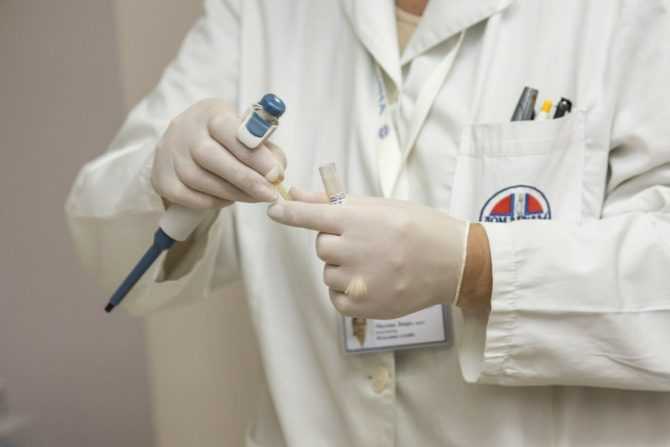
    血液検査 Blood Tests

    メディカル英会話 – Medical English – Blood Test

    Getting a Blood Test from a Medical Laboratory Technician

    View All Dialogues +

    Blood test related conversations and situations.


    MLT = Medical Laboratory Technician

    cannula = a thin tube inserted into a vein or body cavity to administer medication, drain off fluid, or insert a surgical instrument.

    1. Conversation At A Blood Lab

    At the blood test lab:

    Patient
    採血のためにこの検査室に来たのですが。
    I came to this lab to have my blood drawn.

    MLT
    ここで良いですよ。左袖を上げて座ってください。
    You are in the right place. Roll up your left sleeve and have a seat.

    Patient
    何の検査なのですか?
    What am I being tested for?

    MLT
    医師はあなたの白血球の数値を知りたいのですよ。
    Your doctor wants to know what your white blood cell count is.

    Patient
    白血球の数値で彼は何が分かるのですか?
    What does my white blood cell count tell him?

    MLT
    普通は白血球の数値が異常であれば、医師は感染症を疑います。
    Usually if your white count is off, the doctor suspects an infection.

    Patient
    どれくらい痛いの?
    How much will it hurt?

    MLT
    ちょっとちくっとするだけですよ。駆血帯を腕に巻いて血管を見つけやすくしますから。
    It is only a pin prick. I have to put this tourniquet on your arm to make the vein easier to find.

    Patient
    私の血液がその採血管に入るのですか?
    Is that my blood going into that tube?

    MLT
    必要な分だけ採血管に取ります。お疲れさまでした。
    That blood that just filled the tube is all that I needed. Thanks for coming in!

    2. Conversation About A Blood Test

    Your doctor has requested a blood test:

    Patient
    医師が血液検査が必要と言っています。
    My doctor says that I need a blood test.

    MLT
    私が採血しますので、座って左袖を上げてください。
    I can help you with that. Just have a seat and roll up your left sleeve.

    Patient
    血液で何を調べるのですか?
    What are you taking my blood for?

    MLT
    医師は白血球の数値を知りたいのです。
    Your doctor has requested a check of your white blood count.

    Patient
    どんな情報が知りたいのですか?
    What information does that give him?

    MLT
    もし白血球の数値が異常であれば、体のどこかに感染症の疑いがあるからです。
    If your white blood cell count is off, it could signal an infection somewhere in your body.

    Patient
    血液検査は痛いですか?
    Is a blood test painful?

    MLT
    駆血帯を腕に巻いて血管を浮き上がらせるので、ちょっとだけちくっとするだけですよ。
    I am putting a tourniquet on your arm to plump up the vein. It will only feel like a little pin prick.

    Patient
    痛っ!!
    My God, that hurts!

    MLT
    終わりましたよ。今日はお疲れさまでした。
    That was it! Thank you for coming in today.

    3. Conversation

    Ouch! There we go.

    Patient
    医師にここで採血するようにと指示されました。
    The doctor sent me over here to have my blood drawn.

    MLT
    分かりました、おかけになって左袖を上げてください。
    Certainly, please have a seat and roll up your left sleeve.

    Patient
    何のための検査ですか?
    What is this test for?

    MLT
    今日は白血球の数値を調べるためです。
    Well, today your doctor wants us to check your white blood cell count.

    Patient
    それで何が分かるのですか?
    What does that tell him?

    MLT
    もし数値が高ければ感染症かもしれません。
    Well, if it is elevated, you might have an infection.

    Patient
    採血は痛いですか?
    Will the blood test hurt?

    MLT
    ちょっとちくっとするだけですよ。駆血帯を腕に巻いて血管をふくらませて採血しますから。
    It is only a little pin stick. I am going to put a tourniquet on your arm to puff your veins up.

    Patient
    痛い!!
    Ouch!

    MLT
    はい終わり!必要な血液はとれました。
    There we go! I got the blood that I needed.


    4. More Examples/Vocab

    telehealth

    PPE (personal protective equipment)

    isopropyl alcohol

    It’s not sticking.

    It looks like I’ve been in a war zone.

    Dots are out the back.

    I’ll dedot you after.

    We don’t want you to bleed.

    What a morning.

    How tall do you think you are?

    He had a bag of blood yesterday.

    It’s running for 202 minutes.

    Citrate is the anticoagulant.

    We can give you calcium.

    Some people are just more sensitive to it.

    Just gonna stick this in your ear.

    He wanted to go home.

    I’ll make a note of that.

    I’ll see you later. All the best.

    We’re nearly there.

    When we finish, I’ll do another blood test.

    5. Common Blood Test Abbreviations

    A

    • ALT – Alanine Transaminase (enzyme found in the liver and kidneys; part of a liver function test)
    • ANA – Antinuclear Antibody (test to confirm or rule out suspected autoimmune disorders)
    • AST – Alanine Aminotransferase (enzyme; use to screen and monitor liver disorders)

    B

    • BAC – Blood Alcohol Concentration/Content (percentage of alcohol in blood; tests for intoxication level)
    • BMP – Basic Metabolic Panel (measures balance of fluids and sugars along with kidney function )
    • BNP – Beta Natriuretic Peptide (testing for congestive heart failure)
    • BUN – Blood Urea Nitrogen (tests function of liver and kidneys)

    C

    • CA – Calcium (measures blood calcium levels)
    • CBC – Complete Blood Count (test red and white blood cells for overall health and to detect abnormalities)
    • CK – Creatine Phosphokinase (test for muscle damage)
    • CR – Creatinine (part of kidney function test; measures waste in blood)

    E

    • ESR – Erythrocyte Sedimentation Rate (tests for inflammation)

    H

    • Hct – Hematocrit (part of the standard CBC test; abnormals measurements can indicate disease)
    • Hgb – Hemoglobin (measures your hemoglobin levels, used for anemia diagnosis)
    • HDL/LDL – High Density Lipoproteins/High Density Lipoproteins (testing for “good” and “bad” cholesterol)

    I

    • INR – International Normalized Ratio (measures rate of blood clotting; tests for blood disorders or to adjust blood thinning medications)

    K

    • K – Potassium (a test for potassium levels; high or low levels can lead to serious problems)

    M

    • Mg – Magnesium (testing for magnesium levels; certain levels needed body to function properly)

    N

    • Na – Sodium (testing for sodium levels in the blood; necessary for proper nerve and body functions)

    P

    • PSA – Prostate Specific Antigen (prostate cancer test)
    • PT – Prothrombin Time (test blood clotting along with INR or international normalized ratio; to access bleeding problems)

    R

    • RBC – Red Blood Cell Count (part of the CBC test)

    T

    • TPO – Thyroid Peroxidase Antibodies (test for antibodies to thyroid, which suggests thyroid disease)
    • Trig – Triglycerides (a part of cholesterol test)
    • TSH – Thyroid Stimulating Hormone (measures the amount of thyroid stimulating hormone in blood)

    W

    • WBC – White Blood Cell Count (part of the CBC test)

    病院の受付で使う英語
    6. At the reception area of a hospital/clinic

    Receptionist: May I help you?
    Patient: Yes, please. I don’t know what I should do first.

    Receptionist: Do you have your health insurance card?
    Patient: Yes. Here you are.

    Receptionist: Is it your first time here?
    Patient: Yes. It’s my first time here.

    Receptionist: Do you have an appointment?
    Patient: Yes. I have an appointment to see Dr. Inoue at 11am.

    Receptionist: Okay. Please fill out this medical form.
    Patient: Okay.

    Receptionist: Please wait in front of the Examination Room 3.
    Patient: Thank you.

    7. The OPQRST System

    OPQRST is a useful mnemonic (memory device) used by EMTs (Emergency Medical Technicians), paramedics, as well as nurses, medical assistants and other allied health professionals, for learning about your patient’s pain complaint. It is a conversation starter between you, the investigator, and the patient, your research subject.

    Here are some suggestions on how to approach using OPQRST as a patient assessment tool:

    Onset:

    “Did your pain start suddenly or gradually get worse and worse?” This is also a chance to ask, “What were you doing when the pain started?”

    “What was going on when the pain started?”

    “Did it start suddenly?”

    “What were you doing when the pain started?”

    Provokes or Palliates:

    Instead of asking, “What provokes your pain?” use real, casual words. Try, “What makes your pain better or worse?”

    1. “What makes the pain worse?”

    2. “Does anything make the pain better?”

    3. “Does movement or rest change the pain?”

    Quality:

    Asking, “Is your pain sharp or dull?” limits your patient to two choices, when their pain might not be either. Instead ask, “What words would you use to describe your pain?” or “What does your pain feel like?”

    “What does your pain feel like?”

    “Can you tell me how the pain feels?”

    “Can you describe your pain for me?”

    “Has the pain changed since it began?”

    Radiates:

    This is another chance to use real, conversational words during the assessment. Asking, “Does your pain radiate?” sounds silly and pompous to the patient. Instead use this question, “Point to where it hurts the most. Where does your pain go from there?”

    “Where is the pain now and does it travel anywhere else?”

    “Can you feel the pain anywhere else?”

    “Does the pain go up your arm or jaw at all?”

    Severity:

    Remember, pain is subjective and relative to each individual patient you treat. Have an open mind for any response from 0 to 10.

    1. “On a scale of 0 to 10, with ten being the worst pain in your life, how bad is the pain?”

    2. “If 10 is the worst pain in your life, how would you rate the pain on a scale from 0 to 10?”

    3. “How bad is the pain right now on a scale of 0 – 10?”

    Time:

    This is a reference to when the pain started or how long ago it started.

    “When did you start feeling this way?”

    “When did the pain start?”

    “How long have you been in pain?”

    “Does the pain come and go or is it constant?”


    View All Dialogues +

    8. Conversation About A Fever & Sore Throat

    Patient: Good evening doctor.

    Doctor: Good evening. You look pale and your voice a little strange.

    Patient: Yes doctor. I’m running a temperature and have a sore throat.

    Doctor: Lemme check that out.

    (He touches the patient’s forehead to feel the temperature.)

    Doctor: You’ve got a moderate fever. When did this all start?

    Patient: Maybe yesterday in the morning.

    Checking the Patient’s Temperature

    (The doctor then whips out a thermometer.)

    Patient: This thermometer is very different from the one you used the last time. (Unlike the earlier one which was placed under the arm, this one measures using a heat sensor.)

    Doctor: Yes, this is a new one. It’s a lot easier to use as it doesn’t require cleaning after every use.

    Patient: That’s awesome.

    Doctor: Yes, indeed.

    (He looks at the reading on the thermometer.)

    Doctor: Not too high – 99.8 (F) (37.7 C).

    Checking the Patient’s Blood Pressure

    (He then proceeds with measuring blood pressure.)

    Doctor: Your blood pressure is fine.

    (He then checks the throat.)

    Doctor: It looks bit scruffy. Not good.

    Patient: Yes, it’s been quite bad.

    Doctor: Do you sweat or shiver?

    Patient: I’m not sweating, but I feel somewhat cold when I sit under a fan.

    Doctor: Okay. Looks like you have a few symptoms of malaria. I would suggest you get a blood test. Nothing to worry about though. In most cases, the test come out to be negative. It’s just precautionary, as there have been a few malaria cases in the last month or so.

    (He then proceeds to write the prescription.)

    Prescribing Medicine

    Doctor: I’m prescribing three medicines and a syrup. The number of dots in front of each one tells you how many times a day you should take them. For example, the two dots here mean take the medicine twice a day, once in the morning after breakfast and once at night after dinner.

    Doctor: Do you have any questions about this?

    Patient: No. I think I’ll be okay. Thank you very much. See you.

    Doctor: See you.

    9. Conversation About A Headache

    Patient: Doctor, I’ve had a headache since yesterday evening.

    Doctor: Have you taken any medicine so far?

    Patient: Saridon, but the headache hasn’t gone away yet.

    Doctor: You’ve got a running nose. Looks like your headache is a result of sinus infection, and not a regular one that results from anxiety and fatigue. Lemme check.

    (The doctor checks the patient thoroughly.)

    Doctor: The infection in your sinus here is the reason for your headache. I’ll prescribe an antibiotic to clear up the infection and also give you a painkiller to relieve the pain if you like.

    Patient: Yes, please.

    10. Conversation About A Stomach Ache

    Patient: I’ve got a stomach ache and had a bit of diarrhea since last night. I also vomited few times last night.

    Doctor: What did you eat yesterday?

    Patient: I ate some snacks from the roadside eatery. It’s probably because of that.

    Doctor: You might have eaten some contaminated food. Looks like you’re a bit dehydrated. Are you drinking liquids?

    Patient: Not really.

    Doctor: You need to keep hydrated. You should start drinking some water. If you like Glucon-D powder or Electral might be help a bit as well. Or just regular fruit juice. Avoid drinking caffeine, dairy products, or having any solid foods at least until tonight. And get plenty of rest.

    Patient: Do I need a prescription for anything?

    Doctor: Yes. I’m just writing that now. Mainly to control the diarrhea. Just a moment please.

    Patient: Okay. Thank you.

    11. Vocabulary

    Video Study

    Speed: slow


    Page for reading: https://www.hopkinsmedicine.org/health/treatment-tests-and-therapies/blood-test


    View All Dialogues +

  • Lost and Found Offices in Sapporo

    Lost and Found Offices in Sapporo

    Odori Park, Sapporo in the evening - Lost and Found Offices in Sapporo

    Lost and Found Offices in Sapporo

    How do I claim or report items?

    Report lost or found items as soon as possible to the appropriate company, either in person or by calling and telling them what you found (see below for contact information). You, or someone you appoint, will only have a few days to collect a lost item from the operator. After that, the operator usually transfers most unclaimed items to a police station, where the police will keep them for about three months.

    Lost & Found

    Below, you can find a list of the main lost and found offices in Sapporo.

    Subway/streetcar:

    If you are riding on a subway train or streetcar and forget your belongings please call the Transportation Bureau Lost and Found Center on 011-241-2938

    Bus:

    Similarly, for all items lost on buses please inquire at the nearest office of the bus company you used.

    Airport Liner Bus
    Toshin Line, Chuo Bus

    • Hokkaido Chuo Bus Tsukisamu Office 011-857-2772
    • Hokuto Kotsu 011-375-6000

    Oyachi Line, Chuo Bus

    • Hokkaido Chuo Bus Tsukisamu Office 011-857-2772
    • Hokuto Kotsu 011-375-6000

    Kita 24-jo/Asabu Line, Chuo Bus

    • Hokkaido Chuo Bus Sapporo Kita Office 011-751-2637

    Miyanosawa Line, Chuo Bus

    • Hokkaido Chuo Bus Sapporo Kita Office 011-751-2637

    Higashi Kuyakusho Mae/Kanjo Dori Higashi Line, Chuo Bus

    • Hokkaido Chuo Bus Sapporo Kita Office 011-751-2637

    Taxi:

    In Sapporo, there is one company that looks after all lost and found items. So, unless you catch a taxi that is from another area like Ebetsu, call the Sapporo Taxi Association on 011-561-1173 to find missing items.

    Japanese website: https://hokuhakyo.or.jp/contact/


    At New Chitose Airport (CTS)

    For items lost at the check-in counter, at the departure gate or onboard the airplane, contact your airline.
    ANA and ADO tel. 23-45-5112
    JAL tel. 0123-45-2141
    SKY tel. 0123-45-6166

    For items lost in the terminals
    Go to the information counter or contact the Airport’s Lost & Found at +81(0)123-46-5413.
    For items lost in the JR Concourse call 0123-45-7001
    For items lost in the parking area: 
    Area A – tel. 0123-45-70061
    Area B – tel. 0123-45-8338


    Lost Articles On The Street:

    For items lost on the street, go to the nearest police station or police box. For items left on the subway or on buses, contact the relevant transportation company.


    A4JP Design Studio

    Lost and Found Section

    Did you lose something?

    See Glen Rowell, located at 506 Asahi Plaza Kairakuen, North 6 West 6, 2-1, North Ward, Sapporo. Items turned in, will end up in this location.

    Did you find something?

    Please turn the item over to Glen Rowell in the building where the item was found. You will be asked to fill out a “Found Item” report, or be asked for your name and he will fill out the report. You are not obligated to give your name. The item then goes to the Lost and Found, where it is held to be claimed.

    Items kept for three months GET disposed of or given AWAY to charity.

    TEL/FAX 011-768-8116 (Design Studio Number)

    営業時間 8:00-24:30

    Email

  • ?/trackback – Most trackbacks have been turned off on this website.

    ?/trackback – Most trackbacks have been turned off on this website.

    ?/trackback

    ?/trackback

    ?/trackback
    If you are searching for this you will have to contact us for more details. We turned off the trackbacks.

    What is a trackback?

    A trackback allows websites to notify people about an update or updates. It is one of four types of linkback methods for authors to request notification when somebody links to one of their pages or stories. This enables writers to keep track of who is linking to their articles. Some websites, based on SilverStripe, WordPress, Drupal, and Movable Type, support automatic pingbacks. With automatic pingbacks all the links in a published article can be pinged when the article is published. The term colloquially means any kind of linkback.

    Can Trackback links help your SEO performance?

    The downside with trackbacks is that they are heavily abused by web spammers. 

    Website owners that want to improve their own SEO send pingbacks to sites in the hope that they will be approved, thus earning a link from the page. Typically, the links are nofollowed. However, web spammers hope to receive links from sites that are dofollowed and that also auto-approve their links.

    Should trackback links be a part of your SEO?

    In theory, approving trackback links on your site won’t benefit your site. However, if your site links out to other sites and receives trackback links, then it is possible that your site could earn benefits in Google’s eyes.

    You can link out naturally by citing sources on the web. But getting valuable links from trackbacks would be more of a ‘nice to have’.

    If you notice trackback links to your site, check to make sure they are indexed.

    You can ping a linking site’s RSS in order to get trackback links indexed. Ping-o-matic is a great tool for this too.

    Watch this video for more information.

  • What is i-Space?

    What is i-Space?

    What is i-Space?

    Reaching for the Stars

    Reading Comprehension Worksheet

    Name: ________________________________________

    Date: ________________________________________


    i-Space: Reaching for the Stars

    i-Space, also known as Interstellar Glory (Chinese: 星际荣耀; pinyin: xīngjì róngyào), is a private Chinese space technology company founded in October 2016. The Beijing based company is committed to developing technology and providing launch services. The company’s mission is to advance cosmic discovery and make extraplanetary travel more accessible.

    The Beginning

    Founded in 2016, i-Space quickly made a name for itself in the aerospace industry. This company’s initial focus was on developing two-stage small satellite orbital launchers using solid propellant rocket engines from China Aerospace Science and Technology Corporation (CAST).

    Milestones

    In July 2019, they achieved a significant milestone by successfully launching the Hyperbola-1 rocket and reaching low Earth orbit on its maiden flight. This accomplishment made them the first private Chinese company to reach orbit. Despite setbacks with subsequent launches in 2021 and 2022, they made a strong comeback with successful orbital launches in April and December 2023.

    Innovation and Technology

    i-Space is known for its innovative approach to astronautic technology. The company develops advanced rockets, including the Hyperbola-1 and Hyperbola-2. The Hyperbola-1 is a four-stage rocket using solid fuel, while the Hyperbola-2 is a two-stage, reusable rocket powered by liquid methane and oxygen. They are also working on the Hyperbola-3, a larger, partially reusable rocket designed to carry heavier payloads.

    Education and Community

    i-Space places great emphasis on education and community engagement. The company runs educational programs, offers internships and scholarships in STEM fields, and hosts events to inspire future generations of space enthusiasts. By fostering a love for space and science, they aim to cultivate the next generation of aerospace leaders. An important part of this immersion experience includes lunchtime chats between 12:30 PM and 1:00 PM, where students and professionals can discuss the latest advancements in technology and projects.

    Future Goals

    Looking ahead, they aim to continue advancements in rocket technology and expand its launch capabilities. The company plans to establish a permanent human settlement on Mars and explore the outer planets and their moons. With a vision of creating a spacefaring civilization, i-Space is dedicated to pushing the boundaries of space exploration.


    Questions:

    1. When was i-Space founded?

    ________________________________________

    2. What was the name of their first successful orbital rocket?

    ________________________________________

    3. What are some of the technologies used by this company?

    ________________________________________

    4. How does i-Space contribute to education and community?

    ________________________________________

    5. What future goals do they have?

    ________________________________________


    Vocabulary:

    1. Revolutionize – To change something in a major way.
    2. Sustainable – Capable of being maintained over the long term without harming the environment.
    3. Payload – The cargo carried by a spacecraft.
    4. Colonization – The establishment of a colony in a new place.
    5. Spacefaring – Traveling in or operating in outer space.
    6. Immersion – Deep involvement or engagement in a particular activity or environment.

    Discussion Topics:

    1. Would you like to travel to space? Why or why not?

    ________________________________________

    2. How can educational immersion experiences, help students learn more about space technology?

    ________________________________________

    3. Why do you think exploration is important for humanity?

    ________________________________________

    4. How can advances in technology benefit life on Earth?

    ________________________________________


    This page is to improve reading comprehension, expand vocabulary and encourage critical thinking about the future of space exploration. Through immersion in the subject and interactive activities, students can gain a deeper understanding and appreciation for the advancements in space technology.

    Video

    A Reusability Test of the Liquid Filled iSpace Hyperbola-2 VTVL Before the Hyperbola-3

    2 Ton Payload

    Other Study Material

  • 読書クラブ – Book Club Conversation – The Kite Runner

    読書クラブ – Book Club Conversation – The Kite Runner

    読書クラブ Book Club

    読書クラブ – Book Club Conversation – The Kite Runner

    読書クラブ – Book Club – レッスン 100

    Situation: Sharon wants to tell John about a book club she joined. John thinks it sounds good and wants to come to the next meetup.

    View All Dialogues +

    普通のスピード
    Normal Speed

    遅いスピード
    Slower

    会話文と音声
    Transcript and Audio

    読書クラブ 会話 – Book Club Conversation

    Sharon
    ねえ、ジョン、少し話し時間ある?
    Hey John, can I talk to you for a minute?

    John
    あるよ。どうしたの?
    Sure, what’s up?

    Sharon
    数ヶ月前に入った読書クラブの事、教えてあげたくて。ジョン、たくさん本を読むでしょ。もしかして、来月一緒に行かないかなって思って。
    I wanted to let you know about a book club I joined a couple months ago. I know you do a lot of reading so I thought you might want to come with me next month.

    John
    そう、楽しそうだね。いつ集まるの?
    Oh, that sounds like fun. When does the group meet?

    Sharon
    ふつうは毎月最後の土曜日、夜の9時半から。遅すぎる?
    Usually the last Saturday of the month at 9:30 in the evening. Is that too late for you?

    John
    ううん、大丈夫だよ。みんなでどんな事、話すの?
    No, I think that’s ok. What do you talk about in the group?

    Sharon
    そうね、毎月い新しい本を一冊選んで、それについて次の集まりで話し合うの。
    Well, every month we choose a new book and then during the next meeting we discuss it.

    John
    今何を読んでるの?
    What book are you reading now?

    Sharon
    カイトランナー。
    The Kite Runner.

    John
    それ、いい本だって聞いたよ。どんな事が書いてある?
    I’ve heard that’s a good book. What’s it about?

    Sharon
    いい本よ。殆ど読み終わった。80年代にアフガニスタンで育った男の子の話。「カイトランナー」って言うんだけど、主人公が凧揚げ大会に出場するから。
    It is a good book. I’m almost finished. The book is about a boy who grows up in Afghanistan during the 1980s. It’s called the Kite Runner because the main character takes part in a kite flying competition.

    John
    本当におもしろそうだね。是非行きたいよ。
    That sounds really interesting. I’d love to come.

    Sharon
    わあ、よかった。次の集まりまでにまだ2週間あるから、本を読む時間があるね。
    Ok, great. The next meeting isn’t for another two weeks, so you still have time to read the book.


    質問
    Questions

    1. What sounds like fun?

    2. How often are books chosen?

    3. What is the Kite Runner about?


    4. What does ISBN mean?

    5. What was the last book you read about?


    読書クラブ

    Sample Answer

    Here is an example of a good answer to the question of what title you last read:

    “The last book I read was Leaves of Grass by Walt Whitman. Somehow, I missed reading that classic while in school and a friend of mine thought I would enjoy Whitman. After a few pages, I became really enthralled with how he could execute sharp commentaries as well as gentle subtleties in a single passage.”

    If you cannot fit your relevant skills into your answer naturally, don’t worry about it. This question allows you the chance to show how effectively you communicate, so focus more on the book and why you read it.


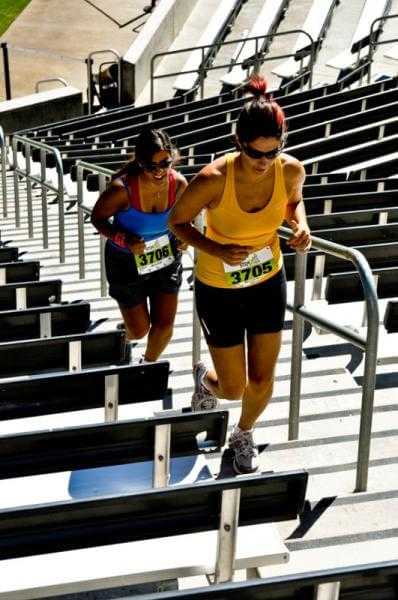
    Story with photos: Step Up for Cancer in Colorado: Bright Ideas

    熟語リスト・Learn Phrases & Idioms


    View All Dialogues +

  • 空港 税関 Airport Customs、関税 Customs Duty & 入国審査 Immigration

    空港 税関 Airport Customs、関税 Customs Duty & 入国審査 Immigration

    空港 税関 Airport Customs、関税 Customs Duty & 入国審査 Immigration

    ImmigrationとCustomsの違いは?

    Customs is the place where bags are checked for illegal or taxable items before travelers can enter a country. A customs duty is the tax collected on some items when they are brought into a country.

    Immigration is the place at an airport, seaport or international border crossing where travelers’ passports and documents are checked.

    customs は、旅行者が入国する前に、荷物に不法なものや課税すべきものがないか確認する場所、つまり、税関のことです。また、customs は、ある品物を国に持ち込む際に課せられる税金、つまり、関税をさすこともあります。

    immigration とは、空港や港、その他の国境地点で、旅行者のパスポートなどの書類を確認する場所、つまり、入国審査のことです。


    税関 空港 – Customs & Airport Immigration Conversation

    空港税関【くうこうぜいかん】Kuukouzeikan – Airport Customs

    View All Dialogues +


    Travel – English Dialogues


    空港の税関職員から聞かれる英語の質問

    Questions you may be asked by a Customs Officer.

    1. パスポートを見せてもらえますか?
    May I see your passport?

    2. どこから出航しましたか?
    Where did you fly in from?

    3. どこから(どの空港から)来ましたか?
    Where are you coming from?

    4. 訪問の目的は何ですか?
    What is the purpose of your visit?

    5. どのくらい滞在する予定ですか?
    How long do you intend to stay?

    6. どこに滞在しますか?
    Where will you be staying?

    7. 何か申告するものはありますか?
    Do you have anything to declare?


    税関での会話

    Customs Conversation

    Note: I’m on holidays’ is commonly used in British English and is used when someone takes a break from work or school. ‘I’m on holiday’ is often used in American English to talk about a specific vacation or trip.

    空港税関

    Officer
    パスポートを見せてもらえますか?
    May I see your passport please?

    You
    はい、どうぞ。
    Yes, here you are.

    Officer
    どこから出航しましたか?(どの空港から来ましたか?)
    Where did you fly from?

    You
    札幌からです。
    From Sapporo.

    Officer
    訪問の目的は何ですか?
    What is the purpose of your visit?

    You
    休暇です。
    I’m on holiday.

    Officer
    どのくらい滞在する予定ですか?
    How long are you planning to stay?

    You
    ちょうど二週間です。
    Just two weeks.

    Officer
    どこに滞在しますか?
    Where will you be staying?

    You
    マリオットホテルです。
    At The Marriott.

    Officer
    以前ハワイに行ったことはありますか?
    Have you ever been to Hawaii before?

    You
    いいえありません。
    No, I haven’t.

    Officer
    何か申告する事はありますか?
    Do you have anything to declare?

    You
    いいえありません。
    No, I don’t.

    Officer
    ありがとうございました。ご滞在をお楽しみ下さい。
    Thank you. Enjoy your stay.

    You
    ありがとうございました。
    Thank you.


    質問
    Questions

    1. What is the purpose of the traveler’s visit?

    2. Has the traveler every been to America before?

    3. What is the name of the hotel the traveler will stay at?


    4. Have you ever had any trouble while you were overseas on a holiday?

    5. Which country would you like to visit and why?


    空港のチェックイン
    Checking in at an airport

    アメリカの税関システム
    The U.S. Customs System

    空港税関 (ぜいかんくうこう)

    View All Dialogues +


    □ fly飛行機で旅行する
    Where are you flying to today?
    今日は どこまで 行きますか?

    I’m flying to San Diego via Los Angeles.
    ロサンゼルス経由で サンディエゴまで 行きます

    * まだ搭乗する前でも 行為(飛行機で移動する事)が 確定している場合、 I’m going to fly… と同様に I’m flying to … 現在進行形を 使うことができます。(アメリカ口語)

    □ stopover (国際線 24時間以内の)乗継ぎ時間、短期滞在
    I have a stopover in Los Angeles. Do I need to pick up my checked bag there?
    ロサンゼルスで 乗り継ぎの待ち合わせ時間 があります。 荷物をそこで 受け取る必要がありますか?

    check my bag (カウンターで)荷物を預ける ⇔ claim my bag (目的地で)荷物を引き取る

    stopover: a brief period of time when you stop at a place during a journey
    ex) We have a six-hour stopover [=layover] in Tokyo.

    入国審査のとき、知っておくと便利な英単語

    さいごに、入国審査のときに役立つ英単語をまとめてみました。

    税関 空港

    入国管理 immigration/passport control
    入国審査官 immigration officer
    税関 customs
    税関申告書 customs declaration form
    目的 purpose
    観光 sightseeing
    遊び pleasure
    休暇 vacation
    仕事 business
    訪問 visit
    職業 occupation
    会社員 office worker
    申告する declare

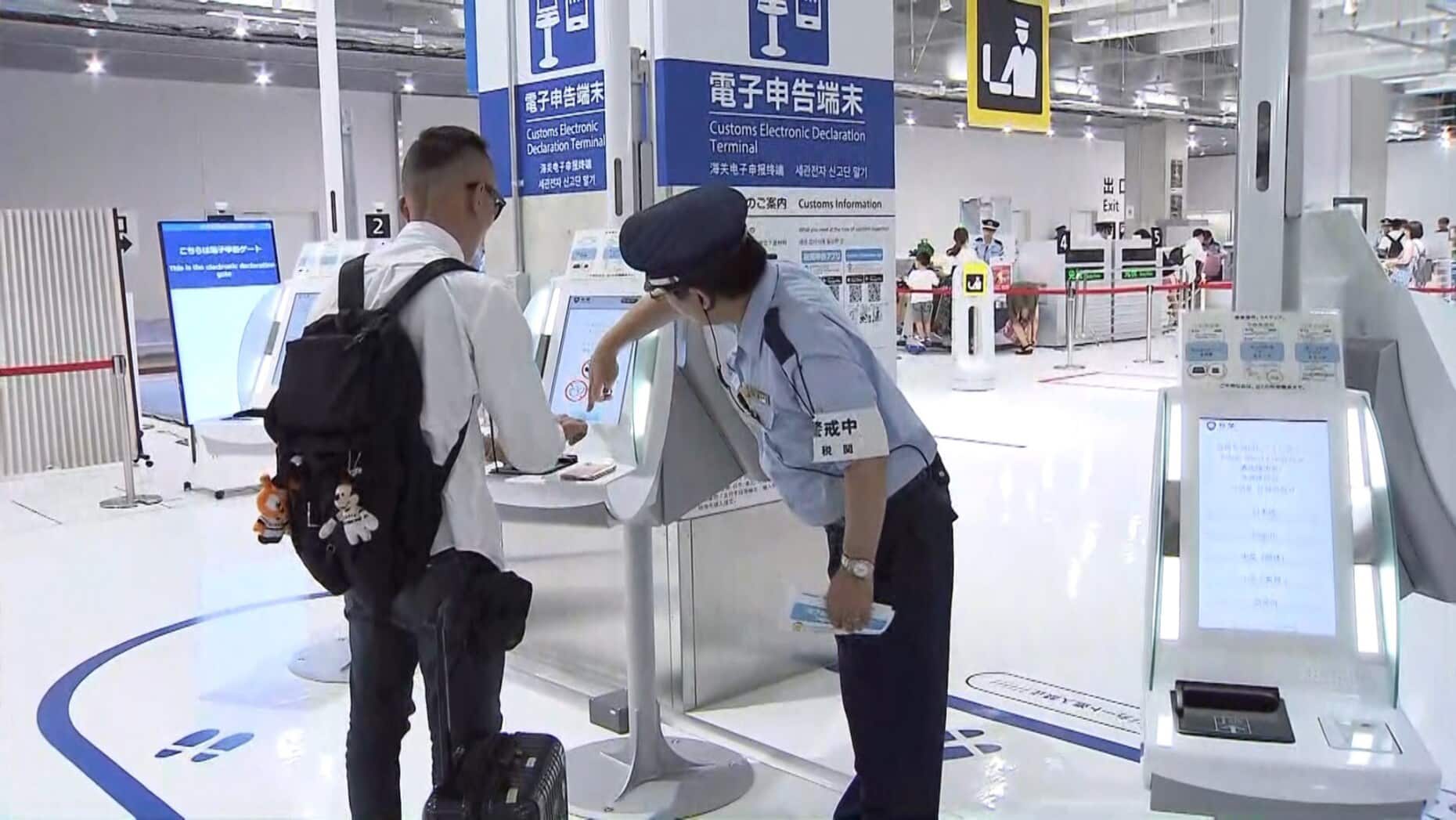
    Electronic Customs Declaration Gates (e-Gates/egates)

    Automated border control systems (ABC)

    The e-Gate aims to facilitate the smooth entry of ever-increasing inbound passengers, shorten their waiting times and reduce congestion at the customs inspection area.

    Rules change all the time, but here is some info about the procedures for the automated gate user registration.

    (1) Necessary documents

    • A passport (including re-entry permit if you have one) or certificate of refugee travel
    • An application for automated gate user registration (mainly for foreign nationals)
    • A resident card

    A person who stays in Japan under the status of “diplomacy” or “official
    service,” a member of the staff of the Japanese office of the Association of East Asian
    Relations or a member of the staff of the General Mission of Palestine, Tokyo or a family
    member thereof who belongs to the same household is not required to present the resident
    card, but a person who stays in Japan under status of “official service (within three
    months)” is required to present a re-entry permit.

    (2) Registration Procedure

    • Complete the application.
    • Read the guide before signing it to show your agreement.
    • Provide your application, passport (or certificate of refugee travel) and resident card to an official at the registration point.
    • Get your index fingers scanned and have a headshot photo taken by the special machine in accordance with the guidance of officials.
    • Once registered, receive your passport back from the official with a registration stamp and QR code sticker affixed. A note for special re-entry is printed below the QR code. If you are not subject to special re-entry, this note is deleted.

    (3) Notice of Completed Registration

    Due to processing, registration may not be completed immediately upon application. In
    this case, the results will be sent to you later. If you receive a notice of completed
    registration, visit the registration counter specified in the notice.

    What to PACK for Flight Attendant Training

    Flight Attendant TRAINING | Week 1 | Flight Attendant Lifestyle

    Behind the Scenes – How Emirates Train Their New Cabin Crew

  • Grammar Practice: Bring vs Take + Multiple Choice Quiz

    Grammar Practice: Bring vs Take + Multiple Choice Quiz

    Grammar: Bring vs Take + Quiz & Origin of the Words

    Bring vs Take

    ★ bring – ブリング – 話し手 / 聞き手 のいる場所へ持ってくる(連れてくる)
    ★ take – ティーク – 話し手 / 聞き手 とは別の場所へ持っていく(連れて行く)

    第3者 → take → 別の場所

    会話の相手 → take → 別の場所

    話し手/書き手 → take → 別の場所

    第3者 → bring → 会話の相手

    第3者 → bring → 話し手/書き手

    話し手/書き手 ↔ bring ↔ 会話の相手

    ■ bring :
    1) 話し手(私)のいる場所へ 人・ものを持ってくる(連れてくる)
    Please bring me your bag.
    「君の鞄を持ってきてください」
    You can bring your friend to our party.
    「私達のパーティーに君の友達を連れてきてもいいよ」

    2) 聞き手(あなた)のいる場所へ 人・ものを持っていく(連れていく)
    I’ll bring some flowers to your office.
    「君の事務所にお花を持っていきます。」
    My friend will bring the money to you.
    「友達があなたのところへお金を持っていきます。」

    ■ take :
    話し手 / 聞き手 とは別の場所へ人・ものを持っていく(連れて行く)
    I’ll take a laptop to the meeting.
    「会議にノートパソコンを持っていきます。」
    Can you take her to the concert ?
    「彼女をコンサートに連れて行ってもらえますか?」

    Bring vs Take Quiz 1

    1. It’s going to rain after 6pm. Don’t forget to  an umbrella if you go out.

    • 午後6時以降 = after 6pm
    • 雨が降る予定です = it’s expected to rain
    • 忘れないでください = don’t forget
    2. The party’s at 8:30pm. Don’t forget to  some wine if you come.

    3. I’m starving. I hope you remembered to  some food.

    4. Have you  the dog to the vet yet?

    5. Can you come here and  this newspaper to your father.

    6. We can drive there. I  the car with me.

    7. Number 7 or 8 always  good luck.

    8. So in fact  an extra coat was a good idea. It’s freezing out there!

    9. I’m leaving now. See you in about 15 minutes. Should I  some wine with me?

    10. She’s not here anymore. They’ve  her to another hospital.

    • 彼女はもうここにいません = She’s not here anymore

    Bring vs Take Quiz 2

    Choices: bring, brought, bringing, brings take, took, taken, taking, takes

    Can you ___________ me the keys?

    Our party’s at 8pm. Don’t forget to ___________ some wine if you come.

    I’m starving. I hope you remembered to ___________ snacks.

    It’s going to snow. Don’t forget to ___________ a coat if you go out.

    Have you ___________ the dog to the vet yet?

    Come here and ___________ this newspaper to the manager.

    We can drive there. I’ll ___________ the car with me.

    They ___________ your book and didn’t return it.

    Number 7 always ___________ good luck.

    I’m coming to your house now. I’ll see you in 30 minutes. Shall I ___________ some snacks?

    It’s freezing here, so ___________ an extra coat was a good idea.

    He’s not here. They must’ve ___________ him to another hospital.

    Quiz 3

    Homework

    Could you please ___________ me a glass of water?

    I have to ___________ the car to the mechanic tomorrow.

    How many suitcases have you ___________ on this trip?

    I’ll remember to ___________ my photo album to your house next time I come over.

    I ___________ the kids to the library yesterday.

    I’ll be ___________ a warm sweater when I go to my cousin’s house on Sunday.

    My steak is overcooked! Please ___________ it away.

    When Blake came to visit me, she ___________ her baby with her.
    * Blake is a unisex name.

    Would you like me to ___________ you the bill?

    Phones aren’t permitted in the classroom. That’s why I’ve ___________ yours from you.

    Origin of the Word Bring

    The word bring came from the Old English word bringan meaning “to bear, move, convey & take along when coming; bring forth, produce, present & offer”. It traces back to the Proto-Germanic word brangjanan and ultimately to the Proto-Indo-European root bher-, which is also means to carry. 

    Here’s a more detailed breakdown: 

    • Old English: The verb0000000000000000000000000000000000000000000000000000000000000000000000000000000000000000000000000000000000000000000000000000000000000000000000000000000 bringan was used in Old English to signify the act of carrying something or conveying something.
    • Proto-Germanic: The word bring evolved from the Proto-Germanic word brangjanan.
    • Proto-Indo-European: The ultimate origin of this word is from the Proto-Indo-European root bher-, meaning to carry and/or to bear.
    • Cognates: The word bring has cognates (related words) in other Germanic languages, including Old Frisian, Middle Dutch, Old High German, German and Gothic.
    • Meaning: The core meaning of the word bring, is the action of moving/conveying something from one place to another or causing something to come into existence.

  • Installing Adobe CS6 (Creative Suite) in the wrong language

    Installing Adobe CS6 (Creative Suite) in the wrong language

    cs header

    Installing Adobe CS6 (Creative Suite) in the wrong language

    Did you just get a copy of Adobe CS6 (Creative Suite) only to find out it installs in the wrong language? If you did, like I did, then maybe these steps below will help you get it installing in the correct language. This should also work if you downloaded the trial of Adobe CS6, and it isn’t installing in English or your main language either. The reason for this problem is usually the region and language settings.

    Installing Adobe CS6 Creative Suite

    Here are the steps for installing and hopefully fixing the Adobe CS6 Creative Suite when it is coming up with the wrong language:

    1. Open the Control Panel

    2. Open Region and Language settings

    3. On the Formats tab change the format to English (or your native language)

    Format: English (United States)

    4. Try installing or reinstalling again.


    Feel free to email me through the contact page if you find a better way of fixing this problem. Any support or help on fixing problems like this is greatly appreciated.


    As a teacher and designer, I’m quite happy with the CS6 Master Collection.

    One day, I would like to upgrade to the new Creative Cloud version but Adobe still hasn’t fixed the line drawing problems in the software. Also after 3 years of going through support through different versions of the software, I kind of gave up on wasting my time talking to Adobe. Consumer Affairs give them a bit of a whipping for breaking the law though lol.

    It’s a pity they used so much money on lawyers to avoid fixing bugs instead of paying a few programmers to do the actual work that needed to be done. Companies like Adobe should employ more people and help communities flourish in my opinion.

    There are quite a few new companies offering amazing programs out there for free these days. And I like to get involved in groups that help others. It’s nice to be able to offer help to others knowing it makes a positive difference.

    Have a wonderful day and do something nice for someone today ;)


    Update: Adobe has disabled the perpetual licensing. Avoid all Adobe products. Adobe it a terrible company. If you were lucky enough to license your software you might be able to deactivate it and then uninstall it but they are stopping the server activations on purpose. I lost mine when my Samsung M2 drive died. Adobe refused to let me activate my unused license as well. Someone please sue this company.

    Adobe was called and they said the don’t want to fix it but the software can be activated any way we want as long as we have paid for the licence.

    ArtCraft is now a better option than Adobe software. It’s still being tested and updated but it’s open source software.

  • Adobe: 32 bit TWAIN scanner problem on Photoshop installation DVD

    Adobe: 32 bit TWAIN scanner problem on Photoshop installation DVD

    Adobe
    Adobe Keeps Quiet About TWAIN Drivers

    Adobe: 32 bit TWAIN scanner problem on Photoshop installation DVD

    No updates for the 32-bit TWAIN scanner…

    Adobe released 32 and 64 bit versions of Photoshop CS6 but forgot to mention it wouldn’t work with most scanners out of the box. By leaving in the 32 bit version of Photoshop on the installation DVD they said to many users to use that version instead… The main problem is the TWAIN driver is missing from the installation DVD.


    TWAIN Driver for 64 Bit Operating System?

    Sean Nelson • Forum Pro • Posts: 11,988
    In reply to Ron AKA • Nov 22, 2013

    Ron AKA wrote:

    My investigation of the issue with Epson has kind of come to a dead end. They say that nobody has bothered to write a 64 bit TWAIN driver. And that is the reason it does not work. They blame Adobe and Microsoft, but it seems to me that Epson has to share some responsibility too.

    The lack of a driver isn’t the real issue, it’s the fact that the industry group who came up with the TWAIN standard never updated it for use in a 64-bit environment.   The WIA (Windows Image Acquisition) standard is for 64-bit software and I guess the TWAIN group figured there wasn’t any reason to re-invent the wheel.

    So the software ecosystem simply doesn’t exist for 64-bit TWAIN.   There’s no point in Epson writing a 64-bit TWAIN driver. There is no standard for it and there’s no other 64-bit software that would be able to interface with it.   If you want to do the stuff that TWAIN did in a 64-bit environment (i.e, scan directly into image processing software such as PhotoShop), WIA is the technology to use.

    I personally wasn’t satisfied with the WIA interfaces. So I ended up just using the scan-to-file utility that came with my Epson scanner. I open the scanned files with the software I use now (primarily Photoshop).

  • #/trackback – The Art of Website Trackback Etiquette

    #/trackback – The Art of Website Trackback Etiquette

    #/trackback – The Art of Website Trackback Etiquette

    Trackback Etiquette: Using trackbacking as a traffic building tool is a fine art. Many bloggers make the mistake of focusing on trackbacks even before their blog has enough or even any content. This may bring new readers in but they will not stay long or bookmark your site as you don’t give them a reason to.

    It is also important to know your place in the blog hierarchy. The really popular bloggers are trackbacked constantly so you will not likely get their attention by trackbacking because you will be one of many. You need to carefully pick and choose who you trackback and when you trackback if you want to use it for building your blog traffic.

    Trackback spam is also a big problem nowadays, so when you receive a trackback to your blog, make sure you check to see the blog that initiated it, it could be a spam blog. You will know this because the blog doesn’t have any original content, it just republishes the content of other blogs.

    I suggest you delete any trackback spam and only let the real trackbacks from real blogs go through live on to your blog or website.

    Try some trackbacks today and see if it will open doors to new relationships with other bloggers.

    Here’s to your blogging success,

    Yaro Starak from Entrepreneurs-Journey
    Edited by Glen Rowell

  • 動詞一覧 ・ 動詞のリスト ・ Verb List

    動詞一覧 ・ 動詞のリスト ・ Verb List

    What are verbs?

    Verbs are words that show an action (study), occurrence (develop) or state of being (exist). For example, the suffixes -ify, -ize, -ate or -en usually signify that a word is a verb, as in typify, characterize, irrigate and soften. The base form is called the infinitive. Eat, drink and love are infinitives.

    How many types of past tense verbs are there?

    When making the past tense verbs in English, there are three main types of verbs.

    Type 1 Verbs

    The verb does not change in the past tense.
    Examples: cut, put, hit and let

    The present form, past form and past participle form look the same.

    These are sometimes called “no change verbs”.

    cut, cut, cut;
    hit, hit, hit;
    let, let, let

    Type 2 Verbs

    Add -ed to make past tense verbs.

    Examples: work, play and help

    Some spelling rules appear inside this group

    • Verbs ending in e add d only
    • Verbs ending in y after a consonant change y to i then add ed
    • Short verbs that end in consonant vowel consonant double the last consonant before ed

    Type 3 Verbs

    Irregular verbs that follow their own patterns.
    The past form does not use -ed and does not follow a single rule.

    Examples:
    go, went, gone;
    eat, ate, eaten;
    begin, began, begun

    Inside this group there are sub patterns

    • Same past and past participle
    • Vowel changes
    • Full changes
    • Mixed changes

    An Expanded List of Verb Pattern Sub Types

    For advanced learners

    1. No change verbs

    cut, cut, cut

    hit, hit, hit

    let, let, let

    2. Regular -ed verbs

    work, worked, worked

    play, played, played

    live, lived, lived

    3. Irregular sub types

    A. Same past and past participle

    build, built, built

    lend, lent, lent

    sell, sold, sold

    B. Vowel change

    begin, began, begun

    ring, rang, rung

    drink, drank, drunk

    C. Vowel change but same past participle and past

    meet, met, met

    leave, left, left

    pay, paid, paid

    D. Full change

    go, went, gone

    be, was, been

    are, were, been

    E. Mixed patterns

    shine, shone, shone
    (for the light meaning)

    shine, shined, shined
    (for the polish meaning)

    F. Different verbs that share a spelling

    bid, bade, bidden
    (offer or command)

    bid, bid, bid
    (farewell or at an auction)

    英語動詞の練習リスト

    PCのみ英単語をダブルクリックすると辞書と例文の機能を使うことができます。
    Double click English words for a pop-up dictionary and example sentences.


    単語リスト(Word List)


    動詞一覧


    Below is a list of 200 verbs.

    ① 単純現在時制 = Base Form
    ② 単純過去時制 = Past Form
    ③ 過去分詞形 = Past Participle Form
    ④ 三人称単数現在 = -s/-es/-ies Form
    ⑤ 現在分詞 = -ing Form
    △ 後で勉強して法がいい (Uncommon/study these later)

    Base Form  
    単純現在時制
    Past Form  
    単純過去時制
    Past Participles
    過去分詞形
    -s/-es/-ies
    三人称単数現在
    -ing Form
    現在分詞

    変形一覧

    「文法&語法について」のトップページへ


    No.

    Base Form
    単純現在時制

    Past Form
    単純過去時制

    Past Participles
    過去分詞

    -s/-es/-ies
    三人称単数現在

    -ing Form
    現在分詞

    1 △ abide abode abode abides abiding
    2 △ alight alit alit alights alighting
    3 arise arose arisen arises arising
    4 awake awoke awoken awakes awaking
    5 be (am,are) was / were been is being
    6 bear bore born/borne bears bearing
    7 beat beat beaten beats beating
    8 become became become becomes becoming
    9 △ befall befell befallen befalls befalling
    10 begin began begun begins beginning
    11 behold beheld beheld beholds beholding
    12 bend bent bent bends bending
    13 △ bereave bereft bereft bereaves bereaving
    14 △ beseech besought besought beseeches beseeching
    15 bet bet bet bets betting
    16 bid (farewell) bade bidden bids bidding
    17 bid (offer price) bid bid bids bidding
    18 bind bound bound binds binding
    19 bite bit bitten bites biting
    20 bleed bled bled bleeds bleeding
    21 blow blew blown blows blowing
    22 break broke broken breaks breaking
    23 breed bred bred breeds breeding
    24 bring brought brought brings bringing
    25 broadcast broadcast broadcast broadcasts broadcasting
    26 build built built builds building
    27 burn burnt burnt burns burning
    28 burst burst burst bursts bursting
    29 bust bust bust busts busting
    30 buy bought bought buys buying
    31 cast cast cast casts casting
    32 catch caught caught catches catching
    33 △ chide chid chidden chides chiding
    34 choose chose chosen chooses choosing
    35 cleave clove/cleft cloven/cleft cleaves cleaving
    36 cling clung clung clings clinging
    37 clothe clad clad clothes clothing
    38 come came come comes coming
    39 cost cost cost costs costing
    40 creep crept crept creeps creeping
    41 cut cut cut cuts cutting
    42 deal dealt dealt deals dealing
    43 dig dug dug digs digging
    44 do did done does doing
    45 draw drew drawn draws drawing
    46 dream dreamt dreamt dreams dreaming
    47 drink drank drunk drinks drinking
    48 drive drove driven drives driving
    49 dwell dwelt dwelt dwells dwelling
    50 eat ate eaten eats eating
    51 fall fell fallen falls falling
    52 fart fart fart farts farting
    53 feed fed fed feeds feeding
    54 feel felt felt feels feeling
    55 fight fought fought fights fighting
    56 find found found finds finding
    57 fit fit fit fits fitting
    58 flee fled fled flees fleeing
    59 fling flung flung flings flinging
    60 fly flew flown flies flying
    61 forbid forbade forbidden forbids forbidding
    62 forecast forecast forecast forecasts forecasting
    63 forget forgot forgotten forgets forgetting
    64 forgive forgave forgiven forgives forgiving
    65 forsake forsook forsaken forsakes forsaking
    66 freeze froze frozen freezes freezing
    67 gainsay gainsaid gainsaid gainsays gainsaying
    68 get got got gets getting
    69 gird girt girt girds girding
    70 give gave given gives giving
    71 go went gone goes going
    72 grave grove graven graves graving
    73 grow grew grown grows growing
    74 hang hung hung hangs hanging
    75 have had had has having
    76 hear heard heard hears hearing
    77 heave hove hove heaves heaving
    78 hew hewed hewn hews hewing
    79 hide hid hidden hides hiding
    80 hit hit hit hits hitting
    81 hold held held holds holding
    82 hurt hurt hurt hurts hurting
    83 inlay inlaid inlaid inlays inlaying
    84 input input input inputs inputting
    85 keep kept kept keeps keeping
    86 kneel knelt knelt kneels kneeling
    87 knit knit knit knits knitting
    88 know knew known knows knowing
    89 △ lade laded laden lades lading
    90 lay laid laid lays laying
    91 lead led led leads leading
    92 lean leant leant leans leaning
    93 leap leapt leapt leaps leaping
    94 learn learnt learnt learns learning
    95 leave left left leaves leaving
    96 lend lent lent lends lending
    97 let let let lets letting
    98 lie lay lain lies lying
    99 light lit lit lights lighting
    100 lose lost lost loses losing
    101 make made made makes making
    102 mean meant meant means meaning
    103 meet met met meets meeting
    104 mistake mistook mistaken mistakes mistaking
    105 mow mowed mown mows mowing
    106 partake partook partaken partakes partaking
    107 pay paid paid pays paying
    108 plead pled pled pleads pleading
    109 put put put puts putting
    110 quit quit quit quits quitting
    111 read (sound: rɪd) read (sound: red) read (sound: red) reads reading
    112 △ rend rent rent rends rending
    113 rid rid rid rids ridding
    114 ride rode ridden rides riding
    115 ring rang rung rings ringing
    116 rise rose risen rises rising
    117 run ran run runs running
    118 saw sawed sawn saws sawing
    119 say said said says saying
    120 see saw seen sees seeing
    121 seek sought sought seeks seeking
    122 sell sold sold sells selling
    123 send sent sent sends sending
    124 set set set sets setting
    125 sew sewed sewn sews sewing
    126 shake shook shaken shakes shaking
    127 shave shove shaven shaves shaving
    128 shear shore shorn shears shearing
    129 shed shed shed sheds shedding
    130 shine shone shone shines shining
    131 shit shat shit shits shitting
    132 shoe shod shod shoes shoeing
    133 shoot shot shot shoots shooting
    134 show showed shown shows showing
    135 shrink shrank shrunk shrinks shrinking
    136 △ shrive shrove shriven shrives shriving
    137 shut shut shut shuts shutting
    138 sing sang sung sings singing
    139 sink sank sunk sinks sinking
    140 sit sat sat sits sitting
    141 slay slew slain slays slaying
    142 sleep slept slept sleeps sleeping
    143 slide slid slid slides sliding
    144 sling slung slung slings slinging
    145 slink slunk slunk slinks slinking
    146 slit slit slit slits slitting
    147 smell smelt smelt smells smelling
    148 smite smote smitten smites smiting
    149 sneak snuck snuck sneaks sneaking
    150 speak spoke spoken speaks speaking
    151 speed sped sped speeds speeding
    152 spell spelt spelt spells spelling
    153 spend spent spent spends spending
    154 spill spilt spilt spills spilling
    155 spin spun spun spins spinning
    156 spit spat spat spits spitting
    157 split split split splits splitting
    158 spoil spoilt spoilt spoils spoiling
    159 spread spread spread spreads spreading
    160 spring sprang sprung springs springing
    161 stand stood stood stands standing
    162 steal stole stolen steals stealing
    163 stick stuck stuck sticks sticking
    164 sting stung stung stings stinging
    165 stink stank stunk stinks stinking
    166 strew strewed strewn strews strewing
    167 stride strode stridden strides striding
    168 strike struck stricken strikes striking
    169 string strung strung strings stringing
    170 strive strove striven strives striving
    171 swear swore sworn swears swearing
    172 sweat sweat sweat sweats sweating
    173 sweep swept swept sweeps sweeping
    174 swell swelled swollen swells swelling
    175 swim swam swum swims swimming
    176 swing swung swung swings swinging
    177 take took taken takes taking
    178 teach taught taught teaches teaching
    179 tear tore torn tears tearing
    180 tell told told tells telling
    181 think thought thought thinks thinking
    182 thrive throve thriven thrives thriving
    183 throw threw thrown throws throwing
    184 thrust thrust thrust thrusts thrusting
    185 tread trod trodden treads treading
    186 understand understood understood understands understanding
    187 wake woke woken wakes waking
    188 △ way-lay way-laid way-laid way-lays way-laying
    189 wear wore worn wears wearing
    190 weave wove woven weaves weaving
    191 wed wed wed weds wedding
    192 weep wept wept weeps weeping
    193 welcome welcomed welcomed welcomes welcoming
    194 △ wend went went wends wending
    195 wet wet wet wets wetting
    196 win won won wins winning
    197 wind wound wound winds winding
    198 withdraw withdrew withdrawn withdraws withdrawing
    199 wring wrung wrung wrings wringing
    200 write wrote written writes writing

    変形一覧

    工事中 Under Construction

    Verbs 1-10

    1
    △

    abide

    (…を)我慢する、我慢する
    abode △
    abode △
    abides
    abiding

    2
    △

    alight

    降りる、飛び降りる、下降する、止まる、(…に)出くわす、(…を)偶然見つける
    alit
    alit
    alights
    alighting

    3

    arise

    起こる、発生する、生じる、起きる、立ち上がる
    arose
    arisen
    arises
    arising

    4

    awake

    起こす、呼び起こす、自覚させる、悟らせる
    awoke
    awoken
    awakes
    awaking

    babysit

    babysat
    babysat
    babysits
    babysitting

    5

    be (am, are)

    (…で)ある、です、ある、いる、(…に)なる、(時間が)かかる、(…が)ある、存在する、起こる、(時間が)かかる(だろう)
    was/were
    been
    is
    being

    6

    bear

    産む、出産する、つける、結ぶ、生む、身につける、帯びる、記載がある、抱く、もつ
    bore
    born/borne
    bears
    bearing

    7

    beat

    (続けざまに)打つ、(手・棒などで)(…を)連打する、たたく、(…を)たたく、(…を)たたき出す、撃退する、(…を)(…に)たたき込む、(…を)たたいてする、羽ばたく、ドンドンさせる
    beat
    beaten
    beats
    beating

    8

    become

    (…に)なる
    became
    become
    becomes
    becoming

    9
    △

    befall

    起こる、降りかかる
    befell △
    befallen △
    befalls △
    befalling △

    10

    begin

    始める、着手する、(…を)(…で)開始する、(…し)始める、(…し)だす、とても(…し)そうで(ない)
    began
    begun
    begins
    beginning

    Verbs 11-20

    11

    behold

    beheld
    beheld
    beholds
    beholding

    12

    bend

    bent
    bent
    bends
    bending

    13
    △

    bereave

    bereft △
    bereft △
    bereaves
    bereaving

    14
    △

    beseech

    besought △
    besought △
    beseeches △
    beseeching △

    15

    bet

    bet
    bet
    bets
    betting

    16

    bid
    (farewell or command)

    bade
    bidden
    bids
    bidding

    17

    bid
    (offer at an auction)

    bid
    bid
    bids
    bidding

    18

    bind

    bound
    bound
    binds
    binding

    19

    bite

    bit
    bitten
    bites
    biting

    20

    bleed

    bled
    bled
    bleeds
    bleeding

    Verbs 21-30

    21

    blow

    blew
    blown
    blows
    blowing

    22

    break

    broke
    broken
    breaks
    breaking

    23

    breed

    bred
    bred
    breeds
    breeding

    24

    bring

    brought
    brought
    brings
    bringing

    25

    broadcast

    broadcast
    broadcast
    broadcasts
    broadcasting

    26

    build

    built
    built
    builds
    building

    27

    burn

    burnt
    burnt
    burns
    burning

    28

    burst

    burst
    burst
    bursts
    bursting

    29

    bust

    bust
    bust
    busts
    busting

    30

    buy

    bought
    bought
    buys
    buying

    Verbs 31-40

    31

    cast
    cast
    cast
    casts
    casting

    32

    catch
    caught
    caught
    catches
    catching

    33
    △

    chide △
    chid △
    chidden △
    chides △
    chiding △

    34

    choose
    chose
    chosen
    chooses
    choosing

    35

    cleave
    clove/cleft
    cloven/cleft
    cleaves
    cleaving

    36

    cling
    clung
    clung
    clings
    clinging

    37

    clothe
    clad
    clad
    clothes
    clothing

    38

    come
    came
    come
    comes
    coming

    39

    cost
    cost
    cost
    costs
    costing

    40

    creep
    crept
    crept
    creeps
    creeping

    Verbs 41-50

    41

    cut
    cut
    cut
    cuts
    cutting

    42

    deal
    dealt
    dealt
    deals
    dealing

    43

    dig
    dug
    dug
    digs
    digging

    44

    do
    did
    done
    does
    doing

    45

    draw
    drew
    drawn
    draws
    drawing

    46

    dream
    dreamt
    dreamt
    dreams
    dreaming

    47

    drink
    drank
    drunk
    drinks
    drinking

    48

    drive
    drove
    driven
    drives
    driving

    49

    dwell
    dwelt
    dwelt
    dwells
    dwelling

    50

    eat
    ate
    eaten
    eats
    eating

    Verbs 51-60

    51

    fall
    fell
    fallen
    falls
    falling

    52

    fart
    (considered rude by some)
    fart
    fart
    farts
    farting

    53

    feed
    fed
    fed
    feeds
    feeding

    54

    feel
    felt
    felt
    feels
    feeling

    55

    fight
    fought
    fought
    fights
    fighting

    56

    find
    found
    found
    finds
    finding

    57

    fit
    fit
    fit
    fits
    fitting

    58

    flee
    fled
    fled
    flees
    fleeing

    59

    fling
    flung
    flung
    flings
    flinging

    60

    fly
    flew
    flown
    flies
    flying

    Verbs 61-70

    61

    forbid
    forbade
    forbidden
    forbids
    forbidding

    62

    forecast
    forecast
    forecast
    forecasts
    forecasting

    63

    forget
    forgot
    forgotten
    forgets
    forgetting

    64

    forgive
    forgave
    forgiven
    forgives
    forgiving

    65

    forsake
    forsook
    forsaken
    forsakes
    forsaking

    66

    freeze
    froze
    frozen
    freezes
    freezing

    67

    gainsay
    gainsaid
    gainsaid
    gainsays
    gainsaying

    68

    get
    got
    got
    gets
    getting

    69

    gird
    girt
    girt
    girds
    girding

    70

    give
    gave
    given
    gives
    giving

    Verbs 71-80

    71

    go
    went
    gone
    goes
    going

    72

    grave
    grove
    graven
    graves
    graving

    73

    grow
    grew
    grown
    grows
    growing

    74

    hang
    hung
    hung
    hangs
    hanging

    75

    have
    had
    had
    has
    having

    76

    hear
    heard
    heard
    hears
    hearing

    77

    heave
    hove
    hove
    heaves
    heaving

    78

    hew
    hewed
    hewn
    hews
    hewing

    79

    hide
    hid
    hidden
    hides
    hiding

    80

    hit
    hit
    hit
    hits
    hitting

    Verbs 81-90

    81

    hold
    held
    held
    holds
    holding

    82

    hurt
    hurt
    hurt
    hurts
    hurting

    83

    inlay
    inlaid
    inlaid
    inlays
    inlaying

    84

    input
    input
    input
    inputs
    inputting

    85

    keep
    kept
    kept
    keeps
    keeping

    86

    kneel
    knelt
    knelt
    kneels
    kneeling

    87

    knit
    knit
    knit
    knits
    knitting

    88

    know
    knew
    known
    knows
    knowing

    89
    △

    lade △
    laded
    laden
    lades
    lading

    90

    lay
    laid
    laid
    lays
    laying

    Verbs 91-100

    91

    lead
    led
    led
    leads
    leading

    92

    lean
    leant
    leant
    leans
    leaning

    93

    leap
    leapt
    leapt
    leaps
    leaping

    94

    learn
    learnt
    learnt
    learns
    learning

    95

    leave
    left
    left
    leaves
    leaving

    96

    lend
    lent
    lent
    lends
    lending

    97

    let
    let
    let
    lets
    letting

    98

    lie
    lay
    lain
    lies
    lying

    99

    light
    lit
    lit
    lights
    lighting

    100

    lose
    lost
    lost
    loses
    losing

    Verbs 101-110

    101

    make
    made
    made
    makes
    making

    102

    mean
    meant
    meant
    means
    meaning

    103

    meet
    met
    met
    meets
    meeting

    104

    mistake
    mistook
    mistaken
    mistakes
    mistaking

    105

    mow
    mowed
    mown
    mows
    mowing

    106

    partake
    partook
    partaken
    partakes
    partaking

    107

    pay
    paid
    paid
    pays
    paying

    108

    plead
    pled
    pled
    pleads
    pleading

    109

    put
    put
    put
    puts
    putting

    110

    quit
    quit
    quit
    quits
    quitting

    Verbs 111-120

    111

    read (sound: rɪd)
    read (sound: red)
    read (sound: red)
    reads
    reading

    112

    rend △
    rent
    rent
    rends
    rending

    113

    rid
    rid
    rid
    rids
    ridding

    114

    ride
    rode
    ridden
    rides
    riding

    115

    ring
    rang
    rung
    rings
    ringing

    116

    rise
    rose
    risen
    rises
    rising

    117

    run
    ran
    run
    runs
    running

    118

    saw
    sawed
    sawn
    saws
    sawing

    119

    say
    said
    said
    says
    saying

    120

    see
    saw
    seen
    sees
    seeing

    Verbs 121-130

    121

    seek
    sought
    sought
    seeks
    seeking

    122

    sell
    sold
    sold
    sells
    selling

    123

    send
    sent
    sent
    sends
    sending

    124

    set
    set
    set
    sets
    setting

    125

    sew
    sewed
    sewn
    sews
    sewing

    126

    shake
    shook
    shaken
    shakes
    shaking

    127

    shave
    shove
    shaven
    shaves
    shaving

    128

    shear
    shore
    shorn
    shears
    shearing

    129

    shed
    shed
    shed
    sheds
    shedding

    130

    shine
    shone
    shone
    shines
    shining

    Verbs 131-140

    131

    shit
    (considered rude but used by many)
    shat
    shit
    shits
    shitting

    132

    shoe
    shod
    shod
    shoes
    shoeing

    133

    shoot
    shot
    shot
    shoots
    shooting

    134

    show
    showed
    shown
    shows
    showing

    135

    shrink
    shrank
    shrunk
    shrinks
    shrinking

    136
    △

    shrive △
    shrove △
    shriven △
    shrives △
    shriving △

    137

    shut
    shut
    shut
    shuts
    shutting

    138

    sing
    sang
    sung
    sings
    singing

    139

    sink
    sank
    sunk
    sinks
    sinking

    140

    sit
    sat
    sat
    sits
    sitting

    Verbs 141-150

    141

    slay
    slew
    slain
    slays
    slaying

    142

    sleep
    slept
    slept
    sleeps
    sleeping

    143

    slide
    slid
    slid
    slides
    sliding

    144

    sling
    slung
    slung
    slings
    slinging

    145

    slink
    slunk
    slunk
    slinks
    slinking

    146

    slit
    slit
    slit
    slits
    slitting

    147

    smell
    smelt
    smelt
    smells
    smelling

    148
    △

    smite
    smote
    smitten
    smites
    smiting

    149

    sneak
    snuck
    snuck
    sneaks
    sneaking

    150

    speak
    spoke
    spoken
    speaks
    speaking

    Verbs 151-160

    151

    speed
    sped
    sped
    speeds
    speeding

    152

    spell
    spelt
    spelt
    spells
    spelling

    153

    spend
    spent
    spent
    spends
    spending

    154

    spill
    spilt
    spilt
    spills
    spilling

    155

    spin
    spun
    spun
    spins
    spinning

    156

    spit
    spat
    spat
    spits
    spitting

    157

    split
    split
    split
    splits
    splitting

    158

    spoil
    spoilt
    spoilt
    spoils
    spoiling

    159

    spread
    spread
    spread
    spreads
    spreading

    160

    spring
    sprang
    sprung
    springs
    springing

    Verbs 161-170

    161

    stand
    立つ、立っている、立ち上がる、(…で)立つ、(ある姿勢・位置に)立つ、立ててある、(…に)立てかけてある、(…に)位置する、ある、立ち止まる
    stood
    stood
    stands
    standing

    162

    steal
    stole
    stolen
    steals
    stealing

    163

    stick
    stuck
    stuck
    sticks
    sticking

    164

    sting
    stung
    stung
    stings
    stinging

    165

    stink
    stank
    stunk
    stinks
    stinking

    166

    strew
    strewed
    strewn
    strews
    strewing

    167

    stride
    strode
    stridden
    strides
    striding

    168

    strike
    struck
    stricken
    strikes
    striking

    169

    string
    strung
    strung
    strings
    stringing

    170

    strive
    strove
    striven
    strives
    striving

    Verbs 171-180

    171

    swear
    swore
    sworn
    swears
    swearing

    172

    sweat
    sweat
    sweat
    sweats
    sweating

    173

    sweep
    swept
    swept
    sweeps
    sweeping

    174

    swell
    swelled
    swollen
    swells
    swelling

    175

    swim
    swam
    swum
    swims
    swimming

    176

    swing
    swung
    swung
    swings
    swinging

    177

    take
    took
    taken
    takes
    taking

    178

    teach
    taught
    taught
    teaches
    teaching

    179

    tear
    tore
    torn
    tears
    tearing

    180

    tell
    told
    told
    tells
    telling

    Verbs 181-190

    181

    think
    thought
    thought
    thinks
    thinking

    182

    thrive
    throve
    thriven
    thrives
    thriving

    183

    throw
    threw
    thrown
    throws
    throwing

    184

    thrust
    thrust
    thrust
    thrusts
    thrusting

    185

    tread
    trod
    trodden
    treads
    treading

    186

    understand
    understood
    understood
    understands
    understanding

    187

    wake
    woke
    woken
    wakes
    waking

    188
    △

    way-lay
    way-laid
    way-laid
    way-lays
    way-laying

    189

    wear
    wore
    worn
    wears
    wearing

    190

    weave

    wove
    woven
    weaves
    weaving

    Verbs 191-200

    191

    wed

    wed
    wed
    weds
    wedding

    192

    weep

    wept
    wept
    weeps
    weeping

    193

    welcome

    welcomed
    welcomed
    welcomes
    welcoming

    194
    △

    wend

    went
    went
    wends
    wending

    195

    wet

    wet
    wet
    wets
    wetting

    196

    win

    won
    won
    wins
    winning

    197

    wind

    〈時計が〉巻かれる、〔+副詞(句)〕うねる、屈曲する
    wound
    wound
    winds
    winding

    198

    withdraw

    (…を)引っこめる、引く、(…を)引っ込める、そらす、退(ひ)かせる、撤退させる、引き出す、取り出す、(…を)取り上げる、取り戻す
    withdrew
    withdrawn
    withdraws
    withdrawing

    199

    wring

    絞る、絞り機にかける、絞り出す、(力まかせに)ねじる、ねじ(り)取る、(…を)ねじり取る、固く握る、しぼり取る、無理やりに得る、(…で)苦しめる
    wrung
    wrung
    wrings
    wringing

    200

    write

    (ペン・鉛筆・タイプライターなどの道具を使って)書く、書く、作る、字を書く、(…と)書く、(…を)書いて送る、書いてやる、手紙を書く、書き送る、手紙で知らせる
    wrote
    written
    writes
    writing

    Finished studying this list?

    Want more?

    Take lessons with us online or in our classroom.

    Click here for course details in English or here for course details in Japanese.

  • What is a trackback link? Trackbacks, Pingbacks & Linkbacks

    What is a trackback link? Trackbacks, Pingbacks & Linkbacks

    What is a trackback link? Trackbacks, Pingbacks & Linkbacks

    Trackback links used to be a powerful way to increase your blog or website’s visibility and attract more traffic. They are still useful but most blogs disable them now because of spam. They also set trackback links as nofollow. Google also said it doesn’t use them as a ranking signal any more.

    These links still allow website owners or content creators to receive notifications when someone links to one of their pages or documents. By keeping track of who’s linking to your articles, you can build relationships with other bloggers and websites, further boosting your reach.

    Trackback links are one of four types of linkback methods. They allow website companies or authors to request a notification. The notification shows when somebody links to one of their web pages or documents. They enable them to keep track of who is linking to their articles. Many popular content management systems (CMS), such as WordPress, Drupal, SilverStripe and Movable Type, support automatic pingbacks. Pingbacks allow links in a published article to ping when published. Pingbacks are automated and don’t send any content. The term trackback is for any kind of linkback. Unlike trackbacks, pingbacks are fully automated and don’t send content but simply notify the linked site. In contrast, trackbacks provide more manual control.

    How To Send A Trackback

    The method for sending trackbacks varies depending on the blogging software as each blogging software system handles trackbacks differently. Bloggers can also choose to switch them off or require every one be approved before going live. Don’t be surprised when you send a trackback and it doesn’t show up. It may have nothing to do with you.

    Some websites will trackback automatically, or attempt to, especially if they are the same format. For example a WordPress site trackbacking a WordPress site. In that case, as long as you include a link to the other sites’s post your site will attempt a trackback. This is sometimes also called a pingback.

    Usually you have to manually enter a trackback URI into the blog entry you are creating. You can find the URI at the end of most blog posts. Take a look at your blog posts for the term Trackback URI or something similar.

    URL = Uniform Resource Locator, a fancy name for a link

    URI = Uniform Resource Identifier, another fancy name for a link

    In WordPress and for each blog post I make there is a trackback input box section for entering trackback URIs. I copy and paste the trackback URI from the blog entry I want to link to and when I click publish my blog will send the trackback. My blog will also confirm when a trackback has been sent after publishing my post.

    How To Get Traffic – Benefits of Trackbacks

    1. Drive Traffic to Your Blog:
    By sending a trackback to another site or blog post, you’re leaving a link, usually in their comment section, that sometimes directs readers back to your blog. Interested visitors may click the link to see your content, bringing in new traffic.

    2. Improve Your SEO (Search Engine Optimization):
    Some websites allow trackbacks and don’t add the “nofollow” tag to your link, meaning you can gain PageRank juice from the link. PageRank helps search engines rank your content higher in search results, improving your blog’s visibility. Not sure what PageRank is? For more on PageRank, check out this quick introduction – https://www.semrush.com/blog/pagerank/ which will help you improve your search engine rankings.

    3. Build Relationships with Other Bloggers:
    When you trackback to another blog, it shows you’re engaging with their content. This can encourage the blog owner to visit your site, possibly leading to a mention or a trackback in return. Over time, these relationships can increase your credibility and audience.

    What Does “nofollow” Mean?

    The “nofollow” tag is a line of programing code that some blogging systems, such as WordPress, automatically add to links. As this tag is added to every link left in comments and trackbacks search engines/bots usually don’t follow the links. Humans however can see the link and click it like a standard link leading to your site.

    Its supposed purpose is to stop people spamming blog comment sections. Mainly for links but it really doesn’t work that well as a deterrent.

    Maximizing Traffic Through Trackbacks

    Trackbacks are a useful strategy for bringing more attention to your blog:

    • Engage with High-Quality Blogs: When you send trackbacks reputable blogs in your niche, you can attract their audience. Choose blogs with a high number of viewers that align with your target market.
    • Create Value-Driven Content: Make sure your content is worth linking to. If bloggers and readers find your posts valuable, they’re more likely to link back or share your content.
    • Monitor Trackbacks: When another sites send trackbacks to your site, it usually shows that they found your content valuable. Encourage this by writing shareable, link-worthy content.

    Send Trackbacks For Traffic

    Trackbacks can be good because they bring traffic to your site when you trackback other blogs. Being the “victim” of a trackback is also good. It means another blogger has read your blog and deemed something you wrote worthy of including in their blog. There is a good chance if they trackbacked you that they also made a direct link to your blog too.

    This helps your social proofing because it provides evidence that other people are reading and responding to your blog articles. However the real power of trackbacking is an awareness building tool to get the attention of other bloggers.

    When you first start blogging not many people will know your blog exists. By trackbacking other bloggers you demonstrate interest in their content. And it is a surefire way to make them interested in you and your blog.

    It’s very likely that the person you trackbacked will check your link and see what your site is all about. If you have been following my advice and have written some pillar articles your new visitor may like what they see. They might also subscribe to your blog. If you are lucky, they may even trackback you or mention your website in a future entry on their website.

    If nothing else, by trackbacking another blogger you will occupy some of their mind-space. In the future this may open up all kinds of doors and opportunities for traffic.


    PR: A4JP Design Studio Sapporo, Hokkaido, Japan

    PR: AGREATDREAM.COM Language School

    PR: Hokkaido Travel & Tourism Page

  • Search: Type & hit enter

    Search: Type & hit enter

    Search: Type & hit enter

    If you just pressed enter or clicked on the search icon in the text field you probably ended up here.

    When you just press enter this website will look for “Search: Type & hit enter“.

    Type the keyword to find specific pages

    or

    try a few links from the side menu.

    Thank you for taking your time to look at this site.

    If you have any questions feel free to email us anytime.

    Search : Hacking


    verb

    1. Try to find something by looking or otherwise seeking carefully and thoroughly.

    “I searched among the rocks, but I couldn’t find the phone I dropped.”

    Synonyms

    hunt, look, explore, forage, fish about/around, look high and low, cast about/around/round, ferret (about/around), root about/around, rummage about/around…


    noun

    1. An act of looking for someone or something.

    “the police carried out a thorough search of the premises looking for clues”

    Synonyms

    hunt, look, exploration, scout, probe, dig, digging, forage, foraging, scavenge, scavenging, ferreting (about/around), rummage, rummaging about/around, rooting about/around, rifling, scouring, quest, pursuit of, seeking after
    “we continued our search for a hotel until we found a nice place to stay in”

    searching for, hunting for, after, seeking, looking for, on the lookout for, in quest of, in pursuit of, on the track of, questing after, chasing after
    “they were forced to travel in search of new places to find food in”

  • 55th Annual Meeting – Japanese Society for Clinical Virology

    55th Annual Meeting – Japanese Society for Clinical Virology

    55th Annual Meeting – Japanese Society for Clinical Virology

    Clinical virology meeting files can be downloaded from this link below:

    Click to Download

    Regards,

    Glen

    Annual Meeting - Japanese Society for Clinical Virology
    A pharmacist undergoes training as they prepare for the distribution of the Pfizer coronavirus disease (COVID-19) vaccine at a Mount Sinai Health System pharmacy in the Queens borough of New York City, in this handout photo released on December 10, 2020. Mount Sinai Health System/Handout via REUTERS NO RESALES. NO ARCHIVES. THIS IMAGE HAS BEEN SUPPLIED BY A THIRD PARTY.

    We are very pleased to announce that the 55th Annual Meeting of the Japanese Society for Clinical Virology will be held in Sapporo, on Saturday the 14th and Sunday the 15th of June, 2014. For the convenience of participants who will be attending the event, we have a special accommodation and air ticket plan run through Kinki Nippon Tourist Hokkaido Co. LTD., Sapporo City hotels may be fully booked on this weekend in June, so we recommend contacting us as soon as possible. Thank you for your time.

    Kinki Nippon Tourist Hokkaido Co., Ltd .Sapporo corporate travel branch

    Notice

    Application Date: January 20th, 2014 (Mon) to May 14th, 2014 (Wed) 

    Sapporo City Accommodation Information

    Application deadline: May 14, 2014 (Wed)

    Dates: June 13, 2014 (Fri) to June 15 (Sun)

    Plan No.Hotel
    Name
    Room
    Type
    Plan
    Code
    Rates Per Person
    per Night with Breakfast
    (tax included)
    Access
    ARoyton SapporoTwin Room
    2 person
    AT13,000 yenConference
    Venue
    3-minute walk from the Tozai Subway Line
    (11-chome Station)
    Twin Room
    1 person
    AX15,000 yen
    BSapporo Prince HotelTwin Room
    2 person
    BT12,000 yen   6/14 (Sat) 2,000 yen extra3-minute walk from the Tozai Subway Line   (11-chome Station)
    Twin C
    1 person
    BX18,000 yen

    6/14 (Sat)
    2,000 yen extra
    CSapporo Grand HotelSingle RoomCS16,000 yen

    6/13 (Fri)
    1,500 yen extra

    6/14 (Sat)
    1,500 yen extra
    8-minute walk from the Sapporo JR Station southwest exit
    Twin Room
    2 person
    CT13,000 yen

    6/13 (Fri)
    1,500 yen extra

    6/14 (Sat)
    1,500 yen extra
    Twin Room
    1 person
    C X22,000 yen

    6/13 (Fri)
    1,500 yen extra

    6/14 (Sat)
    1,500 yen extra
    DWashington Hotel SapporoSingle RoomDS12,000 yen   6/13 (Fri) 1,000 yen extra 6/14 (Sat) 1,000 yen extra

    1-minute walk from the Sapporo JR Station southwest exit
    Twin Room
    2 person
    DT10,000 yen

    6/13 (Fri)
    1,000 yen extra

    6/14 (Sat)
    1,000 yen extra
    EHotel
    Resol Trinity Sapporo
    Single RoomES10,500 yen   6/13 (Fri) 1,000 yen extra 6/14 (Sat) 1,000 yen extra

    1-minute walk from the Odori Subway Station
    Twin Room
    2 person
    ET10,000 yen

    6/13 (Fri)
    1,000 yen extra

    6/14 (Sat) 1,000 yen extra
    FToyoko INN
    Sapporo Station North Exit
    Single RoomFS7,400 yen2-minute walk from the Sapporo JR Station north exit
    Twin Room
    2 person
    FT4,700 yen

    [Note]

    • Hotel rates are per person, per night (including breakfast, tax and service charges).
    • If you apply for a twin room, please include the name of the person you will stay with on your application form.
    • Hotel rooms are booked in the order that application forms are received and hotel rooms are also assigned in order of preference, if the hotels are fully booked.
    • Click on the hotel’s name above to see more information and a map of the area.

    [Location of the Conference Venue & Hotels (Google Map)]

    The 55th Annual Meeting of the Japanese Society for Clinical Virology

    Hotel and Flight Plan (Group Discount Tickets)

    Application deadline: May 14, 2014 (Wed)

    We offer a round-trip tickets and accommodation in a hotel with breakfast included, during this 3 day period (June 13th to 15th, 2014).
    Prices may vary depending on the hotel that you have chosen to stay in so please check for additional charges in the price lists below. These prices are group discount prices, so they may changes if 4 other people are not on the same plan.

    Example 1:

    One night in an economy class hotel with breakfast + round-trip tickets for 40,400 yen (taxes and service charges included)

    Base Charge: 40,400 yen

    Total = 40,400 yen

    ※ This package is for a domestic flight. Click “Clinical Virology – Guidance of Travel Conditions” to see further information at the bottom of this page.

    Example 2:

    Three days and two nights + round-trip tickets from Haneda Airport

    • The Hotel:Two nights in a single room at the Hotel Resol Trinity Sapporo
      4,100 yen extra for the first night.
      11,500 yen extra for the second night.
    • The Flight: Chitose – Haneda
      6/13 (Friday) A-1: No addition charges
      6/15 (Sunday) X-1: 3,500 yen extra

    Base Charge: 40,400 yen +

    Additional Hotel Charges

    The 1st Night: 4,100 yen +

    The 2nd Night: 11,500 +

    Additional Flight Charges: 0 yen +

    Addition Return Flight Charges: 3,500 yen

    Total = 59,500 yen

    [Hotel Price List]

    Hotel NameRates for the 1st night (breakfast, tax and service charges included)Rates per extra night from the 2nd night (breakfast, tax and service charges included)
    Twin Room
    2 guests
    Twin Room
    1 guest
    Single RoomTwin Room
    2 guests
    Twin Room
    1 guest
    ARoyton Sapporo–+5,600 yen+7,600 yen–+13,000 yen+15,000 yen
    BSapporo Prince Hotel–+4,600 yen+10,600 yen–+12,000 yen+18,000 yen
    CSapporo Grand Hotel+8,600 yen+5,600 yen+14,600 yen+16,000 yen+13,000 yen+22,000 yen
    DHotel Sapporo+4,600 yen+2,600 yen–+12,000 yen+10,000 yen–
    EHotel Resol Trinity Sapporo+3,100 yen+2,600 yen–+10,500 yen+10,000 yen–
    FToyoko INN Sapporo Station North ExitNo additional charges-2,700 Yen–+7,400 yen+4,700 yen–

    ※ Extra charges apply from hotels other than the economy class hotel. Please check prices from the price lists shown.

    [Flight Price List]

    ■ Initial Flight

    CodeDayFlightTimeAddition Amount
    A-16/13 (Fri)Haneda to New Chitose15:00 to 16:30No additional charges
    A-26/13 (Fri)Haneda to New Chitose19:00 to 20:35+12,500 yen
    A-36/14 (Sat)Haneda to New Chitose09:00 to 10:35+3,000 Yen
    B-16/13 (Fri)Kansai to New Chitose14:30 to 16:25+5,000 Yen
    B-26/13 (Fri)Kobe to New Chitose19:00 to 20:50+2,000 Yen
    B-36/14 (Sat)Kansai to New Chitose08:30 to 10:25+9,000 yen
    C-16/13 (Fri)Nagoya to New Chitose15:00 to 16:40+2,000 Yen
    C-26/13 (Fri)Nagoya to New Chitose19:00 to 20:40+2,000 Yen
    C-36/14 (Sat)Nagoya to New Chitose09:30 to 11:10+16,500 yen

    [Flight Price List]

    ■ Return Flight

    CodeDayFlightTimeAddition Amount
    X-16/15 (Sun)New Chitose to Haneda17:00 to 18:35+13,500 yen
    X-26/15 (Sun)New Chitose to Haneda19:30 to 21:05+3,500 yen
    X-36/16 (Mon)New Chitose to Haneda10:30 to 12:05No additional charges
    Y-16/15 (Sun)New Chitose to Kansai17:00 to 19:10+9,000 yen
    Y-26/15 (Sun)New Chitose to Kansai19:30 to 21:40+9,000 yen
    Y-36/16 (Mon)New Chitose to Kansai11:30 to 13:40+2,000 Yen
    Z-16/15 (Sun)New Chitose to Nagoya17:30 to 19:10+11,500 yen
    Z-26/15 (Sun)New Chitose to Nagoya19:30 to 21:15+9,500 yen
    Z-36/16 (Mon)New Chitose to Nagoya10:30 to 12:15+1,500 yen

    [Notes]

    • Details or flight times may change and are based on information from January 2014.
    • 5 people are needed for the above discount prices to be available.
    • In the case where there are less than 5 people, we may have to change flights or flight times.
    • These flights are not covered by mileage or other frequent flyer discount programs.

    Application Procedure

    1. Online Registration or Fax Form

    Click the “Application Form” button at the bottom of this page and fill out your information into the correct fields. Items marked with an asterisk (*) are required. After entering your information, please click the “Submit” button at the end of the page.For people wanting to fax the information to us instead, please click on the “FAX Registration PDF” button, fill out the form, and fax it to us on 011-280-2732. Application deadline: May 14, 2014 (Wed)

    2. Receive Acceptance Confirmation Letter and Number

    We will send (FAX or mail) and acceptance confirmation letter and number to you. If you are not contacted within 5 days of application, please email us: s-convention-1 @ or.knt-h.co.jp subject=%E7%AC%AC55%E5%9B%9E%E6%97%A5%E6%9C%AC%E8%87%A8%E5%BA%8A%E3%82%A6%E3%82%A4%E3%83%AB%E3%82%B9%E5%AD%A6%E4%BC%9A

    3. Receive Invoice, Reservation Information and Make Payment

    After the deadline, will send you an invoice and reservation information within 7 days, If you are not contacted please email us: s-convention-1 @ or.knt-h.co.jp subject=%E7%AC%AC55%E5%9B%9E%E6%97%A5%E6%9C%AC%E8%87%A8%E5%BA%8A%E3%82%A6%E3%82%A4%E3%83%AB%E3%82%B9%E5%AD%A6%E4%BC%9A Please confirm all bookings, dates, prices and times.

    4. Payment

    Bank transfer, Visa, Master Card, American Express, Diners Club, or JCB credit card.Bank transfer
    Please send the invoiced amount by bank transfer by the deadline stated on the booking invoice. Customer must pay transfer fees.Credit card
    Money with be withdrawn from your account in late May.
    (Your credit card statement will show the name Kinki Nippon Tourist Hokkaido, not the Society name).Convenience store
    You can pay at major convenience stores nationwide over-the-counter.
    We will send you a dedicated “payment slip” for an additional 400 yen.

    5. Receive Ticket after Confirmation of Payment

    You will be sent a ticket (ticket exchange slips and hotel voucher/s) by Friday, June 5 at the latest.

    This site uses a security system that encrypts all the information you send by VeriSign SSL.
    Information sent is encrypted.
    FAX or Mailing Application Form. Please use this if email form is not working or available.

    Cancellations or Changes

    If a cancellation or change has been made on your application form, after filling, please contact us by FAX or email: s-convention-1 @ or.knt-h.co.jp subject=%E7%AC%AC55%E5%9B%9E%E6%97%A5%E6%9C%AC%E8%87%A8%E5%BA%8A%E3%82%A6%E3%82%A4%E3%83%AB%E3%82%B9%E5%AD%A6%E4%BC%9A about the changes, including your receipt number and the date of issue. Please note that we do not offer telephone support for changes or cancellations.

    Cancellation fees are listed below. If your cancellation is made on Saturday or Sunday the cancellation will be processed on the first business day after that (usually Monday).

    [Cancellation rates]

    8 to 10 days in advanced2 to 7 days in advancedThe day beforeOn the day before the flight departure timeAfter the flight departure time
    20%30%40%50%100%

    Travel Conditions

    We have published below the guidance of detailed travel conditions. We ask our customers to check travel conditions I ask to have you sign up on the check.

    [Travel Conditions]

    Travel guide (accommodation, flight plan set)

    Upon participation, the Company does not issue (written description, contract writing) the pamphlet, we will guide you on this website all this time. This trip, in the recruitment-Organized travel that we recruit, is carried out, the customer will be entered into a travel contract with us.

    Travel conditions on this trip

    This service follows the “(Part of the Recruitment-Organized Travel Contract) Travel Industry Terms” and our “National Recruitment-Organized Travel Agreement” listed below. The base date for the “Domestic Recruitment-Organized Travel Conditions” is January 20, 2014. Fares advertised as valid on that date have been calculated according to the applicable rules.

    Please note that trips booked through this website do not include a tour conductor. Instructions for receiving travel services, such as reserved tickets or exchange cards, will be sent to you in writing. Be sure to follow these instructions to receive the travel services as planned.

    [Travel Industry Registration Information]

    Business Range: Domestic and Overseas Travel Registration Number: No. 1885 Tourism Agency Commissioner registered travel agency Date of Registration: December 25, 2009 Validity Period: December 25, 2009 to December 24, 2014 Company Name: Kinki Nippon Tourist Co., Ltd. Hokkaido Branch Name: Sapporo corporate travel branch Comprehensive Travel Trade and Handling Administrator: Aoyama Tomomasa

    A comprehensive travel business handling administrator is responsible for trading in the office dealing with your trip.
    For this travel contract, please ask a question to the overall travel business handling administrator of the above if you have any questions from the description of the person in charge.

    [Travel Trade Agreement]

    Part of the Recruitment-Organized Travel Contract
    Special Compensation Rules

    [Trip Conditions]

    Domestic Recruitment-Organized Travel Conditions

    With Respect to the Handling of Personal Information

    During various arrangements involved this time with the “55th Annual Meeting of the Japanese Society for Clinical Virology” is not responsible for the personal information of everyone who had you sign up, the use of only when the business need this, Ltd. Kinki Nippon Tourist Hokkaido Sapporo corporate travel branch But be used for any other purpose is not. I am facing in the perfect system in the management of personal information.

    Kinki Nippon Tourist Co., Ltd. of Sapporo, Hokkaido branch corporate travel
    and writing on “Commitment to Privacy”

    In order to open PDF files, you need Adobe Reader or another similar program. Adobe Reader is offered free of charge from Adobe Systems Incorporated. Applications and Contact Information 3814-14-01-02

    Kinki Nippon Tourist Co., Ltd., Sapporo, Hokkaido corporate travel branch

    “55th Annual Meeting of the Japanese Society for Clinical Virology” Tantou Desk
    6th floor, 日通 Sapporo Building, North 3, West 3, Chuo-ku, Sapporo 060-0003
    Phone: (011) 280-8855 Fax: (011) 280-2732
    E-mail : s-convention-1 @ or.knt-h.co.jp
    (Business Hours: 9:00 to 17:45 Mon-Fri. Closed on Saturdays, Sundays and holidays)

  • 単語練習帳 | Words Worth Learning In English Or Japanese – Word Lists

    単語練習帳 | Words Worth Learning In English Or Japanese – Word Lists

    単語練習帳 | Words Worth Learning In English Or Japanese – Word Lists

    Word Lists > General Word Lists

    単語練習帳 | Word Lists

    Word Lists > Studying > Vocabulary

    General Word Lists

    話す(talk)、食べる(eat)、飲む(drink)等

    話した(talked)、食べた(ate)、飲んだ(drank) 等
    英語では、主語の次の動詞の末尾にed (d, ied,(動詞の末尾のアルファベット)ed) をつける。動詞によっては不規則に変化するものもある。
    “I had a bowl of cereal for breakfast yesterday. “

    “Have you been here before?” 食べたことがある(eaten)、飲んだことがある(drunk) 等
    These are great for “Have you ~?” questions.

    Junior High School Vocabulary

    Senior High School Vocabulary

    Grammar

    Testing (TOEIC)

    Business English words for people that want to pass the TOEIC test. Please search through the list for new words and then try to use them in example sentences and/or questions.

    Advanced Level

    You might not see these words every day or have even heard of most of them. It’s a collection of words that pop up in articles or in stories I have been reading mainly on the web.

    Kanji List

    These kanji lists have English and can be used for a quick vocabulary check.

    English By Level

    These words lists are samples of what students use at home for writing practice. The sentences get a quick check at the beginning of lessons.

    英単語を学習 Study English Words (Vocabulary List – Level 1 to 10)

    Study Software

    Word Lists | 単語練習帳 | Video for Studying English or Japanese

    Video: How Bill Gates remembers what he reads (QUARTZ)

    How to Remember More of What You Read

    Word Lists | 単語練習帳

    Word Lists - Vocabulary | 単語練習帳
  • How to Study in Six Simple Steps

    How to Study in Six Simple Steps

    How to Study in Six Simple Steps: Space

    How to Study in Six Simple Steps

    Space (1)

    How to Study: It is easier to study when you are in a comfortable space. Make room, mentally and physically, for studying. Take a deep breath and pause for a moment before you start. Remember the types of things that make you comfortable. Find a quiet and comfortable space where you can focus without distractions.

    Place (2)

    Personalize your workspace. Surround yourself with items that inspire and motivate you. This could include quotes, posters or images that help you remember things. Arrange your desk and study materials in a way that makes it easy to study. Use organizers, shelves and containers to keep everything tidy but accessible. Also remove all the things you don’t need on your desk. Lots of people just pile up stuff and move it to the side but this makes it difficult to study at times.

    Pace (3)

    Notice the way you like to work, and adjust your pace accordingly. If you work slowly just allow more time to study. A 10-minute break for 30 minutes study works for a lot of people. Also don’t forget to check how much you actually remembering after studying for about 30 minutes. It’s easy to study for hours but not remember what you have been studying.

    Memory (4)

    Our brains are wired to remember the first and last things best. So use this to your advantage by putting the most important bits of information there.

    Method (5)

    It’s always good to have a plan. However big or complex your task may look at first sight, with a feasible plan you can always find a way to manage it.

    When studying, break your biggest goal into smaller chunks or tasks. It’s best if each of these chunks consists of a single topic. Often, you’ll discover one or two key elements that stand out and get fixed in your mind. You can then use those as building blocks.

    Classic tricks used by memory professionals include ‘the house of memory’ where you place everything you want to remember in unique locations in the house. It’s also useful to use humor — play with your key-words and make them funny or outrageous. You’ll be surprised at how much easier they are to memorize.

    mind map example empathy pace memory

    Mind maps (6)

    A mind map is rough diagram that you can make to visually outline information. You can create a mind map by starting with the primary word or phrase of a topic in the center, with related, lesser categories branching out from it. Subcategories of these are on smaller branches, still. Your categories can consist of anything you think is important; they can be important terms, ideas, or tasks to complete — whatever you need to help you study or organize the information.

    Mind maps are easy to master if you don’t use them already, and you’ll discover they help you remember masses of information much more efficiently than conventional lists. If you’re not satisfied with your current note-taking skills, try building a mind map during your next class or lecture and see if you find it more helpful.

    Using Mind Mapping Software

    1. Choose the Main Topic. Start by entering the main subject in the center of the mind map, for instance “Capitals of the world”.
    2. Brainstorm Other Topics. Create the main branches that connect to your topics such as “Sapporo”, “Bie”, “Hakodate” and “Asahikawa”. Do not worry about the order of topics so much.
    3. Branchout to Sub-Topics. Elaborate on topics by creating subtopics. Use short phrases for these or even single words.
    4. Rearrange Topics. If you need to rearrange topics in your mind map, most software allows you to drag-and-drop branches. This enables you to structure topics that you brainstormed.
    5. Add Images and Style the Mind Map. According to mind mapping theory, images and colors help improve memory retention. Use different colors and fonts. Also place images on branches.
    6. Add Notes and Research. Take notes and add them to add your topics. Also research files if your software allows you to do that.

    Is Mind Mapping Effective?

    A Johns Hopkins study indicated that students who used Mind Mapping techniques increased their grades by about 12%.
    https://www.semanticscholar.org/paper/Use-of-Premade-Mind-Maps-to-Enhance-Simulation-Boley/6ad578dabf16c89719e323ebe2ee951a7cdb91e0

    How to Study in Six Simple Steps Video

    Video: How Bill Gates gets the most out of books (QUARTZ)

    Four Steps to Get the Most out of Books

  • ???Search:????type+Enter?????

    ???Search:????type+Enter?????

    ???Search:????type+Enter?????

    ???Search:????type+Enter?????

    ???Search:????type+Enter????? shows up in your search if your browser can’t display Japanese characters.


    How to fix the problem

    If you are using Windows 10, you might need to change your regional setting to get the Japanese font loading or add a language pack to your PC.

    Watch the videos below for more ideas on fixing the problem.


    ???Search:????type+Enter?????


    This article applies to:
    Platform(s): Windows 10, Windows 7, Windows 8, Windows Vista, Windows XP
    SYMPTOMS

    A program displays in an incorrect language.

    CAUSE

    The system locale is not set to use the language of choice.

    SOLUTION

    Notes
    You must be logged in with an account that has administrative privileges in order to change the system locale.
    The appropriate language packs should be installed on the operating system.

    View the System Locale settings for Windows
    Click Start, then Control Panel
    Click Clock, Language and Region
    Windows 10, Windows 8: Click Region
    Windows 7: Click Region and Language
    Windows XP: Click Regional and Language Options
    The Region and Language options dialog appears.
    Click the Administrative tab
    On Windows XP, click the Advanced tab
    If there is no Advanced tab, then you are not logged in with administrative privileges.
    Under the Language for non-Unicode programs section, click Change system locale and select the desired language.
    Click OK
    Restart the computer to apply the change.


    View Homepage

  • Search

    Your Current Search

    If you are looking for a certain thing and can’t find it, use our menu on the right side of this site, or try our search engine :)


    Navigation

    If a navigation bar is the roadmap to a website, it’s probably best to show every page there, right? That way people are sure to find what they need…

    Actually, not so much.

    Many people take the “more is more” approach to their top (or side) navigation menu—the logic being that if visitors need to find something, at least they’ll be able to find it in the main menu.

    The thing is, navigation menus work best when they are short and sweet. There’s a few reasons for this:

    • User experience: A short menu is easier and faster for people to read through—if they have to hunt through lots of options, they are more likely to bounce.
    • Search engine optimization (SEO): A short, clear menu makes it easier for search engines to navigate, understand, and index your site.
    • Design: Most website templates are designed with one line of navigation in mind. Adding more than that can make your navigation look crowded, hard to read, and in some cases “break” the style of your website.

    Does the navigation bar need help?

    One way to assess a website is to simply count the number of menu items in the navigation. A good rule of thumb is to keep it to no more than seven choices. Any more than that, and you may be stretching your readers’ attention spans.

    Another sign is if you see the navigation breaking onto two lines. If this is happens, it’s a good idea to reconsider the presentation of pages.


  • DCW (Digital Camera Warehouse) Offers Great Discounts to Students

    DCW Sapporo - late night shot of the city - student discounts

    DCW (Digital Camera Warehouse) Offers Great Discounts to Students

    DCW (Digital Camera Warehouse) is offering English students great discounts on cameras and also photography lessons. If interested, contact their stores in Sydney, Melbourne or Brisbane.

    *Free delivery of products, Australia wide.

    Glen (^-^)v

    Sapporo Eikaiwa AGREATDREAM


    DWC FAQs

    Buying from Us

    How can I contact you or buy from you?

    We have 4 stores (Brisbane, Melbourne and 2 in Sydney). Plus we have a contact centre available during the same trading hours as all of our stores. Call us on 1300 365 220. You can also order right here on our website 24 hours a day, seven days a week. Our prices are the same in our stores, over the phone and online.

    Are the prices you advertise (online and in-store) the best price you can do?

    Yes they are. We have the same price in-store, online and on the phone. Every customer has the same opportunities to get a great price regardless of where they shop.

    Our sales teams in our stores and on the phone talk to our customers about product, not price. No haggling, no deals. Just real customer service. The first priority of our sales team is to listen, then to ask relevant questions to find out what our customer needs in a camera or accessory. And then our sales team can help narrow down the search and make sure our customer gets the right product. That’s our priority.

    Are there any extra charges for using my credit card?

    There is no charge when using MasterCard or Visa credit cards. Amex cards incur a 2% surcharge.

    Shipping and Handling

    Will you ship my order?

    Yes. We ship anywhere in Australia. If any part of your item is temporarily out of stock we will ship what we have and ship the rest as soon as it comes in. You will only be charged one delivery fee.

    How much will shipping and handling cost?

    Shipping and handling is a one-off charge. The shipping and handling charge on orders up to $200 is $11 and for orders over $200 the shipping and handling charge is $19.

    The cost of shipping and handling on items that are bulky (some printers, scanners, backpacks, tripods, multiple cameras etc) will be charged at a higher rate if necessary and we will contact you to inform you of shipping and handling costs.

    Some smaller, lower cost items may be shipped via Australia Post. Your invoice will reflect this once your item has been despatched.

    Is my order insured in transit?

    Yes. Your order is fully insured for damage or non-delivery (lost in transit).

    Tourist Refund Scheme/Duty Free

    Can I buy Duty Free cameras from you?

    Yes. Under the Tourist Refund Scheme (TRS) travellers can claim a refund, subject to conditions on the Goods and Services Tax (GST) on goods bought in Australia.

    If you’re going overseas you can purchase from one of our stores or order online and we will provide you the required tax invoice when you receive your camera.

    Privacy

    How can I be sure you do not pass on my personal details to a third party?

    We take our responsibilities with your personal details seriously. We only give out your details to the credit company to process your order and the couriers to deliver it.

    Returns

    Faulty Products

    At Digital Camera Warehouse (DCW) we hope that you never have a faulty product, however we understand that sometimes this can happen. We will work within Australian Consumer Law guidelines to obtain the best outcome for you.

    If the product you purchased from us has a fault, you can return it to any one of our four stores (you will need Photo ID with you) or you can contact Customer Service for advice:

    • Call Customer Service on 1300 365 220 to discuss the issue and obtain a Return Authority (RA) number
    • E-mail us at customerservice @ digitalcamerawarehouse.com.au to communicate the issue and to obtain a Return Authority number. Without a Return Authority number the item may be refused
    • Return any faulty items with their original accessories and components; we will process this with the Australian Supplier on your behalf.

    In the event a refund is applicable, a credit to the card or account originally used to pay for the goods will be processed by DCW within 7 days of the matter being resolved.

    Incorrect Choice

    We are happy to look at individual customer situations and exchange or refund incorrectly ordered products (unless they are special order items). Obviously the item must be in a saleable condition for an exchange or refund to occur e.g. no signs of physical damage and in original packaging.

    We will need you to return the item to one of our stores. If you are unable to get to one of our stores, please contact us on 1300 365 220 or email us at customerservice @ digitalcamerawarehouse.com.au to discuss return via registered post.

    If you need to return a product for any other reason please contact our Customer Service team on 1300 365 220 or email us at customerservice @ digitalcamerawarehouse.com.au

    Warranty

    Is my camera covered by an Australian warranty, as supplied by the Australian wholesaler/distributor?

    Yes. All cameras come with a back to base warranty with the official Australian camera distributor. This means your camera is fully protected by the Australian distributor. All camera repair and warranty work takes place in Australia through the official distributor. Australian Manufacturer’s warranties also entitle you to claim supplier redemptions, cash back bonuses and other great promotions and competitions.

    Can I get extra protection through you?

    Yes. Extra protection is available if you buy your camera from us. Please contact us on 1300 365 220 for further information.

    Are your cameras ‘grey market’?

    DWC has not, does not and will not sell ‘grey cameras’.

  • Study Tips + How to Excel in Studying English Effectively: Advanced Guide Version 3

    Study Tips + How to Excel in Studying English Effectively: Advanced Guide Version 3

    Top 10 Study Tips: Study skills - how to study effectively. 1. Find your best study method. 2. Eat well. 3. Exercise regularly. 4. Stay positive. %. Get enough sleep. 6. Take breaks. 7. Set goals. 8. Find the best study time for you. 9. Exams can be good. 10. Sleep on it.

    Study Tips + How to Excel in Studying English Effectively: Advanced Guide Version 3

    Study Tips – Below are a few ideas on studying English effectively.

    There are many ways to study English, but many students ask which is the most effective. Unfortunately, I don’t think there is a single answer that is right for every student. However… I can certainly give advice. Here are some helpful guidelines as to how to study that should help.

    Warming-up to Study English

    Just as there are exercises to help you warm up before you play some basketball or other sport, there are exercises which can help you warm up to study English. Here are some simple exercises to help you warm up.

    How to Study Effectively
    Study Tips

    1: Activate Your Vocabulary

    Activate your vocabulary by thinking or speaking briefly about the subject you are about to work on. For example, if you are going to study English on topics that focuses on vacations, take a moment to think about your last vacation, what you did, what you enjoyed, etc. This simple exercise will help your brain warm-up to vocabulary that you are likely to encounter as you study English about this particular subject.

    2: Activate Your Grammar

    Activate your grammar by thinking about the general grammar area before you begin to study. For example, if you are going to study English grammar focusing on the past, stop to think about what you did last weekend, where you went, etc. to help activate what you already understand about using the past. As with activating vocabulary, you’ll help your brain bring up what it knows about the past simple in an easy way before you begin to focus on studying English grammar in detail.

    3: Sing a Song

    Before class begins, or before you sit down to study English sing a song in English to yourself. Make sure to use a song that you understand and know very well. This short and fun exercise will help your brain focus on the English language in a relaxing manner. It’s important to be relaxed when you study English! Singing a song also helps activate the creative side of your brain which can help you come up with more examples as your practice conversation or do some creative writing.

    4: Type a Short Paragraph in English

    If you going to study English at your desk, begin by typing a simple paragraph in English. You can type about your day, your hobbies, your friends, etc. Anything will do. Typing helps activate the kinetic part of your brain that helps improve learning through physical activity. I also recommend typing while you study your English grammar. This will help solidify your knowledge with movement.

    5: A Thousand Words…

    As the saying goes in English: A picture is worth a thousand words. So help activate the creative side of your brain by trying to describe a photo or other image. You can combine use this also to activate your vocabulary by choosing a picture that has something to do with the subject your are going to study in English.

    Study English – Tips for Success

    Here are some study for success to help you as you study English.

    6. Study English Every Day

    It’s important to study English every day. However, don’t exaggerate! Study for thirty minutes every day instead of two hours once a week. Short, steady practice is much better for learning than long periods on an irregular basis. This habit of studying English every day will help keep English in your brain fresh.

    7. Using Different Methods to Learn English

    Don’t just use one way to study English. Because a variety of methods will help all the parts of your brain (multiple intelligences) remember thing. For example, if you are learning new vocabulary, create a word map, describe a picture, make a list and study that, type out the words five times. All of these methods together help to reinforce your learning.

    8. Study by Finding some Friends, or a Teacher for Support

    There is nothing like having a few friends to study English together with. As you can practice exercises together, have conversations (in English!), and, as you study English together you can help each other with exercises you may not understand.

    9. Choose Topics that Interest You

    One of the most important things to do is to study English using topics that you like. This will help motivate you because you will also be learning about a topic you find interesting while you study English.


    If you are in Sapporo, Hokkaido and interested in face-to-face English lesson, feel free to contact us any time. We also offer online lesson for people living outside Sapporo.

    Study Tips / Videos

    Marty Lobdell – Study Less Study Smart

    Data from the University of Michigan and the University of Hawaii

     Thomas Frank: Study Less Study Smart, A 6-Minute Summary of Marty Lobdell’s Lecture – College Info

    Josh Kaufman: How to Learn Anything Fast

    Think Fast, Talk Smart: Communication Techniques

  • Hokkaido Explorer ・ 北海道エクスプローラー (hokkaidoexplorer.com)

    Hokkaido Explorer ・ 北海道エクスプローラー (hokkaidoexplorer.com)

    Hokkaido Explorer ・ 北海道エクスプローラー (hokkaidoexplorer.com)

    Hokkaido Explorer: If you are in Hokkaido and looking for English travel information check out this new website. It has stories and videos about food, drinks, famous places and people around Hokkaido.

    Hokkaido Explorer ・ 北海道探検家・北海道エクスプローラー

    hokkaidoexplorer.com

    Mao of Hokkaido - Hokkaido Explorer ・ 北海道探検家・北海道エクスプローラー

    Hokkaido Tour Guide

    If you are looking for hotels or information on Hokkaido, another website you can check out is Hokkaido.a4jp.com. It has hotel and event information mainly for East Hokkaido.

    If you are looking for hotels or information on Hokkaido, another website you can check out is https://hokkaido.a4jp.com 

    It has hotel and event information mainly for East Hokkaido.


    The North Island

    Hokkaido, the northernmost of Japan’s main islands, is known for its volcanoes, natural hot springs (onsens) and ski areas. Daisetsuzan National Park is home to steaming, volcanic Mount Asahi. Shikotsu-Tōya National Park contains caldera lakes, geothermal springs and a Mount Fuji look-alike called Mount Yōtei. If you are looking for a popular ski resort you can visit areas like Rusutsu, Furano and Niseko, also smaller ski areas like Onze and Bunkei too.

    Hokkaido Explorer

    Area: 83,450 km²

    Weather: 0°C, Wind NW at 6 m/s, 77% Humidity

    Population of Hokkaido:
    5,381,733 (Oct 1st, 2015, Census)
    The next census will be from September 20th to October 8th, 2025
    5.474 million (Mar 31, 2012, Wiki)
    5,506,419 (Oct 1st, 2010, Census)

    Main City: Sapporo

    Highest Peak: Asahi-dake

    Formerly known as Ezo, Yezo, Yeso…

    It ranks first in national production of agricultural products: including beef, corn, wheat, soybeans, potatoes, sugar beet, onions, pumpkins, and raw milk. Hokkaido also accounts for 22% of Japan’s forests with a sizable timber industry.
    Japan’s coldest region, Hokkaido has relatively cool summers and icy/snowy winters. Snowfall varies widely from as much as 11 meters (400 in) on the mountains adjacent to the Sea of Japan down to around 1.8 meters (71 in) on the Pacific coast.

    Education

    Hokkaido has 37 universities (7 national, 5 local public, and 25 private universities), 34 junior colleges, and 5 colleges of technology (4 national and 1 local public colleges).
    Colleges and Universities: Hokkaido University, Hokkai Gakuen University, Hokkaido University of Science, Hokkaido University of Education, Sapporo Medical University, Health Sciences University of Hokkaido…

    Population of Japan

    124,330,690 (Jan 1st, 2025, Census)

    126,476,461 (Oct 1st, 2020, Census)

  • Candor: Definition, Synonyms & Usage Examples | A Great Dream Language School

    Candor: Definition, Synonyms & Usage Examples | A Great Dream Language School

    Quote: Usage and meaning. Candor is a compliment it implies equality equality. It's how true friends talk (Peggy Noonan)

    Candor: Definition, Synonyms & Usage Examples | A Great Dream Language School

    What does Candor mean?

    Candor’s Definition:

    Candor means to be open and honest; sincerity of expression; open (openness); frank (frankness)

    Spelling:

    Candor (US English) | Candour (British English)

    How do you say Candor/Candour?

    Pronunciation:

    ˈkandə

    Synonyms of Candor/Candour:

    frankness, openness, honesty, candidness, truthfulness, sincerity, forthrightness, directness, lack of restraint, straightforwardness, plain-spokenness, plain dealing, plainness, calling a spade a spade, unreservedly, bluffness, bluntness, outspokenness;

    Informal:

    telling it like it is

    Usage/Examples:

    “The photographer Dorothea Lange’s a lady of refreshing candour.”

    Candour means honesty and frankness in expression, being direct, open and truthful in what you say, even when it might be uncomfortable or socially awkward to do so.

    Dorothea’s celebrated for her candid documentation of the Great Depression in the US. Lange had an ability to capture raw, unfiltered moments, often with a straightforward honesty that put a spotlight on real people’s struggles. Her work didn’t shy away from the truth.

    When someone describes this quality as refreshing they mean it’s pleasant or welcome because:

    1. It’s not common. Many people tend to be polite or evasive when speaking, so encountering someone who speaks plainly and honestly stands out.
    2. It’s appreciated. The speaker values directness because it cuts through social pretense and gets to the truth of matters.
    3. It’s genuine. There’s no hidden agenda or manipulation behind what people say.

    So the phrase suggests the woman being described doesn’t sugarcoat things, doesn’t engage in small talk just to be polite and says what she really thinks. In a world where people often speak indirectly or diplomatically, her straightforward honesty feels like a breath of fresh air.

    For example, if everyone else is politely saying a terrible movie was interesting, she might simply say “That was awful” and people find this directness refreshing rather than rude.

    “He spoke with a degree of candour unusual in political life.”

    This highlights how politicians typically speak carefully, using diplomatic language, to spin, evade or avoid controversy. When a politician shows unusual candour, they’re being surprisingly direct and honest, perhaps admitting mistakes, acknowledging unpopular truths or speaking without the usual political filtering. This directness stands out because it’s rare in politics.

    “Minister Adel al-Jubeir, Johnson offered assurances of Britain’s friendship and stressed the importance of candor in their relationship.”

    In diplomatic contexts, Minister Johnson is emphasizing that honest, open communication should be the foundation of the UK-Saudi relationship. Rather than diplomatic pleasantries or hidden agendas. He’s advocating for straightforward dialogue where both parties can speak truthfully about their concerns, interests and positions even when those conversations might be difficult.

    “She spoke with candor about the challenges she faced.”

    This means she was open and honest about difficulties rather than downplaying them. For example, making excuses and presenting overly positive facades. She acknowledged problems directly and truthfully. Perhaps she shared uncomfortable details or admitted vulnerabilities that others might have kept private.

    “His candor was appreciated during the feedback session.”

    In a feedback situation, honesty and directness is valued. Instead of giving vague, diplomatically worded criticism or empty praise. Provide clear, honest assessment. People appreciated getting genuine, useful feedback rather than polite but unhelpful comments. Even if honest opinions are sometimes harder to accept or hear.


    Produce More Ideas

    Candor can generate more diverse or creative ideas because people don’t get fixated on the first idea that’s put on the table, avoiding the problems of idea anchoring and clustering.

    In traditional brainstorming, the first idea put on the table often becomes a point of fixation.

    Avoid Bias

    People’s candid, unbiased views come to light because they generate ideas free of social pressure. Reviewing all the ideas at the beginning of meetings give everyone a voice, maximizing the creative potential in the room.

    In traditional brainstorming, when a majority of the room supports an idea, people with different points-of-view rarely speak up.

    Save Time

    Candor is extremely efficient. Spend less time in meetings and more time getting things done. This is a far more efficient process to put a lot more ideas on the table. In traditional brainstorming, ideas are generated sequentially. A team might spend 10 minutes discussing the first idea before moving onto the second idea.


    HOW TO USE CANDOR

    Candor works by decoupling the generation of ideas from the evaluation of ideas.

    First, people should generate ideas privately at the beginning of meetings, before they learn the opinions of the other people in the room. Then the team should review all the ideas generated before evaluating them.

    Generation of ideas vs evaluation of ideas - Candor/Candour

    Before the Meeting

    • 1. Invite Your Team.
      Send your question or problem to the members of your brainstorming team.
    • 2. Generate Ideas Privately.
      Ask people to generate ideas before the meeting begins or devote the first 5 minutes of the meeting to generating ideas privately.
    • 3. Collect Submissions.
      Have individuals submit ideas to the session organizer through Candor.
    Collect submissions: What should we call the app?

    During the Meeting

    • 4. Put all the Ideas on the Table.
      Use the Candor web app to project all the cards. Have each person briefly describe all the ideas they generated. It’s critical that at this stage people aren’t evaluating ideas, they are simply hearing all the ideas.
    • 5. Discuss all the ideas.
      Now open up the discussion. Eliminate ideas that don’t stand up to scrutiny, modify existing ideas to make them better, cluster ideas into different categorizes, and add new ideas that emerge during the discussion.

    • 6. Vote on the ideas.
      Use Candor to vote on the ideas. If a clear winner emerges, you can stop there. If a few ideas have strong support, you can now focus your discussion on the most popular ideas before voting again.
    Vote on ideas; Choose what you like
  • Singular – Vocabulary | Improve Your English Vocabulary | AGREATDREAM

    Singular – Vocabulary | Improve Your English Vocabulary | AGREATDREAM

    Singular (adjective)

    Singular is an adjective that means individual or only one thing.

    GRAMMAR

    It’s a word or form denoting or referring to just one person or thing.

    For example: “The third person singular form of the verb.”

    2.

    exceptionally good; great; remarkable
    “He had the singular good fortune of not meeting any of the judges before the contest. It surprised them when he stepped out onto the stage and began dancing.”

    GRAMMAR

    1. An individual word or form.

    Synonyms for Singular:

    remarkable, extraordinary, exceptional, outstanding, striking, signal, eminent, especial, particular, notable, noteworthy, conspicuous, distinctive, impressive; rare, unique, unparalleled, unprecedented, superior, superlative, amazing, astonishing, phenomenal, astounding, sensational, spectacular

    Informal synonyms: tremendous, awesome, fantastic, fabulous, terrific, stupendous, unreal

    “The success of the appeal demonstrates the gallery’s singular capacity to attract sponsors and new visitors.”


    How to Memorize Vocabulary

    Part 1: Creating Associations

    Create word associations when you’re learning vocabulary in your native or foreign language. Associations can help you memorize new words quickly. And absurd, vivid, or ridiculous associations are the most likely to help you retain your new vocabulary.
    If you’re learning a foreign language, associate new words with words in your native language. If a new word resembles a word in your native tongue, create a mental image association between the native word and the new word. For example, the French word “vin”, meaning wine, sounds similar to the English word “van” so you might make a visual association of a van full of wine to help you remember.

    learning new words in your own language

    Word associations are also helpful if you’re learning a new word in your own language. For example, the beginning of the word “curtail,” which means to cut short, resembles the beginning of the word “curtain,” so you can make a mental association of curtains cut too short to help you remember “curtail.”
    When creating word associations, be sure to visualize the image vividly and to review it in your head several times a day so the association will become hardwired into your memory.

    Part 2: Use Mnemonics

    A variation on the “similar word association” technique, mnemonic devices use patterns to assist your memory.
    For example, the word “abrogate“, which means to deny or cancel, can be broken down into a pattern of images based on the series of letters that make up the word. So, you might break “abrogate” down into “a” + “bro” + “gate” and then visualize a bro standing at your gate while you “deny” him entrance.
    Like word associations, mnemonic techniques work best when they relate new concepts to concepts already in your knowledge base.


    TOEIC Vocabulary List

    singular monkey

  • Mercurial | Definition of Mercurial | English Vocabulary

    Mercurial | Definition of Mercurial | English Vocabulary

    mercurial

    Mercurial | Definition of Mercurial | English Vocabulary

    Mercurial means quick and changeable in temperament; volatile

    məːˈkjʊərɪəl

    adjective
    1. Subject to sudden or unpredictable changes of mood or mind.
    “his mercurial temperament”

    Synonyms
    volatile, capricious, temperamental, excitable, fickle, changeable, unpredictable, variable, protean, mutable, erratic, quicksilver, inconstant, inconsistent, unstable, unsteady, fluctuating, ever-changing, kaleidoscopic, fluid, wavering, vacillating, moody, flighty, wayward, whimsical, giddy, impulsive; technicallabile
    “a mercurial temperament”

    2. Of or containing the element mercury.
    “gels containing organic mercurial compounds”

    noun
    1. A drug or other compound containing mercury.
    “for twenty years organic mercurials were the most potent diuretics in clinical use”


    Cristiano Ronaldo to model new CR7 _________ Campeoes boots
    Goal.com – Jun 12, 2017
    Cristiano Ronaldo has enjoyed a stellar year and Nike have marked it by manufacturing a special pair of boots to mark it: the CR7 _________


    Anne Teresa de Keersmaeker/Rosas, Sadler’s Wells, London…
    Financial Times – Jun 14, 2017
    The relentless ebb and flow of bodies, the almost instinctive groupings, the _________ shifts of direction invite comparison with organic forms: …


    Joe Root and Ben Stokes’ friendship could hold the key to England’s …
    Telegraph.co.uk – 3 hours ago
    Root had to wait until 2012 for his chance, but while Root seized his with both hands, Stokes stuttered and stagnated, his _________ temper and…


    View Homepage

  • Emulate – Vocabulary Lesson

    Emulate – Vocabulary Lesson

    Emulate: To strive, equal, copy or excel, especially through imitation


    Emulate’s Meaning – Vocabulary

    ˈɛmjʊleɪt/

    Verb: emulate; 3rd person present: emulates; past tense: emulated; past participle: emulated; gerund or present participle: emulating

    Match or surpass (a person or achievement), typically by imitation.
    “most rulers wished to emulate Alexander the Great”

    Synonyms

    Imitate, copy, reproduce, mimic, mirror, echo, follow, model oneself on, take as a model, take as an example; imitate.
    “hers is not a hairstyle I wish to emulate”

    Computing

    Reproduce the function or action of (a different computer, software system, etc.).
    “The adaptor is factory set to emulate an NVidia graphics board.”

    Other Examples

    Charleston wants to emulate Manhattan’s selfie-ready linear park but avoid the displacement it wrought. Is that possible?

    Published in 1991, it’s not the oldest emulation that’s on offer but it’s probably the best for feeling like you’re using a full computer setup.

    The Philadelphia 76ers should be looking to emulate the San Antonio Spurs and their success statistically in almost every season.

    Gandhi Sangrahalay director Razi Ahmad on Thursday called upon the students to emulate the ideals of Mahatma Gandhi

    Origin

    The late 16th century: from Latin aemulat- ‘rivalled, equalled’, from the verb aemulari, from aemulus ‘rival’.

    Japanese Meaning

    1. 倣う (narau): imitate
    2. 競う (kisou): to compete with
    3. 傚う (narau): imitate; follow
    4. エミュレート (emyure-to)


    transition words

    View Other Word Lists

  • Relegate | Improve Your English Vocabulary Today

    Relegate | Improve Your English Vocabulary Today

    relegated referee quote

    Relegate | Improve Your English Vocabulary Today

    Relegate
    ˈrɛlɪɡeɪt/

    verb

    To assign to a lower position or to classify something.
    Assign an inferior rank or position to.

    “It won’t go down as a season to be remembered in Workington Town’s history books as 2016 saw the club relegated to League One”

    Synonyms: downgrade, lower, lower in rank/status, put down, move down; consign, banish, exile; demote, degrade, declass, strip someone of their rank, reduce to the ranks, disrate, drum out; bust

    BRITISH
    transfer (a sports team) to a lower division of a league.
    “United were relegated to division two”


    “Sainsbury’s and M&S relegate ‘Easter’ from chocolate eggs.”

    He ordained that his disciples should speak well and think reverently of the Gods, muses and heroes, and likewise of parents and benefactors; that they should obey the laws; that they should not relegate the worship of the Gods to a secondary position, performing it eagerly, even at home; that to the celestial divinities they should sacrifice uncommon offerings; and ordinary ones to the inferior deities. (The world he Divided into) opposite powers; the “one” was a better monad , light, right, equal, stable and straight; while the “other” was an inferior duad , darkness, left, unequal, unstable and movable.
    — Porphyry of Tyre, in “The Life of Pythagoras” as translated by Kenneth Sylvan Guthrie in The Pythagorean Sourcebook and Library: An Anthology of Ancient Writings which Relate to Pythagoras and Pythagorean Philosophy (1919); also quoted in The Golden Chain: An Anthology of Pythagorean and Platonic Philosophy (2004) by Algis Uzdavinys

    I believe there is no part of our lives, our adult as well as child life, when we’re not fantasizing, but we prefer to relegate fantasy to children, as though it were some tomfoolery only fit for the immature minds of the young. Children do live in fantasy and reality; they move back and forth very easily in a way we no longer remember how to do.
    — Maurice Sendak


    TOEIC Word List

  • DLS… What does it mean? Dirty Little Secret, Dynamic Light Scattering

    DLS… What does it mean? Dirty Little Secret, Dynamic Light Scattering

    DLS keys hanging by string and one hand choosing a key

    DLS… What does it mean? Dirty Little Secret, Dynamic Light Scattering

    What does DLS mean?


    Web Acronyms: DLS
    The meaning of DLS (acronym/abbreviation/slang word)
    Ever wondered what DLS really means?


    Slang words, abbreviations and acronyms are listed here on the Sapporo Eikaiwa AGREATDREAM Internet Slang Dictionary. Your resource for web acronyms, web abbreviations and netspeak.


    The DLS Definition
    The definition of DLS is “Dirty Little Secret”

    Slang dictionary

    DLS is an acronym, abbreviation or slang word that is explained above where the definition is given.


    The All-American Rejects – Dirty Little Secret – Music Video with Song Lyrics

    Song Lyrics:

    Let me know that I’ve done wrong

    When I’ve known this all along

    I go around a time or two

    Just to waste my time with you

    Tell me all that you’ve thrown away

    Find out games you don’t wanna play

    You are the only one that needs to know

    [Chorus]

    I’ll keep you my dirty little secret

    (Dirty little secret)

    Don’t tell anyone, or you’ll be just another regret

    (Just another regret, hope that you can keep it)

    My dirty little secret

    Who has to know

    When we live such fragile lives?

    It’s the best way we survive

    I go around a time or two

    Just to waste my time with you

    Tell me all that you’ve thrown away

    Find out games you don’t wanna play

    You are the only one that needs to know

    [Chorus]

    Who has to know

    The way she feels inside (inside)?

    Those thoughts I can’t deny (deny)

    These sleeping thoughts won’t lie (won’t lie)

    And all I’ve tried to hide

    It’s eating me apart

    Trace this life out

    I’ll keep you my dirty little secret

    (Dirty little secret)

    Don’t tell anyone, or you’ll be just another regret

    (Just another regret)

    [Chorus]

    Dirty little secret

    Dirty little secret

    Who has to know?

    Who has to know?


    Dirty Little Secret: Nick Wheeler Tells The Story Behind The Song

    Did the All-American Rejects have a dirty little secret?

    Nick Wheeler explains how his first number 1 song came together.

    An interview with Songfacts.


    View TOEIC Vocabulary page

  • What are Verbs? List of 600+ English Verbs with Types, Examples, Rules

    What are Verbs? List of 600+ English Verbs with Types, Examples, Rules

    What are Verbs? List of 600+ English Verbs with Types, Examples, Rules

    Verbs are words that describe the way someone or something does something. They describe what the subject of a sentence is doing. Verbs can indicate (physical or mental) actions, occurrences and states of being. They describe an action, like the words eat, sleep, love and study. They are actions, words that involve motion or physical activity.

    Examples: Verbs in a sentence

    Glen teaches English.

    Students are studying now.

    True love exists.

    Sentences must have at least one verb. A sentence can be just a single verb in the imperative form (e.g., “Go!”). In this example, the implied subject is you.

    What are Verbs and How to Use Verbs | Verb List in Alphabetical Order

    Grammar and Examples:

    Mr. Rowell takes a lesson in the morning.

    What does Mr. Rowell do?

    He takes a lesson.

    The action he is doing is “taking” a lesson.

    So the action is denoted by the word “takes”. In that case that word “takes” is the verb.

    The university hired him.
    Here, the word “hired” is the verb.

    His boss refused to support him at critical moments.
    Here, the word “refused” is the verb.

    The students write their papers in the Sapporo City Hall.
    Here, the word “write” is the verb. 

    The verbs can be classified in different methods.
    There are four main types.

    1. Transitive verbs.

    A transitive verb is the verb which takes an object.

    2. Intransitive verbs.

    An intransitive verb is a verb which does not take an object.

    3. Auxiliary verbs:

    A verb which helps another verb to form its tense, voice or mood is called an Auxiliary verb.

    4. Modal verbs:

    The following verbs are called Modal verbs:

    Shall, should, will, would, may, might, can, could, must, ought and dare are called modal verbs.

    Let’s go over them individually. 

    1. Transitive verbs:

    Examples: 

    Mr. Rowell takes a lesson in the morning.

    By this sentence, Mr. Rowell takes a lesson.

    Here “Mr. Rowell” is the noun, “a lesson” is the object and “takes” is the verb.

    Only when all the three parts are there, the whole sentence becomes complete and meaningful.

    In case the object word is not there, the sentence “Mr. Rowell takes” conveys no meaning and the sentence is not complete. In that case “What does Mr. Rowell take?” it is not clear.

    So only when the verb “takes” gets an object, the meaning behind the verb “takes” becomes complete.

    That means the verb “takes” needs an object to make itself complete.

    Such a verb which needs an object is called transitive verb.

    That means the action of the verb is transmitted to another noun or another thing.

    They brought the party two days back.

    Here the verb “brought” (bring) needs an object to become meaningful.

    What was brought?

    The party was brought back by them.

    So the verb “bring” (brought) is a transitive verb.

    Examples

    • My mother has written a book which may interest you. 
    • We are crossing the lake by a ferry. 
    • The girl is reading Japanese kanji clearly. 
    • An uncivilized person killed the Mayor. 
    • She created this design for our proposed-shop. 
    • My friend gave me paper before I entered the exam-room. 
    • They sold their properties. 

    In all the seven sentences given above, the respective verbs 

    “write”, “cross”, “read”, “kill”, “create”,“give” and “sold” 

    need their respective objects to make the sentences meaningful. 

    So, all these verbs are transitive verbs. 

    Few other “transitive verbs” are: build, carry, begin, bear, 

    eat, choose, eat, find, forget, feed, drink, deal, cling, give, 

    grind, have, hold, make, ride, lend, know, learn, win, steal, 

    weave, shut and spread. 

    2. Intransitive Verbs:

    As stated above, an intransitive verb is the verb that does not take an object.

    Examples:

    The river is winding through the forest. 
    Here the verb “winding” (wind) is an intransitive verb.

    I wake up at 6 am daily.
    Here the verb “wake” does not need an object for completing itself.
    So the verb “wake” is an intransitive verb.

    The jar fell down.
    The verb “fell” (fall) is an intransitive verb. 

    She laughed loudly.
    In this sentence, the verb “laughed” does not need an object to complete the sentence.
    So the verb “laugh” is an intransitive verb. 

    They are sitting on their chairs over there. 
    The verb “sitting” (sit) is an intransitive verb.

    Few verbs like go, fall, die, and sleep, are exclusively intransitive.

    Few more “intransitive verbs” are: swim, stand, sit, sink, smite, shine, run, rise, lie, leave, kneel, and grow.

    Note: Many transitive verbs can be used as intransitive verbs as well.

    Intransitive Verb Examples:

    a.
    They fought their enemies. (Transitive verb). 
    They fought fiercely. (Intransitive verb). 

    b.
    He spoke the truth. (Transitive verb). 
    He spoke to me. (Intransitive verb). 

    c.
    The peon rings the bell. (Transitive verb). 
    The bell rings continuously. (Intransitive verb).

    d.
    He walks. (Transitive verb). 
    The hostler walks the horse. (Intransitive verb). 

    e.
    Birds fly through the air. (Transitive verb). 
    The observatory flies balloons to study the weather. (Intransitive verb). 

    f.
    The glass broke. (Transitive verb). 
    The students broke it. (Intransitive verb). 

    Another type of verb is called an “auxiliary verb”. 

    3. Auxiliary Verbs: 

    A verb which helps another verb to form its tense, voice or mood is called an auxiliary verb.

    Have, be (am, are, was and were) and do are usually used as auxiliary verbs, they can be used as main verbs as well.

    Examples:

    • I have few urgent tasks. (Main) 
    They have done very well in the examinations. (Auxiliary) 

    • Aliens are in space. (Main) 
    They are liked by all. (Auxiliary) 

    • The man does his work quietly. (Main) 
    Did he come here? (Main) 

    4. Modal Verbs: 

    A modal is something that shows the person’s attitude toward an action. A modal verb does not only describe the action itself. It shows how the speaker feels about the action. For example, when used with possibility, ability, permission, obligation, willingness or determination.

    The following verbs are called modal verbs. 

    Shall, should, will, would, may, might, can, could, must, ought and dare are called modal verbs. 

    VerbExampleMeaning shown by the modal
    canI can speak English.ability
    mayYou may leave after lunch.permission
    mustYou must wear a helmet.obligation
    mightIt might rain tonight.possibility
    willI will help you.willingness or promise

    4.1 SHALL:

    When “shall” is used in the second or third person, it has the force of a command or promise. 

    a thread, determination, certainty… 

    i. You shall not go out anymore without my written permission. 

    ii. She shall get my help. 

    iii. He shall be punished for his mistake. 

    iv. He shall apologize for his behavior. 

    v. No man shall take this way. 

    4.2 WILL:

    When “will” is used in the first person, it can express (in addition to the future tense) willingness, 
    a promise, a threat or determination. In grammar, the first person means the speaker is talking about themself. The pronouns for the first person are “I” and “we”.

    MeaningSentence
    willingnessI will help you. 
    promiseI will be at your wedding party. 
    threat/refusal to allowI will not allow him to go. 
    determinationI will not miss this opportunity. 

    4.3 MAY:

    “May” has the force of possibility and permission. In the past tense “might” is used. 

    i. He may come here. 

    ii. You may go now. 

    iii. I believed that she might be honest. 

    4.4 CAN:

    “Can” has the force of ability and permission. 

    i. He can do this job easily. 

    ii. She can go there. 

    iii. Everyone can do this homework. 

    4.5 MUST:

    “Must” has the force of compulsion, necessity, determination, duty, certainty of belief, inevitability… 

    i. Everybody must attend this function. 

    ii. I must go urgently. 

    iii. I must have full freedom. 

    iv. Ministers must be honest. 

    v. They must be made to talk like this. 

    vi. This building must be demolished in the near future. 

    4.6 OUGHT: 

    “Ought” indicated duty or moral obligation. 

    i. You ought to be careful. 

    ii. As the secretary, I ought to have attended that meeting. 

    This verb “ought” must be followed by “to”. 

    4.7 DARE: 

    “Dare” conveys the force of challenge or the courage to do a thing. 

    i. He dare not oppose me. 

    ii. The minister dared the opposition to prove the charge. 

    4.8 NEED: 

    “Need” has the force of necessity or obligation.

    When the verb “need” is used to mean obligation in the negative or interrogative forms, 

    ‘s’ is not added to need in the third person singular (present tense). 

    i. She need not come here. 

    ii. It need not be equipped with a nuclear warhead. 

    iii. He need not have worried. 

    Verb List(動詞リスト)635 Verbs

    Verbs beginning with the letter A (32)

    accept
    achieve
    add
    admire
    admit
    advise
    afford
    agree
    alert
    allow
    amuse
    analyze
    announce
    annoy
    answer
    apologize
    appear
    applaud
    appreciate
    approve
    argue
    arrange
    arrest
    arrive
    ask
    assist
    attach
    attack
    attempt
    attend
    attract
    avoid

    Beginning with the letter B (39)

    back
    bake
    balance
    ban
    bang
    bare
    bat
    bathe
    battle
    beam
    beg
    behave
    belong
    bleach
    bless
    blind
    blink
    blot
    blush
    boast
    boil
    bolt
    bomb
    book
    bore
    borrow
    bounce
    bow
    box
    brake
    branch
    breathe
    bruise
    brush
    bubble
    bump
    burn
    bury
    buzz

    Verbs beginning  with the letter C (59)

    calculate
    call
    camp
    care
    carry
    carve
    cause
    challenge
    change
    charge
    chase
    cheat
    check
    cheer
    chew
    choke
    chop
    claim
    clap
    clean
    clear
    clip
    close
    coach
    coil
    collect
    colour
    comb
    command
    communicate
    compare
    compete
    complain
    complete
    concentrate
    concern
    confess
    confuse
    connect
    consider
    consist
    contain
    continue
    copy
    correct
    cough
    count
    cover
    crack
    crash
    crawl
    cross
    crush
    cry
    cure
    curl
    curve
    cycle

    Verbs beginning with the letter D (37)

    dam
    damage
    dance
    dare
    decay
    deceive
    decide
    decorate
    delay
    delight
    deliver
    depend
    describe
    desert
    deserve
    destroy
    detect
    develop
    disagree
    disappear
    disapprove
    disarm
    discover
    dislike
    divide
    double
    doubt
    drag
    drain
    dream
    dress
    drip
    drop
    drown
    drum
    dry
    dust

    Beginning with the letter E (21)

    earn
    educate
    embarrass
    employ
    empty
    encourage
    end
    enjoy
    enter
    entertain
    escape
    examine
    excite
    excuse
    exercise
    exist
    expand
    expect
    explain
    explode
    extend

    Verbs beginning with the letter F (30)

    face
    fade
    fail
    fancy
    fasten
    fax
    fear
    fence
    fetch
    file
    fill
    film
    fire
    fit
    fix
    flap
    flash
    float
    flood
    flow
    flower
    fold
    follow
    fool
    force
    form
    found
    frame
    frighten
    fry

    Verbs beginning with the letter G (15)

    gather
    gaze
    glow
    glue
    grab
    grate
    grease
    greet
    grin
    grip
    groan
    guarantee
    guard
    guess
    guide

    Beginning with the letter H (22)

    hammer
    hand
    handle
    hang
    happen
    harass
    harm
    hate
    haunt
    head
    heal
    heap
    heat
    help
    hook
    hop
    hope
    hover
    hug
    hum
    hunt
    hurry

    Verbs beginning with the letter I (21)

    identify
    ignore
    imagine
    impress
    improve
    include
    increase
    influence
    inform
    inject
    injure
    instruct
    intend
    interest
    interfere
    interrupt
    introduce
    invent
    invite
    irritate
    itch

    Verbs beginning with the letter J (8)

    jail
    jam
    jog
    join
    joke
    judge
    juggle
    jump

    Beginning with the letter K (7)

    kick
    kill
    kiss
    kneel
    knit
    knock
    knot

    Beginning with the letter L (20)

    label
    land
    last
    laugh
    launch
    learn
    level
    license
    lick
    lie
    lighten
    like
    list
    listen
    live
    load
    lock
    long
    look
    love

    Verbs beginning with the letter M (26)

    man
    manage
    march
    mark
    marry
    match
    mate
    matter
    measure
    meddle
    melt
    memorise
    mend
    mess up
    milk
    mine
    miss
    mix
    moan
    moor
    mourn
    move
    muddle
    mug
    multiply
    murder

    Verbs beginning with the letter N (8)

    nail
    name
    need
    nest
    nod
    note
    notice
    number

    Beginning with the letter O (12)

    obey
    object
    observe
    obtain
    occur
    offend
    offer
    open
    order
    overflow
    owe
    own

    Beginning with the letter P (56)

    pack
    paddle
    paint
    park
    part
    pass
    paste
    pat
    pause
    peck
    pedal
    peel
    peep
    perform
    permit
    phone
    pick
    pinch
    pine
    place
    plan
    plant
    play
    please
    plug
    point
    poke
    polish
    pop
    possess
    post
    pour
    practise
    pray
    preach
    precede
    prefer
    prepare
    present
    preserve
    press
    pretend
    prevent
    prick
    print
    produce
    program
    promise
    protect
    provide
    pull
    pump
    punch
    puncture
    punish
    push

    Verbs beginning with the letter Q (2)

    questionqueue  

    Verbs beginning with the letter R (44)

    race
    radiate
    rain
    raise
    reach
    realise
    receive
    recognise
    record
    reduce
    reflect
    refuse
    regret
    reign
    reject
    rejoice
    relax
    release
    rely
    remain
    remember
    remind
    remove
    repair
    repeat
    replace
    reply
    report
    reproduce
    request
    rescue
    retire
    return
    rhyme
    rinse
    risk
    rob
    rock
    roll
    rot
    rub
    ruin
    rule
    rush

    Beginning with the letter S (84)

    sack
    sail
    satisfy
    save
    saw
    scare
    scatter
    scold
    scorch
    scrape
    scratch
    scream
    screw
    scribble
    scrub
    seal
    search
    separate
    serve
    settle
    shade
    share
    shave
    shelter
    shiver
    shock
    shop
    shrug
    sigh
    sign
    signal
    sin
    sip
    ski
    skip
    slap
    slip
    slow
    smash
    smell
    smile
    smoke
    snatch
    sneeze
    sniff
    snore
    snow
    soak
    soothe
    sound
    spare
    spark
    sparkle
    spell
    spill
    spoil
    spot
    spray
    sprout
    squash
    squeak
    squeal
    squeeze
    stain
    stamp
    stare
    start
    stay
    steer
    step
    stir
    stitch
    stop
    store
    strap
    strengthen
    stretch
    strip
    stroke
    stuff
    subtract
    succeed
    suck
    suffer
    suggest
    suit
    supply
    support
    suppose
    surprise
    surround
    suspect
    suspend
    switch

    Beginning with the letter T (39)

    talk
    tame
    tap
    taste
    tease
    telephone
    tempt
    terrify
    test
    thank
    thaw
    tick
    tickle
    tie
    time
    tip
    tire
    touch
    tour
    tow
    trace
    trade
    train
    transport
    trap
    travel
    treat
    tremble
    trick
    trip
    trot
    trouble
    trust
    try
    tug
    tumble
    turn
    twist
    type

    Verbs beginning with the letter U (12)

    underline
    undress
    understand
    unfasten
    unite
    unlock
    unpack
    untidy
    update
    upset
    upload
    use

    Verbs beginning with the letter V (4)

    vanishvisitvotevomit

    Beginning with the letter W (30)

    wail
    wait
    walk
    wander
    want
    warm
    warn
    wash
    waste
    watch
    water
    wave
    weigh
    welcome
    whine
    whip
    whirl
    whisper
    whistle
    wink
    wipe
    wish
    wobble
    wonder
    work
    worry
    wrap
    wreck
    wrestle
    wriggle

    Please wait here.
    Walk through the park if you want to get there quicker.

    Beginning with the letter X (2)

    x-rayxeroxed  

    They had to x-ray her arm.

    Verbs beginning with the letter Y (3)

    yankyawnyell yodel

    You don’t need to yell that loud.

    Beginning with the letter Z (2)

    zipzoom
  • Common Spelling Mistakes Made In English

    Common Spelling Mistakes Made In English

    Common Spelling Mistakes: Quiz + Word List

    English spelling can be tricky, even for English speakers! This is because English is not 100% phonetic and also because there are so many exceptions…

    Take the mini 12 question test to check how good you are at spelling. The questions and answers are randomized each time so the test should be a little different every time.


    Mini Online Spelling Test

    Choose the correct spelling of the English words. Japanese definitions will be shown along with the answers at the end.

    1. 

    [D] Which is correct?


    2. 

    [E] Which is correct?


    3. 

    [C] Which is correct?


    4. 

    [D] Which ones are correct?


    5. 

    [D] Which is correct?


    Word List

    A | B | C | D | E | F | G |

    H | I | J | K | L | M |

    N | O | P | Q | R | S | T |

    U | V | W | X | Y | Z

    間違いやすい綴りの英単語の一覧
    Below is a list with common spelling mistakes made in English


    Correct Spelling ◯

    Misspelt/Misspelled Words X


    Words Beginning with the Letter A

    ◯
    aberration

    X
    abberration


    ◯
    accessibility

    X
    accessability


    ◯
    accommodation

    X
    accomodation
    acommodation


    ◯
    achieve

    X
    acheive


    ◯
    address

    X
    adress


    ◯
    advertisement

    X
    advertisment


    ◯
    a lot or allot

    X
    alot


    ◯
    ulterior

    X
    alterior


    ◯
    appreciated

    X
    apreciated


    ◯
    atheist

    X
    athiest


    ◯
    available

    X
    availible
    avalable


    B

    ◯
    beginning

    X
    beggining


    ◯
    believe

    X
    beleive


    C

    ◯
    category

    X
    catagory


    ◯
    Caucasian

    X
    Caucasion


    ◯
    cemetery

    X
    cemetary


    ◯
    commitment
    (but committed, committing, committee)

    X
    committment


    ◯
    consensus

    X
    concensus


    ◯
    conceive

    X
    concieve


    ◯
    confirmation

    X
    confermation


    ◯
    copyright

    X
    copywrite


    D

    ◯
    Dalmatian

    X
    Dalmation


    ◯
    decaffeinated

    X
    decaffinated


    ◯
    decathlon

    X
    decathalon


    ◯
    definitely

    X
    definately
    definetly
    definatly
    definantly
    definently
    defiantly


    ◯
    definitions

    X
    defanitions


    ◯
    dependence

    X
    dependance


    ◯
    desiccate

    X
    dessicate
    desicate


    ◯
    desirable

    X
    desireable


    ◯
    diarrhoea

    X
    diarhea


    ◯
    disappoint

    X
    dissapoint


    ◯
    dispel

    X
    dispell


    E

    ◯
    embarrass

    X
    embarass


    ◯
    environment

    X
    enviroment


    ◯
    espresso

    X
    expresso


    F

    ◯
    fascist

    X
    facist


    ◯
    February

    X
    Febuary


    ◯
    fifty

    X
    fivety


    ◯
    fluorescent

    X
    fluoroscent


    ◯
    fluoride

    X
    flouride


    ◯
    fourteen

    X
    forteen


    ◯
    forty

    X
    fourty


    ◯
    friend

    X
    freind


    G

    ◯
    genealogy

    X
    geneology


    ◯
    Glen

    X
    Gren, Gran, Glan


    ◯
    government

    X
    goverment


    ◯
    grammar

    X
    grammer


    H

    ◯
    hamster

    X
    hampster


    ◯
    harass

    X
    harrass


    ◯
    hemorrhage (American English spelling)
    haemorrhage (British (Commonwealth) English spelling)

    X
    hemorage


    ◯
    heroes

    X
    heros


    ◯
    height

    X
    hight


    ◯
    hygiene

    X
    hygeine


    ◯
    hypocrisy

    X
    hypocrasy


    I

    ◯
    independence

    X
    independance


    ◯
    innate

    X
    inate


    ◯
    incompatibility

    X
    incompatability


    ◯
    inoculate

    X
    innoculate


    ◯
    interesting

    X
    intresting


    J

    ◯
    judge

    X
    juge


    K

    ◯
    knowledge

    X
    knowlege


    L

    ◯
    laser

    X
    lazer


    ◯
    library

    X
    libary


    ◯
    lightning

    X
    lightening


    M

    ◯
    manageable

    X
    managable


    ◯
    millennium

    X
    millenium


    ◯
    mischievous

    X
    mischievious


    ◯
    misspell

    X
    mispell


    ◯
    missile

    X
    missle


    ◯
    monastery
    (remember that “monastic” is not “monestic”)

    X
    monestary


    ◯
    monkeys

    X
    monkies


    ◯
    mortgage

    X
    morgage


    ◯
    mountain

    X
    mountian


    N

    ◯
    necessary

    X
    neccessary


    ◯
    niece

    X
    neice


    ◯
    nickel

    X
    nickle


    ◯
    ninth

    X
    nineth


    ◯
    ninety

    X
    ninty


    ◯
    no one
    no-one

    X
    noone


    ◯
    noticeable

    X
    noticable


    O

    ◯
    obsolete

    X
    obselete


    ◯
    occurred

    X
    occured


    ◯
    occurrence

    X
    occurence


    ◯
    opportunity

    X
    oppurtunity


    ◯
    ophthalmologist

    X
    opthamologist


    P

    ◯
    parallel

    X
    paralell
    parallell


    ◯
    pastime

    X
    pasttime


    ◯
    pavilion

    X
    pavillion


    ◯
    piece

    X
    peice


    ◯
    perceive

    X
    percieve


    ◯
    perseverance

    X
    perserverance


    ◯
    pursue

    X
    persue


    ◯
    possession

    X
    posession


    ◯
    potato

    X
    potatoe


    ◯
    preceding

    X
    preceeding


    ◯
    pronunciation

    X
    pronounciation


    ◯
    privilege

    X
    privelige


    ◯
    publicly

    X
    publically


    Q

    ◯
    queue

    X
    quew


    ◯
    quarantine

    X
    quarentine


    R

    ◯
    raspberry

    X
    rasberry


    ◯
    receipt

    X
    reciept


    ◯
    receive

    X
    recieve


    ◯
    recommend

    X
    reccomend


    ◯
    regardless

    X
    reguardless


    ◯
    restaurant

    X
    restrant
    restarant
    restorant
    restoront


    ◯
    rhythm

    X
    rythm


    ◯
    ridiculous

    X
    rediculous


    S

    ◯
    Sapporo

    X
    Sappro


    ◯
    schedule

    X
    shedule


    ◯
    siege

    X
    seige


    ◯
    sentence

    X
    sentance


    ◯
    separate

    X
    seperate


    ◯
    seize

    X
    sieze


    ◯
    sincerely

    X
    sincerly


    ◯
    speech

    X
    speach


    ◯
    strategy

    X
    stragedy


    ◯
    supersede

    X
    supercede


    ◯
    surprise

    X
    suprise


    T

    ◯
    their

    X
    thier


    ◯
    tomorrow

    X
    tommorrow
    tomorow


    ◯
    tongue

    X
    tounge


    U

    ◯
    uniform

    X
    uneform


    V

    ◯
    vacuum


    X
    vaccuum
    vaccume


    ◯
    vegetarian

    X
    vegeterian
    vegitarian


    ◯
    visibility

    X
    visability


    ◯
    vulnerabilities

    X
    vunrabilities
    vaunrabilities


    W

    ◯
    Wednesday

    X
    Wendesday
    Wensday


    ◯
    weird

    X
    wierd


    ◯
    written

    X
    writen


    ◯
    writing

    X
    writting


    Y

    ◯
    yacht

    X
    yact
    yaght


    Thank you for checking out this page, Common Spelling Mistakes. Try the spelling test below now to see how much you remember.

    Choose the correct spelling of the English words. Japanese definitions will be shown along with the answers at the end.

    1. 

    [C] Which is correct?


    2. 

    [E] Which is correct?


    3. 

    [C] Which is correct?


    4. 

    [A] Which ones are correct?


    5. 

    [C] Which is correct?


  • Zucchini (Courgette) – Healthy Snacks

    Zucchini (Courgette) – Healthy Snacks

    Zucchini (Courgette) – Healthy Snacks

    Zucchini cut into 5mm circles

    How to prepare and cook the zucchini

    1. Cut a zucchini into 5mm thick circles.
    2. Put the cut zucchini into a bowl, with just enough water to cover the pieces.
    3. Put a microwave safe lid on the bowl.
    4. Microwave at 500W for 5 minutes and 30 seconds.
    5. Eat after it cools down a bit.

    Health benefits of zucchini (courgette)

    • At only 17 calories per 100g, they are great to use in weight reduction and cholesterol control programs.
    • They contain no saturated fats or cholesterol either.
    • The peel is good source of dietary fiber which offers some protection against colon cancers and helps reduce constipation.
    • Relatively moderate source of folates, consists of 24 mcg or 6% of RDA per 100g. Folates are important in cell division and DNA synthesis.
    • When taken adequately before pregnancy, it can help prevent neural tube defects in the fetus.
    • Very good source of potassium which is a heart friendly electrolyte and important intracellular electrolyte; helps reduce blood pressure and heart rates by countering effects of sodium.
    • Fresh zucchinis are rich in vitamin A; they provide about 200 IU per 100 grams.
    • Golden skin zucchinis are rich in flavonoid polyphenolic antioxidants such as carotenes, lutein and zeaxanthin.
    • These compounds help find and remove harmful oxygen-derived free radicals and reactive oxygen species (ROS) from the body that play a role in aging and various disease process.
    • Fresh pods, are good source of antioxidant vitamin-C. They provide about 17.9 mcg or 30% of RDA per 100g.
    • Good in B-complex group of vitamins like thiamin, pyridoxine, riboflavin and minerals like iron, manganese, phosphorus, zinc and potassium.

  • 検索 ・ Search を更新した。Up To 1,000 Results Now

    検索 ・ Search を更新した。Up To 1,000 Results Now

    検索 ・ Search を更新した。Up To 1,000 Results Now

    検索 ・ Search Page

    検索 ・ Search を更新した。

    検索

    Search engine on this website updated.

    • Depending on the keyword or sentence you use there are up to 1,000 results now.
    • We have also changed the search algorithm to give more relevant or popular results first.
    • Search image thumbnail sizes increased.
    • Search words highlighted in yellow in the text preview.
    • A filter added to restrict searches to certain categories if needed.

    Bug: The Japanese titles don’t encode properly if you just press the space bar then enter, or search for spaces.

    Current fix: The search engine looks for “検索 ・ Search:タイプ・type+Enterを押します” instead of nothing to get around this bug for now.

    A4JP Design Studio


    Search vs Find

    To search for something means “to try to find something.”
    Vice versa, to find something doesn’t mean to have searched. Find generally means discover, reach, arrive at, or perceive.

    She also found the time to raise three children.
    The vitamin B12 found in dairy products, is good for you.
    Water finds its own level.

    In these sentences, find doesn’t imply to start a search.


    Find implies that it has a fixed position and can be located using coordinates. Like you’d find a hotel on a map, you wouldn’t search for it. Search brings to mind a rummaging through some filer or sorting through objects until you stumble across the item you’re looking for. Alternatively search could be used to imply a sort of easter egg hunt where there may be more than one item you’re looking for.

    Examples of find:

    I found a nice restaurant on the map. Let's go there tomorrow night.
    Find the area of the square.
    I found a great place to hang out yesterday.
    

    Examples of search:

    Could you search for the car keys now?
    Search for a nice indian restaurant on Google.
    Search for a file on C:.
    

    However, they’re similar enough that even if you used search rather than find or vice versa, it would make little difference.


    View Homepage

  • The history/origin of the question mark – Where did it come from?

    The history/origin of the question mark – Where did it come from?

    The history/origin of the question mark – Where did it come from?

    Question Marks

    The question mark (?; also known as an interrogation point, interrogation mark, question point, query or eroteme), is a punctuation mark that replaces the full stop (period) at the end of an interrogative sentence in English and many other languages. The question mark is not used for indirect questions. It is also often used in place of missing or unknown data.

    ??????????????

    Origin and Evolution

    Long ago when scholars wrote in Latin, they would place the word questio – meaning “question” at the end of a sentence to indicate a query. Soon questio was shortened to qo to save space when writing, but this caused a different problem – readers might mistake it for the ending of a word. So they squashed the letters into a symbol (a lowercased q on top of an o). Over time the o became just a dot and the q changed into a squiggle, giving us our current question mark.

    Larger red Question Mark Symbol (?) Interrobang - agreatdream.com 札幌 英会話

    Interrobangs

     * Try not to use question marks with other marks. It is considered bad to use a question mark in combination with other marks. In Japan, you may see this type of usage in manga books. Especially when translated from Japanese into English → !?

    Question marks can be used with other marks in informal prose to convey complex tones though: He told you what!? This combination (or similar combination) of punctuation marks is sometimes called an interrobang. The interrobang currently has no role in academic prose though.

    How do you type an interrobang on a PC?

    Simply use the code U+203D. This can be achieved by pressing the Alt key, then pressing the plus sign (+) key, and typing the code U+203D. Release the Alt key, and your interrobang should appear.


    Trivia

    One of the earliest examples of text using a form of punctuation resembling a question mark is found in the work of the Roman playwright Plautus, who lived in the 3rd to 2nd centuries BCE. However, Plautus used a punctuation mark called the “interpunct” (·), which served various purposes including denoting the end of sentences and separating clauses, rather than specifically indicating questions.

    The modern form of the question mark (?) emerged much later, likely during the Middle Ages in Europe. One of the oldest surviving books that may contain the modern question mark is “The Consolation of Philosophy” by Boethius, written around the early 6th century CE. However, the punctuation marks used were different from those we use today and their interpretation is subject to debate.

    Rules for Usage

    Guidelines for using question marks include:


    1. The Direct Question Rule

    Use a question mark only after a direct question.

    Correct: ✅Will Akiko go with me?
    Incorrect: ❌ I’m asking if Akiko will go with me?


    2a. The Terminal Punctuation Rule

    A question mark replaces a period at the end of a sentence.

    Incorrect: ❌ Will you go with me?.

    2b. The Post-Question Capitalization Rule

    Because of Rule 2a, capitalize the word that follows a question mark.

    Some writers choose to overlook this rule in special cases.

    Example: Will you go with me? with Joe? with anyone?


    3a. The Indirect Question Rule

    Avoid the common trap of using question marks with indirect questions, which are statements that contain questions. Use a period after an indirect question instead.

    Incorrect: 
    ❌ I wonder if Glen would go with me?

    Correct:
    ✅ I wonder if Glen would go with me.

    OR
    ✅ I wonder: Would Glen go with me?


    3b. The Rhetorical Statement Rule

    Some sentences are statements—or demands—in the form of a question. They are called rhetorical questions because they don’t require or expect an answer. Many should be written without question marks.

    Examples:
    Why don’t you take a day off.
    Would you kids knock it off.
    What wouldn’t I do for you!


    4. The Tag Question Rule

    Use a question mark when a sentence is half a statement and half a question (tag questions).

    Example: You do drink, don’t you?

    Tag questions require a question mark, even if the main clause isn’t a question.

    ✅ She’s coming, isn’t she?

    ✅ You finished your essay, didn’t you?


    5a. The Quotation Logic Rule

    The placement of question marks with quotation marks follows logic. If a question is within the quoted material, a question mark should be placed inside the quotation marks.

    Examples:
    She asked, “Will it still be my turn?”
    The question Will it still be my turn? is part of the quotation.

    Do you agree with the saying, “All’s fair in love and war”?
    The question Do you agree with the saying? is outside the quotation.

    5b. The Mid-Sentence Quotation Rule

    If a quoted question ends mid sentence, the question mark replaces the comma.

    Example: “Will it still be my turn?” she asked.


    6. Avoid Using Double Question Marks

    In formal writing, don’t use multiple question marks for emphasis.

    Incorrect: ❌ Is Bob serious??

    Correct: ✅ Is Bob serious?

    You might see people using multiple question marks in informal messaging though.


    Scrabble and Other Uses

    In addition to its linguistic role, the question mark is used in games like Scrabble. You can use it as a blank tile in Scrabble. Blank tiles can be any letter. If a blank tile is placed on a double-word or triple-word square, it is included in the count and the score is applied to the word that is created as a result.

    The question block (also known as a mystery block, prize block or question block) is a type of block used by the Mario franchise. Since its first appearance in Super Mario Brothers, question mark blocks have become one of the most common blocks in the series, along with regular brick blocks.


    Questions

    What are the names of two games that use question marks?

    When was the first question mark made?

    What is an interpunct?

    What does eroteme mean?

    Where did the question mark come from?

    How do you use a question mark in a sentence?

    Can you use a question mark in quotes?

    What is an interrobang?


    Video – Question Marks

    Final Thoughts / Wrap Up

    The question mark is a fundamental element of written communication. From ancient scholarly discourse to contemporary digital dialogue, it serves a simple but essential purpose: to signal inquiry, curiosity, or uncertainty. By following its rules and understanding the nuances of its usage, we can ask questions more effectively and invite others to join us in exploring ideas.


    Improve Your Writing and Communication Skills

    Are you seeking professional assistance in refining your writing further? Whether you need professional editing, detailed proofreading or personalized guidance, we’re here to help. Our services ensure your content is polished, error-free and tailored to your goals. Contact us today to learn more about how we can enhance your writing or elevate your communication skills through expert support and tailored lessons.


    View Homepage

  • Beef Stir Fry Recipe | Sapporo Eikaiwa AGREATDREAM

    Beef Stir Fry Recipe | Sapporo Eikaiwa AGREATDREAM

    Beef Stir Fry Recipe | Sapporo Eikaiwa AGREATDREAM

    Beef Stir Fry Recipe

    Beef Stir Fry Ingredients

    200g of beef

    3 pieces of baby corn

    1 pack (100g) of noodles

    1/2 a red pepper (capsicum)

    1/2 a carrot

    2 teaspoons oil (roasted garlic infused olive oil if possible)

    Continental parsley for garnish

    Beef Stir Fry Sauce

    Soy sauce

    1/4 cup of water

    Garlic

    1 teaspoon of sesame oil

    Hoisin sauce

    Crushed red pepper


    Preparation time: 10 minutes

    Cooking time: 4 minutes

    Ready in: 14 minutes


    Stir together the soy sauce, 1/4 cup water, garlic, 1 teaspoon sesame oil, hoisin sauce and crushed red pepper.

    Heat the remaining 2 teaspoons oil in a large skillet or wok over medium-high heat for 2 minutes.

    Add the beef and carrot.

    Stir-fry for 4 minutes.


    This beef stir fry contains protein, vitamins and minerals.

    Beef is an excellent source of high-quality protein, which helps build and repair muscles, support the immune system plus keep you feeling full longer. It also contains important nutrients such as iron, zinc and vitamin B12. Iron helps carry oxygen through the body, which can improve energy levels and reduce tiredness. Zinc supports the immune system while vitamin B12 is important for healthy nerves plus brain function.

    The Vegetables in this Recipe

    Carrots are rich in beta-carotene, which the body changes into vitamin A. Vitamin A is good for the eyes, skin and immune system.

    Red peppers contain a large amount of vitamin C, which helps the body absorb iron from the beef more effectively. Vitamin C also supports healthy skin plus immune health.

    Baby corn provides fiber, which can help digestion and support a healthy gut. It is also is low in calories while still providing important nutrients that can support a healthy diet. Baby corn also contains small amounts of vitamins and minerals such as vitamin A, vitamin C, folate and potassium. These nutrients help the immune system, skin and normal body functions.

    Garlic contains natural compounds that may be good for the heart and immune system. It contains natural sulfur compounds, especially allicin, which is released when garlic is chopped or crushed. Allicin is believed to have antibacterial and antioxidant properties that may help protect the body from damage caused by harmful molecules called free radicals.

    Other Ingredients

    The noodles provide carbohydrates, giving the body energy for work, study or exercise.

    Sesame oil contains healthy fats plus antioxidants while parsley adds freshness along with vitamins K and C.

    Using a stir-fry cooking method also helps vegetables keep more nutrients because they are cooked quickly over high heat.

    Overall, this dish is a colorful, nutritious meal that combines protein, vegetables plus carbohydrates in a simple and delicious way.


    Contact Us: Sapporo Eikaiwa AGREATDREAM

  • 豆腐ハンバーグ レシピ

    豆腐ハンバーグ レシピ

    豆腐ハンバーグ | 材料 ( 大人2人+子供2人 )

    豆腐ハンバーグ レシピ

    ふわっとしっかり塩麹で 豆腐ハンバーグ ✿

    このぷっくりかげん!!凄くないですか??
    塩麹って凄い❤ハマってしまいました✿
    つなぎ??いりません^^
    ひなかなかか

    材料 ( 大人2人+子供2人 )

    豚ひき肉 400g

    木綿豆腐 1丁(350g)

    塩麹大 2(うちは塩薄めなので)

    コショウ 少々

    たまねぎ 1個


    作り方

    1. 豚肉をボウルにだし塩麹をいれて混ぜておく。玉ねぎはみじん切りにしておく。

    2. 豚肉が入ったボウルに豆腐をつぶしながら入れてよ~くまぜる。たまねぎ、こしょうもいれてよ~くまぜる。

    3. もったりしてきたら焼くまで寝かせておく。

    4. 生地を、適当な大きさに丸めて空気抜きをして真ん中をへこませて火をつけたフライパンに並べて焼いていく。

    5. 焼き色がついたらひっくり返して焼き色を付ける。蓋をして蒸し焼きにしていく。

    6. 焼いてるうちに、どんどん、ぷっくりしてきますよ~!肉汁が透明なら出来上がり。

    7. 今回はさっぱりとポン酢と大根おろしでいただきました。いつもの豆腐ハンバーグよりボリュームがでて、しっかりしてました。

    8. お好みのソースでどうぞ✿


    Homemade Tofu Hamburg Recipe

    Ingredients (2 adults + 2 children)

    400g ground pork

    1 pack of tofu (350g)

    2 tablespoons salted / malted rice (we don’t use much salt)

    A pinch of pepper

    1 onion

    Method

    1. Add the pork mince to a bowl with the salt. Cut the onion.
    2. Add the tofu to the bowl and mix the pork mince, onion and tofu together.
    3. Cover until you are ready to cook the patty.
    4. Roll the patty into a suitable size, air it out, dent the center, and place it in a hot frypan and cook it.
    5. When browned, turn over to brown the other side as well. Cover with a lid and let it steam.
    6. As you are cooking it, it will become increasingly plump and juicy! When the juices are clear, it’s done.
    7. This time, it was served with a refreshing ponzu (Japanese sauce made from ponzu citrus juice) sauce and grated radish. It was more solid than the usual tofu hamburger steak.
    8. Cover with your favorite type of sauce.

    View Homepage

  • Beef Stir-Fry Recipe | Sapporo Eikaiwa AGREATDREAM

    Beef Stir-Fry Recipe | Sapporo Eikaiwa AGREATDREAM

    Beef Stir-Fry Recipe | Sapporo Eikaiwa AGREATDREAM

    Beef Stir-Fry tips:

    • Thinly Slice your beef
    • Cut steak against the grain
    • Sear over high heat (sealing in the juices)
    • Don’t crowd the pan which cools the pan quickly and results in chewy beef

    Ingredients

    • 250g dried medium egg noodles
    • vegetable oil
    • 350g steak, thinly sliced
    • 2 garlic cloves, peeled & finely sliced
    • a thumb-sized piece of fresh ginger, peeled & finely sliced
    • 1–2 large fresh red chillies, finely sliced
    • 200g peanut shoots or bean sprouts
    • soy sauce
    • sesame oil
    • juice of ½ a lime
    • 1 large red pepper, deseeded & finely sliced
    • a handful of snow peas, finely sliced
    • a handful of baby corn, quartered lengthwise
    • 6 spring onions, trimmed & finely sliced
    • a bunch of fresh coriander, leaves picked & roughly chopped
    • cos lettuce leaves, to serve

    beef stir-fry recipe | Sapporo Eikaiwa AGREATDREAM

    Method

    Cook the egg noodles in boiling salted water until just tender. Drain, place in a bowl and set aside.

    Heat a large wok or a heavy-based frying pan until very hot. Add a splash of vegetable oil, then stir-fry the beef slices with the sliced garlic, ginger and chillies until just cooked. Add the shoots or bean sprouts, a good splash of soy sauce and sesame oil and the lime juice for the last 30 seconds of cooking.

    Tip the contents of the wok into a large bowl, including all the lovely juices. Put the wok back on the heat, add a splash more vegetable oil and all the vegetables. Stir-fry for 1 to 2 minutes, then add the cooked noodles and toss well over the heat.

    Divide the fried vegetables and noodles between 4 plates. Return the beef and juices to the wok and stir-fry until heated through. Add the coriander and toss until well mixed with the beef. Arrange on top of the noodles and garnish with a cos lettuce leaf.


    Chef Ramsay How to Stir Fry Beef

  • Step Up for Cancer in Colorado: Bright Ideas

    Step Up for Cancer in Colorado: Bright Ideas

    Step Up for Cancer in Colorado: Bright Ideas - cancer-in-colorado - Team Brad

    Step Up for Cancer in Colorado: Bright Ideas

    ONE CAUSE, ONE COMMUNITY

    Step Up for Cancer in Colorado: Giving a few hours of your day can give years to someone else’s life!

    Over two years, more than 400 participants have helped raise $215,000 for the local cancer community in Colorado. And last year, one very special yes made a life-saving bone marrow match.

    When you Step Up, you’re teaming up with the community in the fight against cancer. Take to the stairs at your own pace as you listen to live music. Wander the concourse and learn about cancer prevention, detection, treatment and more from over 40 non-profit cancer organizations. Stop by the kids zone, get a massage or try some yoga. Because no matter how you Step Up, you’re speaking up.

    Step Up for Cancer in Colorado: Bright Ideas


    Why running?

    Running improves aerobic fitness, also it is a great way to improve cardiovascular health. Plus, it burns calories and can build strength. There is also a long list of psychological benefits you can gain from this sport, also physical and mental health benefits.

    Running makes you happier.

    If you work out regularly, you’ve already discovered it: No matter how good or bad you feel at any given moment, exercise will make you feel better. And it goes beyond just the runner’s high —that rush of feel-good hormones known as endocannabinoids. In a 2006, a study published in Medicine & Science in Sports & Exercise, researchers found that even a single bout of exercise, like 30 minutes of walking on a treadmill, could instantly lift the mood of someone suffering from a major depressive order. In a May 2013, study in Medicine & Science in Sports & Exercise in which rats and mice got antidepressant-like effects from running on a wheel, researchers concluded that physical activity was an effective alternative to treating depression.

    Even on those days when you have to force yourself out the door, exercise still protects you against anxiety and depression, studies show. Moderate exercise may help people cope with anxiety and stress even after they are done working out, according to a 2012 study published in Medicine and Science in Sports & Exercise. A 2012 study in the Journal of Adolescent Health proved that just 30 minutes of running during the week for three weeks boosted sleep quality, mood, and concentration during the day.

    Ever heard someone call running their drug? Well, apparently, it actually is pretty similar. A 2007 study in Physiological Behavior showed that running causes the same kind of neurochemical adaptations in brain reward pathways that also are shared by addictive drugs.

  • Bat Cupcake From Woman’s Day With Blue Frosting & Sprinkles | Sapporo Eikaiwa AGREATDREAM

    Bat Cupcake From Woman’s Day With Blue Frosting & Sprinkles | Sapporo Eikaiwa AGREATDREAM

    Bat Cupcake From Woman’s Day With Blue Frosting & Sprinkles | Sapporo Eikaiwa AGREATDREAM

    Bat Cupcake

    From Woman’s Day

    Plain cupcakes take flight once decorated with blue frosting and sprinkles, dark chocolate wings and sugar-spun eyes and fangs.

    Recipe courtesy of Mark Ferri

    Serves: 12

    Total Time: 1 hr

    Prep Time: 1 hr

    Ingredients

    • 12  baked and cooled cupcakes
    • 1 can(s) (16 oz) vanilla frosting
    • Wilton royal blue icing color
    • Blue Jimmies (sprinkles)
    • Wilton jumbo confetti and
    • Halloween confetti sprinkles
    • 1  tube black decorating frosting
    • White fondant
    • Wilton dark chocolate candy melts

    Directions

    1. Tint the frosting of the bat cupcakes with blue icing color. Then spread the cupcakes with the frosting and sprinkle with blue Jimmies (blue sprinkles). Use jumbo confetti and Halloween confetti sprinkles for eyes if available. Attaching them with a small amount of frosting.
    2. Pipe on black frosting for the mouth. Pinch fondant with fingers and cut it into 24 triangles for fangs.
    3. Line a baking sheet with wax paper. Melt some candy melts as package directs and transfer to a ziptop bag with a small hole snipped in one corner. Pipe 24 (4×2-in.) wings and 24 (1/2-in.) eyebrow shapes onto a prepared pan. Refrigerate them for 10 minutes. Pipe the candy melt lines onto wings; refrigerate. Peel the wings and eyebrows off wax paper. Insert the wings and eyebrows into cupcakes as liked. Add the fondant fangs.
    4. Eat the delicious bat cupcakes ;)

    Sapporo Eikaiwa AGREATDREAM

  • 鱸と無花果 レシピ – Sea Bass Sashimi (Perch) and Fig Recipe

    鱸と無花果 レシピ – Sea Bass Sashimi (Perch) and Fig Recipe

    鱸と無花果 レシピ - Sea Bass Sashimi (Perch) and Fig Recipe

    鱸と無花果

    鱸(スズキ)のお刺身と熟れた無花果をサラダに。 ワインにも合うと思われます。 塩とバルサミコ酢だけで手軽でちょっとゴージャスなひと品に。  

    Pinguino

    材料 ( 2人分 )

    熟れた無花果 2個
    鱸のお刺身(白身魚のお魚だったら何でも) 薄切りで10枚ほど
    天然塩 適宜
    バルサミコ酢 ひとたらし

    1

    無花果はよく熟れたものを選び冷蔵庫で冷やしておきます。
    皮をむいて食べやすい大きさに切っておきます。

    2

    鱸のお刺身に軽く塩をパラパラとふり、器に盛り付けた無花果の上に鱸を乗せます。

    3

    バルサミコ酢をほんの少しだけ振り掛けて出来上がり!
    良く冷えたワインやスパークリングワインとどうぞ

    コツ・ポイント

    器は GLASS FISH ) の大場匠さんの作品。

    http://www.glassfish2001.com

    鱸と無花果


    Perch (Suzuki) sashimi and fig fruit salad. It goes well with wine. The salt and balsamic vinegar alone make it a gorgeous but easy to make meal.

    Ingredients (2 people)

    2 ripe figs
    About 10 slices of Perch sashimi (or other white fish)
    Natural salt for taste
    1 tablespoon of Balsamic vinegar

    Method

    1. Choose well ripened figs and cool them in the refrigerator.
      Peel the skin and cut them into bit size pieces.
    2. Lightly rub salt on the sashimi.
    3. Put the sashimi on top of the the ripe pieces of fig, on the plate you will server the food on.
    4. Sprinkle only a little balsamic vinegar on top.
    5. Serve with a cold wine or sparkling wine.

    View Homepage

    鱸と無花果 Perch and Figs

    鱸と無花果

    鱸(スズキ)のお刺身と熟れた無花果をサラダに。 ワインにも合うと思われます。 塩とバルサミコ酢だけで手軽でちょっとゴージャスなひと品に。

     Pinguino

    材料 ( 2人分 )

    熟れた無花果
    2個
    鱸のお刺身(白身魚のお魚だったら何でも)
    薄切りで10枚ほど
    天然塩
    適宜
    バルサミコ酢
    ひとたらし

    1

    無花果はよく熟れたものを選び冷蔵庫で冷やしておきます。
    皮をむいて食べやすい大きさに切っておきます。

    2

    鱸のお刺身に軽く塩をパラパラとふり、器に盛り付けた無花果の上に鱸を乗せます。

    3

    バルサミコ酢をほんの少しだけ振り掛けて出来上がり!
    良く冷えたワインやスパークリングワインとどうぞ

    コツ・ポイント

    器はGLASS FISH(http://cat.zero.ad.jp/~zat76700/)の大場匠さんの作品。
    http://www.glassfish2001.com

    鱸と無花果


    Perch (Suzuki) sashimi and fig fruit salad. It goes well with wine. The salt and balsamic vinegar alone make it a gorgeous but easy to make meal.

    Ingredients (2 people)

    2 ripe figs
    About 10 slices of Perch sashimi (or other white fish)
    Natural salt for taste
    1 tablespoon of Balsamic vinegar

    Method

    1. Choose well ripened figs and cool them in the refrigerator.
      Peel the skin and cut them into bit size pieces.
    2. Lightly rub salt on the sashimi.
    3. Put the sashimi on top of the the ripe pieces of fig, on the plate you will server the food on.
    4. Sprinkle only a little balsamic vinegar on top.
    5. Serve with a cold wine or sparkling wine.

    View Homepage

  • 英文法: 過去分詞形・Past Participles

    英文法: 過去分詞形・Past Participles

    英文法:動詞 過去分詞形(Past Participle – Grammar)

    過去分詞形 past participle examples - drawing sketch of people talk talked talked

    英文法 過去分詞形(Past Participles) Examples

    過去分詞はbe+過去分詞で受動態,have+過去分詞で完了形を表します。また動詞の性質をもちながら形容詞・副詞としても働き,副詞で働くときを特に分詞構文と言います。動詞の性質をもっているので,目的語や補語,副詞などとともに句を作ります。

    In English, past participles ① are used in the passive voice ② and for all perfect tense ③ forms of a verb.

    ① (過去分詞形:eaten, seen, chosen, stolen, etc.)

    ② (受動態:My bag was stolen!)

    ③ (Nobody has ever climbed that mountain.)

    1. 現在形 Present Simple

    元気ですよ!!
    (例)I feel great!

    グレンさんは寿司が大好きです。
    (例)Glen loves sushi.

    地球は丸いです。
    (例)The Earth is round.

    太陽は西に沈む。
    (例)The sun sets in the west.

    学校の休みは3月27日から始まります。
    (例)The school holidays begin on March 27th.

    彼女はまだレッスンを終えていません。
    (例)She hasn’t finished her lesson yet.

    2. 現在完了形 Present Perfect

    彼女はまだレッスンを終えていません。
    (例)She hasn’t finished her lesson yet.

    まだ手帳が見つからない。
    (例)I still haven’t found my notebook.

    私達は既にサッポロファクトリーに行ったことがあります。
    (例)We‘ve already been to Sapporo Factory.(完了)

    私は2020年から中央区に住んでいます。
    (例)I have lived in Central Ward since 2020.(継続)

    彼女は西区に住んだことがあります。
    (例)She has lived in West Ward before.(経験)

    問題

    次の英文を、日本語にしましょう。

    ① I have been to Susukino once.

    ② Have you eaten breakfast yet?

    ③ I have never read that book.

    ④ It has been cloudy since Saturday.

    解答

    ① わたしは、ススキノに一度行ったことがあります。

    ② あなたはもう朝ご飯を食べましたか。

    ③ わたしは、その本を一度も読んだことがありません。

    ④ 土曜日からずっとくもりです。

    解説

    ① は、have been to+場所で「(場所)に行ったことがある」を表します。現在完了形の経験用法ですね。once「一度」という回数の表現があることからも経験用法だとわかります。

    ② は、Have ~ yet?に注目しましょう。「もう~しましたか。」という完了・結果を表します。疑問文のyetは「もう」、否定文でのyetは「まだ」という訳になります。

    ③ は、have never readで「一度も読んだことがない」を表します。neverは「一度も~ない」という表現で、現在完了形の経験用法でよく用いられます。

    ④ は、It has been cloudyで「(ずっと)くもりである」を表します。現在完了形の継続用法ですね。since「~から」という表現があることからも継続用法だとわかります。

    3. 過去完了形 Past Perfect

    (例)Mio was happy because she had passed her Eiken exam twice.

    (例)She missed the bus because she hadn’t set her alarm.

    4. 未来完了形 Future Perfect

    (例)At the end of the month, I will have been working in this office for ten years.

    (例)He will have gone by the time you get here.

    5. 条件完了形 Conditional Perfect

    (例)If my apple had not been eaten, I would have used it to make a snack.

    (例)I wouldn’t have known, if you hadn’t told me.

    6. 受身形 Passive Voice

    (例)The last page of the TOEIC test was finished by only half the students.

    (例)The language learning app was used to help students remember the spelling of words.


    Passive Verb Formation


    Tense Subject Auxiliary Past
    Participle
    Singular Plural
    Present The lesson/lessons is are finished.
    Present perfect The DVD/DVDs has been have been copied.
    Past The poster/posters was were printed.
    Past perfect The book/books had been had been ripped.
    Future The test/tests will be will be checked.
    Future perfect The form/forms will have been will have been designed.
    Present progressive The teacher/teachers is being are being interviewed.
    Past progressive The game/games was being were being delivered.

    Perfect Tense Formation


    I have finished the homework.
    You have been to Sapporo Station.
    He has just gone to the bank.
    She has already had a break today.
    It has been said before.
    We have seen this dictionary before.
    They have just bought a new house.

    For regular verbs, we normally add “ed” to make past participles. Unfortunately for irregular verbs you just need to remember most of them.


    Past Participles as Adjectives


    Past Participles can also be used like an adjective in front of a noun:

    The stolen books were found by students in the subway station.

    My broken plate was taken away by the waiter at the restaurant.

    Please bring all of the required documents. Your interview is tomorrow.

    単語リスト(Word List)

    過去分詞形一覧


    動詞(Verb) → 過去形(Past Simple) → 過去分詞形(Past Participle) 


    A

    am was been

    arise arose arisen
    起こったことある

    B

    babysit babysat babysat
    子どもの世話をしたことはある

    be were been

    beat beat beaten 

    become became become

    bend bent bent

    begin began begun
    始まった

    bet bet bet

    bind bound bound

    bite bit bitten

    bleed bled bled

    blow blew blown

    break broke broken

    breed bred bred

    bring brought brought

    broadcast broadcast broadcast

    build built built

    buy bought bought

    C

    catch caught caught

    choose chose chosen

    come came come

    cost cost cost

    cut cut cut

    D

    deal dealt dealt

    dig dug dug

    do did done

    draw drew drawn

    drink drank drunk

    drive drove driven

    E

    eat ate eaten
    食べたことある

    F

    fall fell fallen

    feed fed fed

    feel felt felt

    fight fought fought

    find found found

    fly flew flown

    forbid forbade forbidden

    forget forgot forgotten

    forgive forgave forgiven

    freeze froze frozen

    G

    get got gotten

    give gave given

    go went gone
    行ったことある

    grow grew grown

    H

    hang* hung hung

    have had had

    hear heard heard

    hide hid hidden

    hit hit hit

    hold held held

    hurt hurt hurt

    I

    is was been

    K

    keep kept kept

    know knew known

    L

    lay laid lain

    lead led led

    leave left left

    lend lent lent

    let let let

    lie ** lay lain

    light lit lit

    lose lost lost

    M

    make made made

    mean meant meant

    meet met met

    P

    pay paid paid

    put put put

    Q

    quit quit quit

    R

    read *** read read

    ride rode ridden

    ring rang rung

    rise rose risen

    run ran run

    S

    say said said

    see saw seen

    sell sold sold

    send sent sent

    set set set

    shake shook shaken

    shine shone shone

    shoot shot shot

    show showed shown

    shut shut shut

    sing sang sung

    sink sank sunk

    sit sat sat

    sleep slept slept

    slide slid slid

    speak spoke spoken

    spend spent spent

    spin spun spun

    spread spread spread

    stand stood stood

    steal stole stolen

    stick stuck stuck

    sting stung stung

    strike struck struck

    swear swore sworn

    sweep swept swept

    swim swam swum

    swing swung swung

    T

    take took taken

    teach taught taught

    tear tore torn

    tell told told

    think thought thought

    throw threw thrown

    U

    understand understood understood

    W

    wake woke woken

    wear wore worn

    win won won

    withdraw withdrew withdrawn

    write wrote written


    過去形動詞一覧 (Past Tense Verbs)


    Past tense verbs refer to actions or events that have already happened. In grammar, the past tense is used to describe actions that took place in the past and to express events or situations that existed in the past.

    List 1

    arose(起こった), babysat(子どもの世話をした), beat(かき混ぜた), became(になった), bent(曲った), began(始まった), bet(賭けに負けた), bound(縛りつけた), bit(噛んだ), bled(血が出った), blew(消した), broke(壊した), bred(繁殖した), brought(持ってきた), broadcast(放送した), built(作った), bought(買った), caught(捕まえた), chose(選んだ), came(来た), cost(かかった), cut(切った), dealt(取引した), dug(掘った), did(した), drew(描いた), drank(飲んだ), drove(運転した), ate(食べた), fell(落ちた), fed(食べ物をあげた), felt(感じた), fought(喧嘩した), found(見つかった), flew(飛んだ), 

    List 2

    forbade(禁じた), forgot(忘れた), forgave(許した), froze(凍った), got(手に入れた), gave(あげた), went(行った), grew(成長した), hung(掛けた), had(持っていた), heard(聞いた), hid(隠れた), hit(叩いた), held(持った), hurt(痛んだ), was(でした), kept(動作を続けた), knew(知った), laid(寝かした), led(導いた), left(去った), lent(貸した), let(させた), lay(横になった), lit(灯りをつけた), lost(負けた), made(作った), meant(意味した), met(会った), paid(払った), put(置いた), quit(辞めた, 止めた), read(読んだ), rode(乗った), rang(鳴った), rose((陽が)昇った), ran(走った), 

    List 3

    said(言った), saw(見た), sold(売った), sent(送った), set(整えた), shook(振った), shone(光った), shot(撃った), showed(見せた), shut(閉めた、閉まった), sang(歌った), sank(沈んだ), sat(座った), slept(寝た), slid(滑った), spoke(話した), spent((お金を)使った), spun(回った), spread(広げた), stood(立った), stole(盗んだ), stuck(貼り付けた), stung(刺さった), struck(叩いた), swore(誓った), swept(掃除した, 掃き掃除をした), swam(泳いだ), swung(振った), took(取った), taught(教えた), tore(破った, 引きちぎった), told(教えた), thought(考えた), threw(投げた), understood(理解した), was, were(でした), woke(起きた), wore(着た), won(勝った), withdrew(引き下がる), wrote(書いた)


    過去分詞形 一覧 (Past Participle Verbs)


    Past participles are verb forms that are used to describe completed actions in various tenses, such as the past perfect or present perfect tense. They can also be used as adjectives to describe nouns.

    List 1

    arisen(起こったことある), babysat(子どもの世話をしたことある), beat(かき混ぜたことある), became(になったことある), bent(曲ったことある), begun(始まったことある), bet(賭けに負けたことある), bound(縛りつけたことある), bitten(噛んだことある), bled(血が出ったことある), blown(消したことある), broken(壊したことある), bred(繁殖したことある), brought(持ってきたことある), broadcast(放送したことある), built(作ったことある), bought(買ったことある), caught(捕まえたことある), chosen(選んだことある), come(来たことある), cost(かかったことある), cut(切ったことある), dealt(取引したことある), dug(掘ったことある), did(したことある), drawn(描いたことある), drunk(飲んだことある), driven(運転したことある), eaten(食べたことある), fallen(落ちたことある), fed(食べ物をあげたことある), felt(感じたことある), fought(喧嘩したことある), found(見つかったことある), flown(飛んだことある), 

    List 2

    forbidden(禁じたことある), forgotten(忘れたことある), forgiven(許したことある), frozen(凍ったことある), gotten(手に入れたことある), given(あげたことある), been(行ったことある), grown(成長したことある), hung(掛けたことある), had(持っていたことある), heard(聞いたことある), hid(隠れたことある), hit(叩いたことある), held(持ったことある), hurt(痛んだことある), was(でしたことある), kept(動作を続けたことある), known(知ったことある), laid(寝かしたことある), led(導いたことある), left(去ったことある), lent(貸したことある), let(させたことある), lay(横になったことある), lit(灯りをつけたことある), lost(負けたことある), made(作ったことある), meant(意味したことある), met(会ったことある), paid(払ったことある), put(置いたことある), quit(辞めた, 止めたことある), read(読んだことある), ridden(乗ったことある), rung(鳴ったことある), risen((陽が)昇ったことある), run(走ったことある), 

    List 3

    said(言ったことある), seen(見たことある), sold(売ったことある), sent(送ったことある), set(整えたことある), shaken(振ったことある), shone(光ったことある), shot(撃ったことある), shown(見せたことある), shut(閉めたことある、閉まったことある), sung(歌ったことある), sunk(沈んだことある), sat(座ったことある), slept(寝たことある), slid(滑ったことある), spoken(話したことある), spent((お金を)使ったことある), spun(回ったことある), spread(広げたことある), stood(立ったことある), stolen(盗んだことある), stuck(貼り付けたことある), stung(刺さったことある), struck(叩いたことある), swore(誓ったことある), swept(掃除した, 掃き掃除をしたことある), swum(泳いだことある), swung(振ったことある), took(取ったことある), taught(教えたことある), tore(破った, 引きちぎったことある), told(教えたことある), thought(考えたことある), threw(投げたことある), understood(理解したことある), been(でしたことある), woken(起きたことある), wore(着たことある), won(勝ったことある), withdrew(引き下がることある), written(書いたことある)

    間違いを見つけよう!Let’s find the mistakes!
    Which of these sentences are incorrect?

    1. I been to English school.

    2. I have been to English school.

    3. English school to I have been.

    4. I was been to English school.

    5. I’ve been to English school.


    クイズ(Past Participle Quiz)


    am → ___________

    arise → ___________

    babysit → ___________

    be → ___________

    beat → ___________

    become → ___________

    bend → ___________

    begin → ___________

    bet → ___________

    bind → ___________

    bite → ___________

    bleed → ___________

    blow → ___________

    break → ___________

    breed → ___________

    bring → ___________

    broadcast → ___________

    build → ___________

    buy → ___________

    catch → ___________

    choose → ___________

    come → ___________

    cost → ___________

    cut → ___________

    deal → ___________

    dig → ___________

    do → ___________

    draw → ___________

    drink → ___________

    drive → ___________

    eat → ___________

    fall → ___________

    feed → ___________

    feel → ___________

    fight → ___________

    find → ___________

    fly → ___________

    forbid → ___________

    forget → ___________

    forgive → ___________

    freeze → ___________

    get → ___________

    give → ___________

    go → ___________

    grow → ___________

    hang → ___________

    have → ___________

    hear → ___________

    hide → ___________

    hit → ___________

    hold → ___________

    hurt → ___________

    is → ___________

    keep → ___________

    know → ___________

    lay → ___________

    lead → ___________

    leave → ___________

    lend → ___________

    let → ___________

    lie → ___________

    light → ___________

    lose → ___________

    make → ___________

    mean → ___________

    meet → ___________

    pay → ___________

    put → ___________

    quit → ___________

    read → ___________

    ride → ___________

    ring → ___________

    rise → ___________

    run → ___________

    say → ___________

    see → ___________

    sell → ___________

    send → ___________

    set → ___________

    shake → ___________

    shine → ___________

    shoot → ___________

    show → ___________

    shut → ___________

    sing → ___________

    sink → ___________

    sit → ___________

    sleep → ___________

    slide → ___________

    speak → ___________

    spend → ___________

    spin → ___________

    spread → ___________

    stand → ___________

    steal → ___________

    stick → ___________

    sting → ___________

    strike → ___________

    swear → ___________

    sweep → ___________

    swim → ___________

    swing → ___________

    take → ___________

    teach → ___________

    tear → ___________

    tell → ___________

    think → ___________

    throw → ___________

    understand → ___________

    wake → ___________

    wear → ___________

    win → ___________

    withdraw → ___________

    write → ___________