【間違いやすい英文法】THE, A, AN の違い… 正しい冠詞の使い方
冠詞:
英単語:article
意味:冠詞(a, an, the)
発音:アーティクル
複数形:articles アーティクルズ
冠詞とは何かということをご説明しましょう。英語には、“the”、 “a” 、 “an” の3種類の冠詞があります。これらの冠詞は名詞の前に使われます。
【aとanの違い】 Indefinite Articles
これらの冠詞は、具体的にどの名詞の話をしているのか特定できないので、不定冠詞と呼ばれています。
例えば、“ア・ベジタブル a vegetable”と言えば、どの野菜でもよいわけですし、特定のリンゴを選ばずに “アン・アップル an apple” を食べたいと言うこともできます。どちらの冠詞を使うのかを知る方法ですが、名詞が母音(”a”, “e”, “i” ,”o” or “u”の文字)で始まっていたら“an”を使いますし、子音で始まっている場合には“a”を使います。
例外:
母音の前に“an”、子音の前に“a”を使うという規則には、実はいくつかの例外があります。 “u”で始まる名詞でありながら“you”の発音をする場合には“a”を使います。 “アイ・ウェント・トゥ・ア・ユニバーシティ。I went to a university.” の例がそうです。そして、名詞が無音の“h”で始まるときには“an”を使います。“ウィー・ハヴ・アン・アワー・ビフォー・ザ・ムービー・スターツ。We have an hour before the movie starts.”の例がそうです。
The following word starts with a spoken consonant
a, e, i, o, or u
a lesson
a teacher
a girl
a unit
unit = yu + ni + t
The following word starts with a spoken vowel
an apple
an online lesson
an American woman
When to add articles
つける とき
Before Time & Measurements (per week/weekly)
- I have online lessons 5 times a week.
アイ・ハヴ・オンライン・レッスンズ・ファイブ・タイムズ・ア・ウィーク。
オンラインレッスンを週5回行っています。 - I go to Australia three times a year.
アイ・ゴー・トゥ・オーストラリア・スリー・タイムズ・ア・イヤー。
年に3回オーストラリアに行っています。 - Her motorbike can do 250 kilometres an hour.
ハー・モーターバイク・キャン・ドゥー・ツー・ハンドレッド・フィフティ・キロメートルズ・アン・アワー。
彼女のバイクは時速250キロで走れる。 - Apples are $4 to $5 a kilo.
アップルズ・アー・フォー・トゥ・ファイブ・ダラーズ・ア・キロ。
りんご 1kgは4.00ドル ~ 5.00ドルです。
Before Jobs
- My father is a consultant.
マイ・ファーザー・イズ・ア・コンサルタント。
私のお父さんはコンサルタントです。
With Noun Complements
- He is a nice guy.
ヒー・イズ・ア・ナイス・ガイ。
彼はいい男だ。
Before Nationalities
- Scarlett Johansson is an American.
スカーレット・ヨハンソン・イズ・アン・アメリカン。
スカーレット・ヨハンソンさんはアメリカ人です。
Half & Quite
- We need half a kilo of flour.
ウィー・ニード・ハーフ・ア・キロ・オブ・フラワー。
半キロの小麦粉が必要です。 - This is quite a restaurant.
ディス・イズ・クワイト・ア・レストラン。
これはすごいレストランだ。
【the】Definite Article
これは定冠詞です。この冠詞を使うのは、ある特定のなにかについて話をするときです。例えば “アイ・ボート・ザ・ベジタブルズ。I bought the vegetables.” といえば、私が買った特定の野菜の話をしていることになります。
冠詞は名詞の前に使われますが、使用すべきときと、使用しなくてもよいときを区別することがとても大切です。
| [ðə] “thuh,” rhymes with “duh” The following word starts with a spoken consonant |
the girlthe homeworkthe school |
| [ði:] (“thee,” rhymes with “free”) The following word starts with a spoken vowel |
the English girlthe orange markerthe old book |
【冠詞を使用しないとき】
Times You don’t Need an Article
- Ariana Grande、 Dwayne Johnson や Will Smith など固有名詞の前。
- France, China や Spain などの国名の前。
- baseball、soccer、 cricket や basketball などのスポーツ名の前。
- Spanish、Hindi や English などの言語名の前。
- Economics、Law や Medicine などの科目名の前。
【冠詞を使用するとき】
- the Pacific Ocean、the Philippine Sea や the Volga Riverなどの海や川の名前の前。
- the Amazon、the Antarctic Desert や the Gulf of Mexico などの砂漠、湾、森や半島の名前の前。
- a software developer、a dentist や an orthodontist などの職業の名前の前。
これで、 theとaとanの違いはばっちりでしょうか?冠詞を間違えるとネイティブスピーカーには不自然に聞こえてしまうので、ぜひ意識して使ってみてくださいね。
【便利な表現】
「Have a nice day.」
訳語: 良い日を
「I bought a lot.」
訳語: たくさん買った
【間違いやすい英文法】
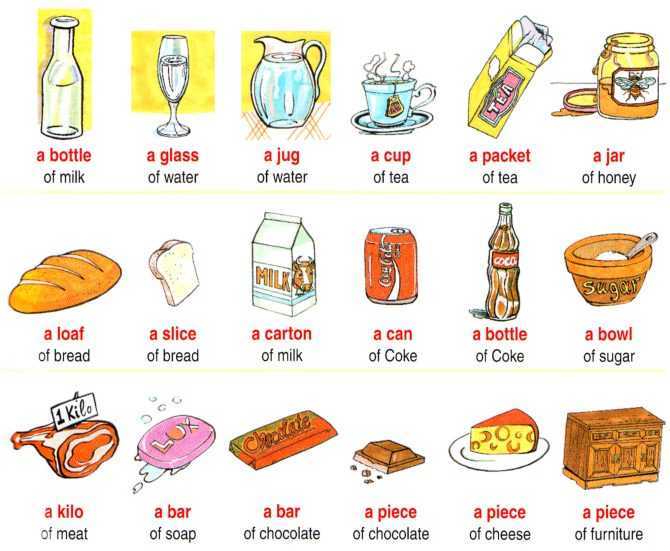
- The following nouns are uncountable in English but not in many other languages:
bread, news, information, furniture, work, research and spaghetti.
Don’t use a with these nouns. Use some and do not make these nouns plural.
❌ Please buy a furniture.
❌ Please buy furnitures.
✅ Please buy some furniture.
プリーズ・バイ・サム・ファニチャー。
We don’t use the for most countries names but we use the with countries that have words such as states, kingdom or republic in them.
❌ I’m from United States.
✅ I’m from the United States.
アイム・フロム・ザ・ユナイテッド・ステイツ。
Don’t use the with languages.
❌ The Japanese isn’t an easy language to learn.
✅ Japanese isn’t an easy language to learn.
ジャパニーズ・イズント・アン・イージー・ランゲージ・トゥ・ラーン。
【クイズ・Quiz】
最も良い答えを選んでください。複数の答えを選ぶことができます。
Please select the best answer. You can select more than one answer.

Grammar Quiz 2
1. We bought some cheese and ham. _____ cheese was delicious.
2. It’s _____ interesting book.
3. There was _____ document on the table.
4. Diane Vizthum, M.S., R.D., research nutritionist for Johns Hopkins University School of Medicine say that _____ coffee can be good for your health.
5. I don’t have _____ car but I want one.
6. Can you pass me _____ seaweed flakes?
7. _____ president visited Hokkaido.
8. My step-mother was _____ police officer.
9. Almost everybody knows that _____ cats are very independent animals.
10. They picked me up at _____ airport.
11. Do you want _____ bottle of milk?
12. _____ potentially effective treatment for atopic dermatitis is _____ honey.
不可算名詞(Uncountable Nouns)
The History of Articles / Origins
“the,” “a,” and “an” in English, are deeply intertwined with the development of languages, particularly Indo-European languages. Articles serve as a grammatical tool to indicate the definiteness and indefiniteness of a noun. Here’s an overview of the history and development of articles:
Ancient and Classical Periods
- Ancient Greek:
- Ancient Greek had definite articles but no indefinite articles. The definite article (ὁ, ἡ, τό) was used to specify a particular noun.
- The definite article evolved from the demonstrative pronoun, which means it initially pointed out something specific.
- Latin:
- Classical Latin did not have articles. Nouns could be definite or indefinite based on context alone.
- However, demonstrative pronouns like “ille” (that) and “hic” (this) could serve similar functions as definite articles.
The Medieval Period
- Romance Languages:
- With the fall of the Roman Empire and the evolution of Latin into the various Romance languages (Spanish, French, Italian, etc.), definite and indefinite articles emerged.
- For instance, in Old French, the definite article “le” (from Latin “ille”) and the indefinite article “un” (from Latin “unus”) began to be used.
- Germanic Languages:
- Old English used the definite article “se” (masculine), “seo” (feminine), and “þæt” (neuter), which evolved into “the” in Modern English.
- There was no clear indefinite article in Old English, but “an” (one) started to be used in Middle English, leading to the modern “a” and “an.”
The Early Modern Period
- English:
- By the Early Modern English period (15th-17th centuries), the use of “the” as the definite article and “a” or “an” as the indefinite article was firmly established.
- The Great Vowel Shift and other phonological changes in this period influenced the modern pronunciation and usage.
The Modern Period
- Standardization:
- The rules for articles became more standardized with the advent of dictionaries and grammar books.
- In English, “a” is used before words starting with a consonant sound, and “an” before words starting with a vowel sound.
- Global Influence:
- As English spread globally, its use of articles influenced other languages, especially through colonization and global media.
- Many languages still do not have articles (e.g., Russian, Chinese) or use them differently (e.g., Arabic, Hebrew).
Linguistic Insights
- Semantic and Syntactic Functions:
- Articles play a crucial role in syntax and semantics, helping to clarify the specificity and generality of nouns.
- The study of articles has provided insights into language acquisition, language change, and cognitive processes in linguistics.
- Cross-Linguistic Variations:
- Languages vary in their use and necessity of articles. Some languages, like Japanese and Korean, use particles or context instead of articles.
- The presence or absence of articles can affect the interpretation of sentences and the structure of noun phrases.
Conclusion
The history of articles illustrates the dynamic and adaptive nature of language. Emerging from demonstrative pronouns in ancient languages like Greek, the concept of articles evolved significantly, shaping the way we specify and generalize nouns. The absence of articles in Classical Latin and their development in Romance and Germanic languages highlight the diverse paths languages can take. In English, articles like “the,” “a,” and “an” became standardized, influencing linguistic structures and communication clarity. The study of articles not only sheds light on language evolution but also enhances our understanding of human cognition and linguistic diversity. As languages continue to evolve, the role of articles remains a key aspect of how we convey meaning and navigate the complexities of grammar and syntax.