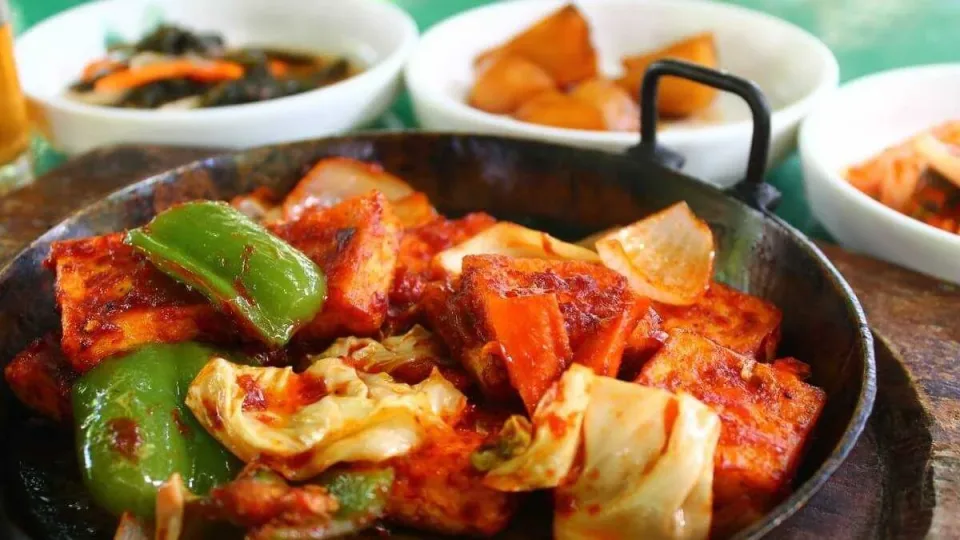
Spicy Food & Conjunctions
How much spice is too much? Some people love spicy food. In many cultures, ingredients like chilies and hot pepper are common. Other cultures use garlic, ginger, or horseradish to spice up their food. Many people in the United States love hot sauce. They use it on almost everything from eggs to sandwiches! If you ask an American, they will probably have a favorite brand of hot sauce they like to use.
Spicy food can be good for your body. It can help with congestion if you have a cold. It can make you sweat, which cools your skin off. In hot countries, many people eat spicy food all the time so that they can feel cooler. However, if you are not used to spicy food, it can make you feel sick. It sometimes causes indigestion or just burns your tongue. It’s important to be careful and drink a lot of water if you are new to eating spicy food. Some people even drink milk, as it can help stop the spread of the heat.
Bryan and Kate are talking about some spicy food that Kate ate. Find out what they think about it in this English lesson.
Dialogue
Kate: Bryan, I went out to eat today, and my food was so spicy that it gave me indigestion. And I used to love spicy food! But now, I don’t know what it’s doing to my body. It’s making me sweat, and it’s causing a stomach ache.
Bryan: Oh, I love spicy food. I actually kind of like it when it makes my eyes water. I just feel like I’m enjoying to food a little bit more. But I also love the taste of peppers and chili…
Kate: Oh, yum.
Bryan: I think that’s a really, really strong taste, and it really hits home for me.
Kate: Yeah, I do like to try different types of hot sauces, because some of them aren’t necessarily spicy, but they’re smoky and have different flavors. I had a Jamaican hot sauce the other day that was delicious. So, those don’t hit me the same way as like going out to eat and getting spicy food from a restaurant. I have more control over it that way.
Bryan: Right, I love like jalapeno peppers or habanero peppers, but I can’t stand Tabasco sauce.
Kate: Oh, really?
Bryan: Like that’s a different type of heat that I can’t take.
Kate: See, and wasabi is a little strange for me. But I don’t know, maybe, I’ll venture out and try some new types of food.
Quiz – Spicy Food
1. What happened to Kate after she ate spicy food?
A. She felt happy.
B. She had a cold.
C. She had indigestion.
D. She took a nap.
2. Bryan loves the taste of ___________________.
A. fish and hot sauce
B. jalapeno peppers and habanero peppers
C. red peppers and green peppers
D. horseradish and garlic
3. Sweat is ________________________________________.
A. water from the skin that cools the body
B. a type of drink that’s good for the body
C. the way that sugar tastes
D. something you wear when it is cold
4. Which of the following is NOT a conjunction?
A. Since.
B. Although.
C. But.
D. Near.
Discussion
Kate just ate some very spicy food. She used to love eating spicy food, but now it makes her feel sick. It makes her sweat and causes a lot of stomach pain. Bryan really likes the taste of spicy food. He loves hot peppers. When his eyes water, he feels like he is just enjoying the food more. Strong, intense flavors are something he loves.
Kate also likes strong flavors. She enjoys hot sauce, but she prefers sauces that are more smoky than spicy. Bryan is the opposite. He can eat a lot of spicy peppers, but he can’t stand hot sauce. Kate doesn’t like the heat in wasabi. They both have very different tastes when it comes to eating spicy things.
Do you like spicy food? Do people in your country eat a lot of hot sauce?
Grammar Point
Bryan likes hot peppers but not hot sauce. He says, “I love jalapeno peppers or habanero peppers, but I can’t stand Tabasco sauce.” He uses a conjunction.
A conjunction is a word that joins two or more words, phrases or clauses. There are three kinds of conjunctions: coordinating, subordinating and correlative.
There are only seven coordinating conjunctions. They are for, and, nor, but, or, yet, and so. Coordinating conjunctions join together parts of a sentence that are the same. For example, “Would you like pie or cake?” or “John likes taking walks and riding his bike.”
Coordinating conjunctions can also join two independent clauses. For instance, you might say, “I love coffee,” and also, “It makes my stomach hurt.” You can join these clauses with a conjunction, saying, “I love coffee but it makes my stomach hurt.”
Subordinating conjunctions allow us to join independent clauses with adverb clauses. Examples: “I will bring dessert unless you are baking a cake,” or, “I cry whenever I watch that movie.” Other common subordinating conjunctions are although, because, before, if, since and while, but there are many more!
Correlative conjunctions are used in pairs and have the same function as coordinating conjunctions. For example, “Both Nate and Amy work at the library,” or, “Either Mom or Dad will pick you up from the airport.” In addition to both… and and either… or, other common correlative conjunctions are neither… nor, not… but, whether… or, and not only… but also.
We can tell that Brian used a coordinating conjunction. He could also use a different kind of conjunction. He could say something like, “Although I like jalapeno peppers, I can’t stand Tabasco sauce.”
Which is correct, “Each Sarah and Dan like sushi,” or, “Both Sarah and Dan like sushi”?
Related Videos
Watch video clips to improve your English language skills.
#SpicyFood #HotCheetos #FoodInsider
31 Spicy Foods You Need To Eat In Your Lifetime | The Ultimate List
Chile (with an ‘e’) refers to the fresh or dried pepper, its plant or the South American country; chili (with an ‘i’) usually means the spicy stew or the ground spice powder in American English; and chilli (with ‘ll’) is the common British spelling for the pepper and related dishes. The distinction is regional and context-dependent, but generally, ‘e’ is for the pepper/country in Spanish-influenced areas, ‘i’ for the stew/spice in the US and ‘ll’ for the pepper/dishes in the UK.
Global Spice Classics
- Phaal Curry (India): Renowned as the spiciest curry in the world, this thick tomato-based dish features the Bhut Jolokia (ghost pepper).
- Sichuan Hot Pot (China): A numbing, interactive dining experience fueled by Sichuan peppers and various dried chiles.
- Pork Vindaloo (India/Goa): A tangy and fiery vinegar-based curry traditionally made with pork and a complex blend of red chiles.
- Jerk Chicken (Jamaica): Famous for its smokey heat derived from Scotch bonnet peppers and aromatic allspice.
- Kimchi-jjigae (South Korea): A comforting, spicy stew made with well-aged kimchi, tofu and often pork or seafood.
- Doro Wat (Ethiopia): A slow-cooked chicken stew heavily seasoned with berbere, a spicy and fragrant spice blend.
- Dakdoritang (South Korea): A braised chicken dish with a savory and spicy sauce. It is made from gochugaru (chile powder) and gochujang (chile paste).
- Mapo Tofu (China): Silken tofu set in a spicy, oily and numbing sauce flavored with fermented black beans and Sichuan peppercorns.
- Egusi Soup (West Africa/Nigeria): A rich, spicy soup thickened with ground melon seeds, flavored with scotch bonnet peppers.
- Papa a la Huancaína (Peru): Boiled potatoes covered in a creamy, spicy cheese sauce made with the fruity and spicy Aji Amarillo chile.
Which classic spicy food would you like to try?
Trending Flavors for 2026
- Caribbean Curry Bowls: A top trend for 2026, these bowls blend turmeric, allspice and thyme with a distinct peppery kick.
- Elevated Spicy Ramen: A move toward complex, high-quality instant noodles featuring intense spice levels like 5x heat miso paste.
- Chili Crisp Pasta: Using the popular umami-heavy chili crisp condiment to add texture and heat to traditional Italian pasta dishes.
- Spicy Orange Masala: A trending fusion snack featuring frozen citrus, mint and chaat masala. A sweet, tangy and spicy flavor bomb.
- Aji Amarillo-Infused Dishes: A Peruvian chile famous for its uniquely fruity flavor and moderate heat.
- Spicy Ranch & Modern Sauces: Classic condiments like ranch and buffalo sauce are being reinvented with sharper heat for 2026 menus.
What’s a trending food where you live?
Iconic Regional & Street Foods
- Nashville Hot Chicken: Fried chicken doused in a cayenne-heavy paste. A staple for heat seekers in the US.
- Buffalo Wings: A global bar favorite, often ordered as “Suicide Wings” for the highest heat intensity.
- Shrimp Creole (USA): A classic Southern dish featuring shrimp in a spicy tomato-based sauce with peppers and onions.
- Shrimp Fra Diavolo (Italy/USA): “Brother Devil” pasta, known for its spicy tomato sauce and seafood.
- Arrabbiata Sauce (Italy): A tomato sauce made spicy with a generous amount of dried red chili peppers.
- Mafé (Senegal): A peanut stew that often incorporates significant heat from habanero or scotch bonnet peppers.
- Tako Poke (Hawaii): Octopus poke often served with wasabi or a spicy chili dressing.
- Spicy Ahi Poke (Hawaii): Fresh tuna marinated in a blend of sesame oil, soy sauce and spicy sriracha or chili flakes.
- Szechuan-Style “Dry Pot” (China): A stir-fried version of hot pot that focuses on numbing and spicy (ma la) flavors without the broth.
- Hoisin Pork Spicy Noodles: Stir-fried noodles with a balance of sweet hoisin and sharp chili heat.
- Spicy Miso Ramen: A staple in Japanese cuisine, often customized with extra “karami” (spicy flakes).
- Chile Con Carne (Tex-Mex): A spicy meat and chili stew, typically served with tortilla chips or rice.
- Mala Meat & Sprout Stir-fry: An izakaya favorite featuring ground meat and bean sprouts in a numbing mala sauce.
- Sriracha-Glazed Shrimp: Shrimp tossed in original chili sauces, blending sweetness with a sharp garlic-chili kick.
- Volcanic Hot Sauces: Exploring artisanal hot sauces made from the world’s hottest peppers, like the Carolina Reaper or Scorpion peppers.
Do you like eating street food and if yes what is your favorite street food?
Questions with Answers
What is a charger plate?
A charger plate is a type of plate you set your regular plate on top of. It is also called a service plate or underplate. It protects the table cloth from spills, helps keep food warm and adds a touch of elegance to a table. Don’t eat directly from the charger plate. It is removed after the main course.
What is the origin of the word charger in charger plate?
The word charger comes from the Middle English word chargeour from about 1275-1325. Chargeour came from the Latin word carricare meaning to load.
Where is Egusi soup from?
Egusi soup comes from West Africa. Maybe Nigeria. It is a staple among various ethnic groups like the Yoruba and Igbo, though its exact tribal origin is debated, with strong Yoruba roots and widespread adoption across the region, including Ghana, it is cooked with ground melon seeds (egusi) being used as the thickener.